

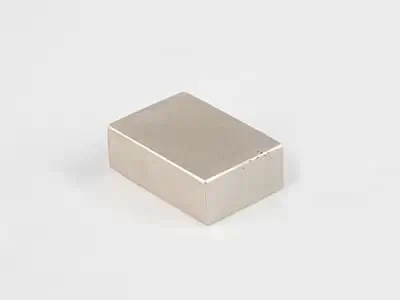
Block neodymium magnets
strong rectangular and square magnets for mounting
Shape: blocks, plates, bars (perfectly flat surfaces).
Mounting: large contact area facilitates gluing with 3M tape.
Material: sintered neodymium NdFeB (strongest on the market).
Coating: layer Ni-Cu-Ni protecting against corrosion.
Stacking: possibility of combining into stacks for increased force.
Availability: thousands of pieces in stock, shipping right away.
Direction of magnetization

↑ through thickness

→ through length

↗ through width
As a direct importer, we bypass intermediaries, ensuring the best price-to-power ratio (we stock grades from N38 to very powerful N52). Block magnets are also an excellent base for building your own magnetic separators – by arranging them in the appropriate way (e.g., in a Halbach array), one can create a very effective filter catching metal filings from conveyor belts or chutes.
Remember that two plate magnets put together "face-to-face" (with opposite poles) create a system with significantly greater attraction force than a single magnet, which allows for power scaling without the need to purchase a new, larger block. The application in printing is also wide – these magnets are ideal for closing folders, decorative boxes (packaging), or sample books. The flat surface allows them to be easily hidden under paper or veneer, giving the effect of a "magical" closure. Thanks to resistance to demagnetization, our products serve for years without losing their properties even in difficult industrial conditions.
Subcategories:
Filters and sorting
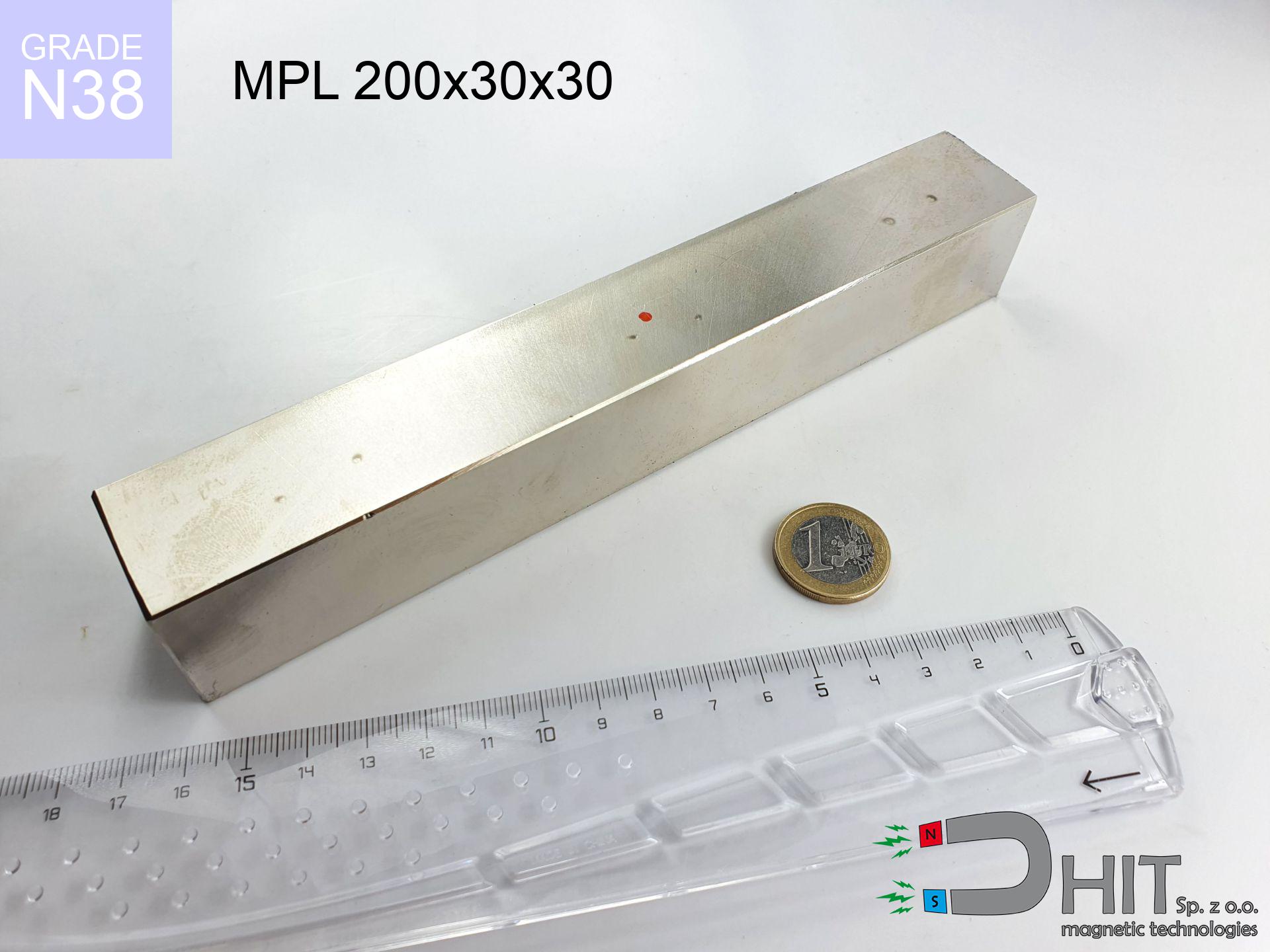
Catalog no 020125
GTIN/EAN: 5906301811312
length
200 mm [±0,1 mm]
width
30 mm [±0,1 mm]
height
30 mm [±0,1 mm]
Weight
1350 g
Magnetization direction
↑ axial
Coating
[NiCuNi] Nickel
457.95 zł net / pcs
563.28 zł gross (incl. 23% VAT) / pcs
bulk discounts:
Applications for block magnets
A block magnet is worth considering for flat recesses in packaging, closures and display assemblies. Choose length, width and thickness for the construction, not just the available space. Covering material or adhesive increases the distance between magnet and steel.
Test a sample joint, allowing for the load direction and actual gap. The magnet calculator (v2 — engineering) provides a starting point, not a guarantee for the complete assembly. For a round recess, compare cylindrical models.