
![Separation magnetic rod SM 32x450 [2xM8] / N52](https://cdn3.dhit.pl/graphics/banners/magnet.webp "Separation magnetic rod SM 32x450 [2xM8] / N52")
![SM 32x450 [2xM8] / N52 - magnetic separator](https://cdn3.dhit.pl/graphics/products/sm-32x450-2xm8-bir.jpg)
SM 32x450 [2xM8] / N52 - magnetic separator
magnetic separator
Catalog no 130465
GTIN/EAN: 5906301813361
- Diameter Ø
- 32 mm [±1 mm]
- Height
- 450 mm [±1 mm]
- Weight
- 2490 g
- Magnetic Flux
- ~ 10 000 Gauss [±5%]
How we measure these parameters — certificates and measurements
1150.00 zł net / pcs
1414.50 zł with VAT (23% VAT) / pcs
bulk discounts:
Need more?Frequently asked questions
How do I choose a separator for fine contamination and check availability?
Where can I order a separator for a production line, and what should I check?
How can I verify a separator's declared magnetic parameters before purchase?
Can a magnetic beam withstand continuous work on a production line?
What roller design is suitable for a dusty environment?
How do I choose the size of a hand-held separator?
What is a hand-held separator for, and how is it different from a built-in rod?
Which separator type suits a small production plant?
Call us now
+48 888 99 98 98
alternatively let us know using
contact form
the contact section.
Specifications and structure of a neodymium magnet can be estimated using our
power calculator.
Order by 14:00 and we’ll ship today!
Detailed specification - SM 32x450 [2xM8] / N52 - magnetic separator
Specification / characteristics - SM 32x450 [2xM8] / N52 - magnetic separator
| properties | values |
|---|---|
| Cat. no. | 130465 |
| GTIN/EAN | 5906301813361 |
| Production/Distribution | Dhit sp. z o.o. |
| Country of origin | Poland / China / Germany |
| Customs code | 85059029 |
| Diameter Ø | 32 mm [±1 mm] |
| Height | 450 mm [±1 mm] |
| Weight | 2490 g |
| Material Type | Stainless steel AISI 304 / A2 |
| Magnetic Flux | ~ 10 000 Gauss [±5%] |
| Size/Mount Quantity | 2xM8 |
| Polarity | circumferential - 17 poles |
| Casing Tube Thickness | 1 mm |
| Manufacturing Tolerance | ±1 mm |
Magnetic properties of material N52
| properties | values | units |
|---|---|---|
| Remanence Br ? | 14.2-14.7 | kGs |
| Remanence Br ? | 1420-1470 | mT |
| Coercivity bHc ? | 10.8-12.5 | kOe |
| Coercivity bHc ? | 860-995 | kA/m |
| Intrinsic coercivity iHc | ≥ 12 | kOe |
| Intrinsic coercivity iHc | ≥ 955 | kA/m |
| Energy product BHmax ? | 48-53 | BH max MGOe |
| Energy product BHmax ? | 380-422 | BH max KJ/m |
| Maximum working temperature ? | ≤ 60 | °C |
Physical properties of sintered neodymium magnets Nd2Fe14B at 20°C
| properties | values | units |
|---|---|---|
| Vickers hardness | ≥550 | Hv |
| Density | ≥7.4 | g/cm3 |
| Curie Temperature TC | 310 | °C |
| Curie Temperature TF | 590 | °F |
| Specific resistance | 150 | μΩ⋅cm |
| Bending strength | 250 | MPa |
| Compressive strength | 1000~1100 | MPa |
| Thermal expansion parallel (∥) to orientation (M) | (3-4) x 10-6 | °C-1 |
| Thermal expansion perpendicular (⊥) to orientation (M) | -(1-3) x 10-6 | °C-1 |
| Young's modulus | 1.7 x 10⁴ | kg/mm² |
Table 1: Rod construction
SM 32x450 [2xM8] / N52
| Parameter | Value | Description / Unit |
|---|---|---|
| Diameter (Ø) | 32 | mm |
| Total length | 450 | mm (L) |
| Active length | 414 | mm |
| Section count | 18 | modules |
| Dead zone | 36 | mm (2x 18mm starter) |
| Weight (est.) | ~2751 | g |
| Active area | 416 | cm² (Area) |
| Housing material | AISI 304 | 1.4301 (Inox) |
| Surface finish | Ra < 0.8 µm | Polished |
| Temp. class | 60°C | N52 |
| Force loss (at max °C) | -8.6% | Reversible loss (physics) |
| Force (calculated) | 41 | kg (theor.) |
| Induction (surface) | ~10 000 | Gauss (Max) |
Chart 2: Field profile (18 sections)
Chart 3: Temperature performance
Material specification
| iron (Fe) | 64% – 68% |
| neodymium (Nd) | 29% – 32% |
| boron (B) | 1.1% – 1.2% |
| dysprosium (Dy) | 0.5% – 2.0% |
| coating (Ni-Cu-Ni) | < 0.05% |
Ecology and recycling (GPSR)
| recyclability (EoL) | 100% |
| recycled raw materials | ~10% (pre-cons) |
| carbon footprint | low / zredukowany |
| waste code (EWC) | 16 02 16 |
Other proposals
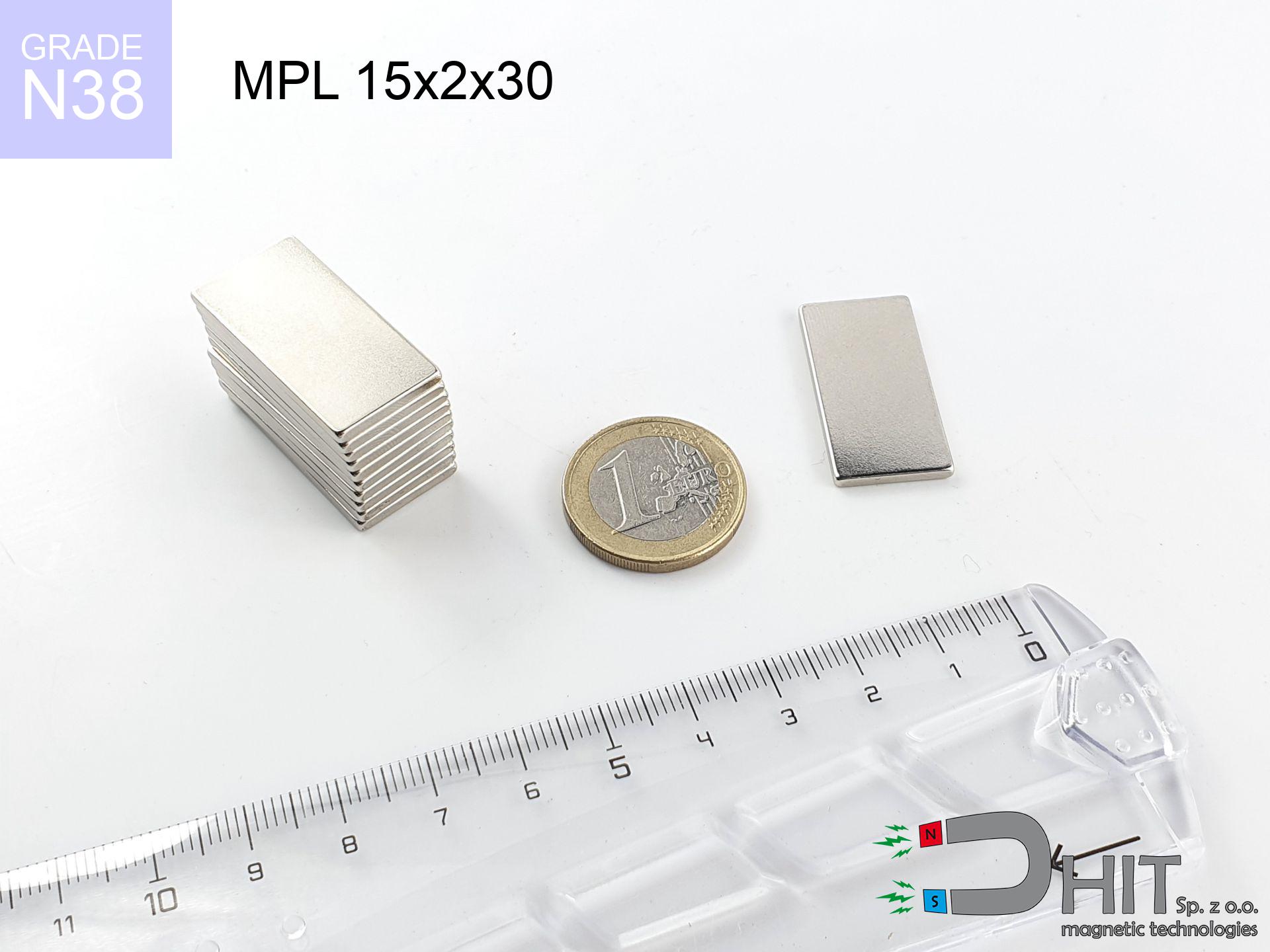
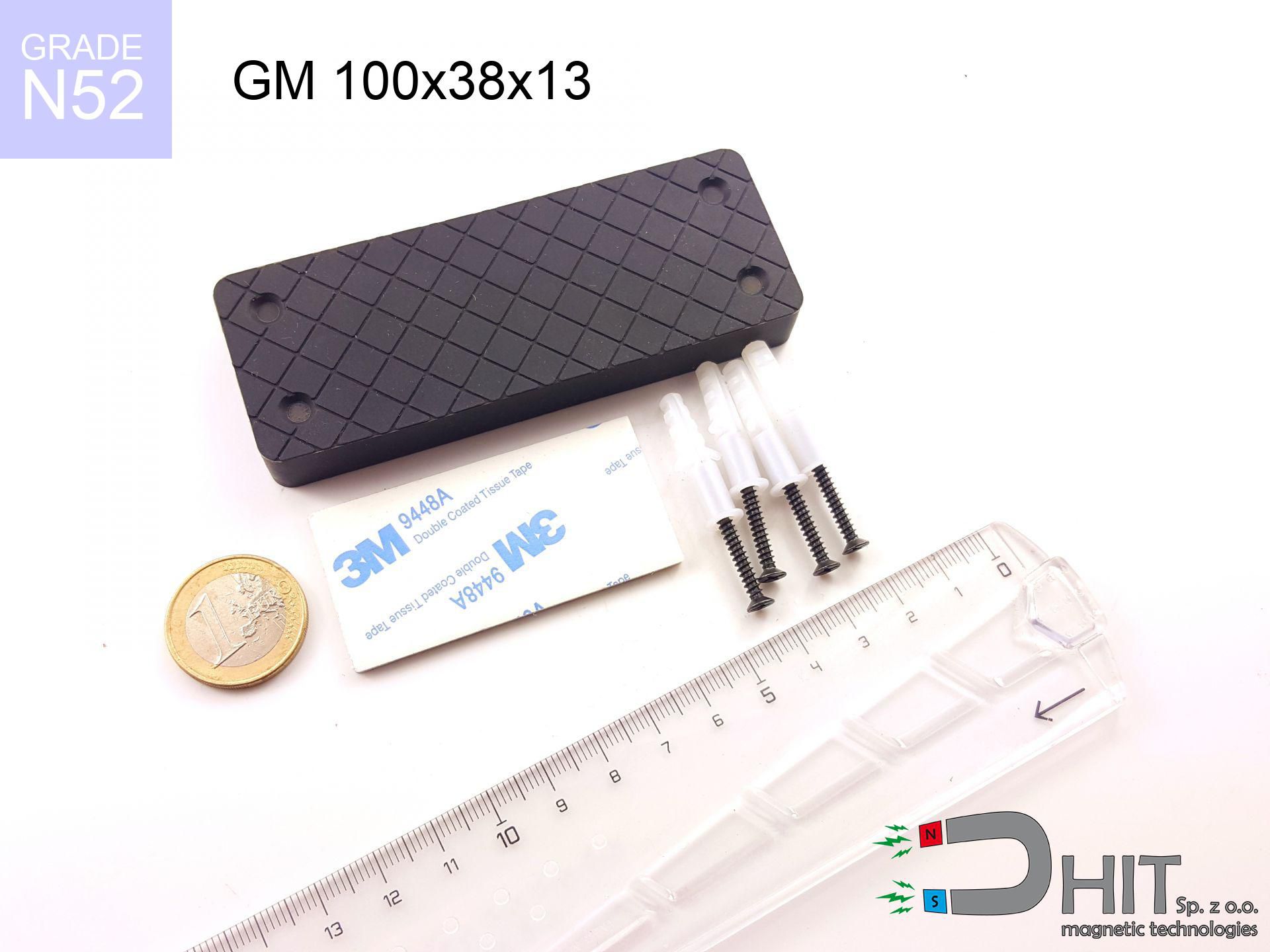
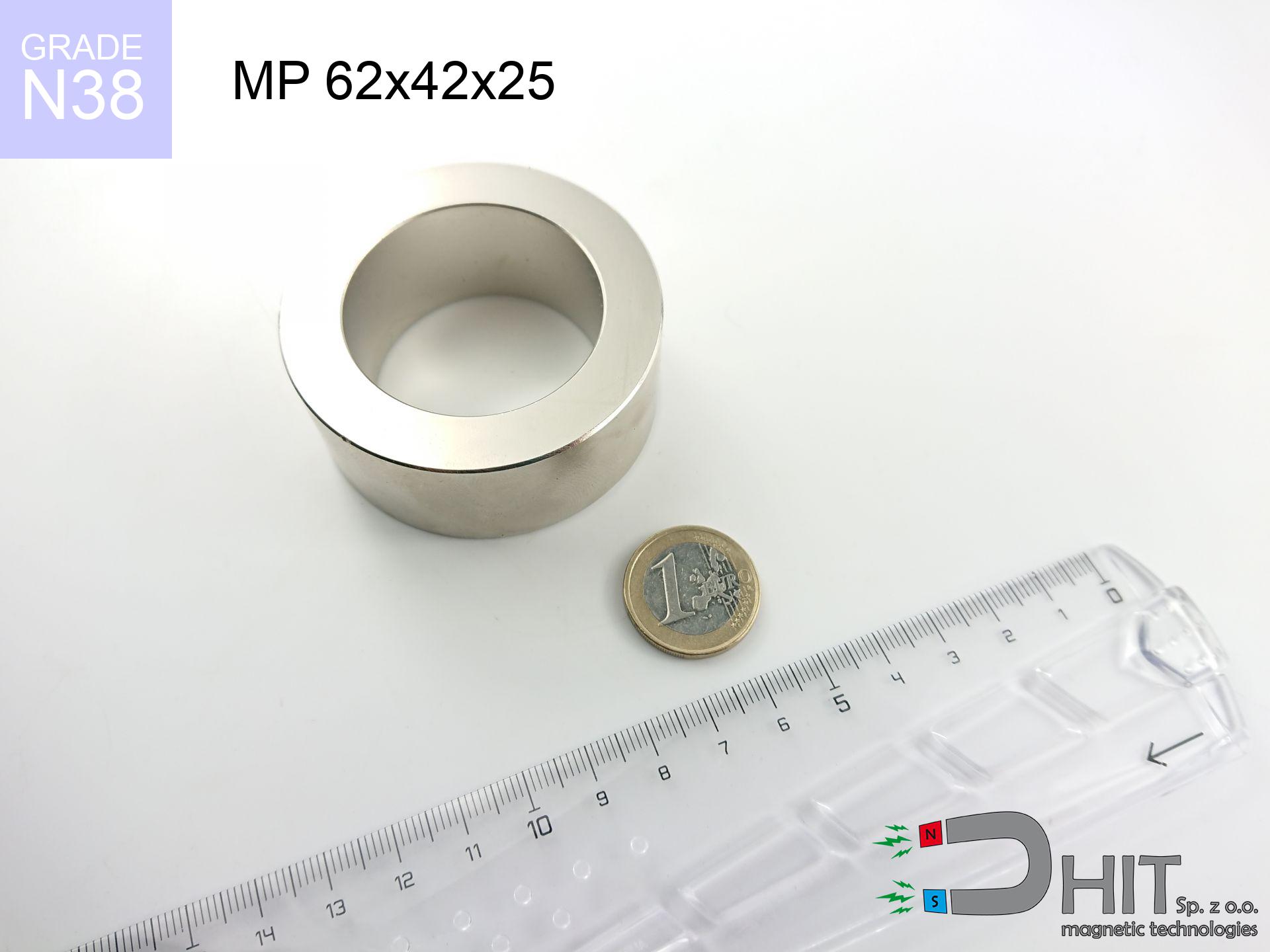

Advantages and disadvantages of rare earth magnets.
Advantages
- Their magnetic field is durable, and after approximately ten years it drops only by ~1% (theoretically),
- They are resistant to demagnetization induced by external field influence,
- The use of an refined layer of noble metals (nickel, gold, silver) causes the element to present itself better,
- Magnets are distinguished by excellent magnetic induction on the active area,
- Through (appropriate) combination of ingredients, they can achieve high thermal resistance, allowing for functioning at temperatures reaching 230°C and above...
- Considering the option of flexible shaping and adaptation to individualized projects, neodymium magnets can be modeled in a broad palette of shapes and sizes, which amplifies use scope,
- Key role in innovative solutions – they are commonly used in magnetic memories, electric motors, diagnostic systems, as well as complex engineering applications.
- Compactness – despite small sizes they offer powerful magnetic field, making them ideal for precision applications
Weaknesses
- To avoid cracks under impact, we suggest using special steel housings. Such a solution secures the magnet and simultaneously improves its durability.
- Do not exceed this material temperature limit: 60°C. Overheating may permanently weaken the magnet.
- Magnets exposed to a humid environment can corrode. Therefore while using outdoors, we suggest using waterproof magnets made of rubber, plastic or other material resistant to moisture
- Due to limitations in producing nuts and complex forms in magnets, we recommend using cover - magnetic holder.
- Health risk to health – tiny shards of magnets are risky, if swallowed, which is particularly important in the context of child health protection. Additionally, small elements of these magnets can disrupt the diagnostic process medical when they are in the body.
- With large orders the cost of neodymium magnets is a challenge,
Pull force analysis
Highest magnetic holding force – what contributes to it?
- using a base made of mild steel, acting as a ideal flux conductor
- whose transverse dimension equals approx. 10 mm
- characterized by smoothness
- with direct contact (without impurities)
- under perpendicular force direction (90-degree angle)
- in neutral thermal conditions
Practical lifting capacity: influencing factors
- Clearance – the presence of foreign body (rust, dirt, gap) interrupts the magnetic circuit, which lowers power rapidly (even by 50% at 0.5 mm).
- Force direction – catalog parameter refers to pulling vertically. When applying parallel force, the magnet exhibits significantly lower power (typically approx. 20-30% of maximum force).
- Wall thickness – the thinner the sheet, the weaker the hold. Magnetic flux passes through the material instead of generating force.
- Material type – the best choice is pure iron steel. Stainless steels may generate lower lifting capacity.
- Smoothness – full contact is possible only on smooth steel. Rough texture reduce the real contact area, reducing force.
- Thermal conditions – neodymium magnets have a negative temperature coefficient. At higher temperatures they lose power, and in frost they can be stronger (up to a certain limit).
Holding force was measured on the plate surface of 20 mm thickness, when the force acted perpendicularly, whereas under shearing force the holding force is lower. Moreover, even a minimal clearance between the magnet’s surface and the plate reduces the holding force.
Warnings
Serious injuries
Danger of trauma: The pulling power is so immense that it can result in blood blisters, crushing, and broken bones. Use thick gloves.
Product not for children
Neodymium magnets are not toys. Eating multiple magnets can lead to them attracting across intestines, which poses a severe health hazard and necessitates immediate surgery.
Do not drill into magnets
Machining of neodymium magnets carries a risk of fire risk. Magnetic powder reacts violently with oxygen and is difficult to extinguish.
Handling guide
Handle with care. Neodymium magnets attract from a distance and connect with massive power, often quicker than you can move away.
Safe distance
Avoid bringing magnets near a purse, laptop, or TV. The magnetic field can destroy these devices and erase data from cards.
Eye protection
Protect your eyes. Magnets can fracture upon violent connection, ejecting sharp fragments into the air. Eye protection is mandatory.
Heat sensitivity
Control the heat. Exposing the magnet to high heat will permanently weaken its properties and strength.
Allergy Warning
Certain individuals suffer from a sensitization to nickel, which is the common plating for neodymium magnets. Extended handling can result in skin redness. We recommend use safety gloves.
Medical interference
For implant holders: Powerful magnets affect medical devices. Maintain minimum 30 cm distance or request help to handle the magnets.
Magnetic interference
Navigation devices and mobile phones are highly sensitive to magnetic fields. Direct contact with a powerful NdFeB magnet can decalibrate the internal compass in your phone.
Tabela kosztu i czasu dostawy
Płatność przed wysyłką:

GLS kurier
Przesyłka będzie u Ciebie za 2-3 dni
14.99 ZŁ

InPost Paczkomaty 24/7
Przesyłka będzie u Ciebie za 1-2 dni
12.30 ZŁ
Płatność przy odbiorze (pobranie):
GLS kurier
Przesyłka będzie u Ciebie za 1-2 dni
23.00 ZŁ