
![Plate separator BM 550x180x70 [4x M8]](https://cdn3.dhit.pl/graphics/banners/magnet.webp "Plate separator BM 550x180x70 [4x M8]")
![BM 550x180x70 [4x M8] - magnetic beam](https://cdn3.dhit.pl/graphics/products/bm-550x180x70-4x-m8-nic.jpg)
BM 550x180x70 [4x M8] - magnetic beam
magnetic beam
Catalog no 090221
GTIN/EAN: 5906301812562
- length
- 550 mm [±1 mm]
- Width
- 180 mm [±1 mm]
- Height
- 70 mm [±1 mm]
- Weight
- 35320 g
How we measure these parameters — certificates and measurements
4640.80 zł net / pcs
5708.18 zł with VAT (23% VAT) / pcs
bulk discounts:
Need more?Frequently asked questions
How do I choose a separator for fine contamination and check availability?
Where can I order a separator for a production line, and what should I check?
How can I verify a separator's declared magnetic parameters before purchase?
Can a magnetic beam withstand continuous work on a production line?
What roller design is suitable for a dusty environment?
How do I choose the size of a hand-held separator?
What is a hand-held separator for, and how is it different from a built-in rod?
Which separator type suits a small production plant?
Call us now
+48 888 99 98 98
alternatively let us know using
contact form
the contact section.
Specifications and structure of a neodymium magnet can be estimated using our
power calculator.
Order by 14:00 and we’ll ship today!
Product card - BM 550x180x70 [4x M8] - magnetic beam
Specification / characteristics - BM 550x180x70 [4x M8] - magnetic beam
| properties | values |
|---|---|
| Cat. no. | 090221 |
| GTIN/EAN | 5906301812562 |
| Production/Distribution | Dhit sp. z o.o. |
| Country of origin | Poland / China / Germany |
| Customs code | 85059029 |
| length | 550 mm [±1 mm] |
| Width | 180 mm [±1 mm] |
| Height | 70 mm [±1 mm] |
| Weight | 35320 g |
| Manufacturing Tolerance | ±1 mm |
Physical properties of sintered neodymium magnets Nd2Fe14B at 20°C
| properties | values | units |
|---|---|---|
| Vickers hardness | ≥550 | Hv |
| Density | ≥7.4 | g/cm3 |
| Curie Temperature TC | 310 | °C |
| Curie Temperature TF | 590 | °F |
| Specific resistance | 150 | μΩ⋅cm |
| Bending strength | 250 | MPa |
| Compressive strength | 1000~1100 | MPa |
| Thermal expansion parallel (∥) to orientation (M) | (3-4) x 10-6 | °C-1 |
| Thermal expansion perpendicular (⊥) to orientation (M) | -(1-3) x 10-6 | °C-1 |
| Young's modulus | 1.7 x 10⁴ | kg/mm² |
Chemical composition
| iron (Fe) | 64% – 68% |
| neodymium (Nd) | 29% – 32% |
| boron (B) | 1.1% – 1.2% |
| dysprosium (Dy) | 0.5% – 2.0% |
| coating (Ni-Cu-Ni) | < 0.05% |
Ecology and recycling (GPSR)
| recyclability (EoL) | 100% |
| recycled raw materials | ~10% (pre-cons) |
| carbon footprint | low / zredukowany |
| waste code (EWC) | 16 02 16 |
Other products
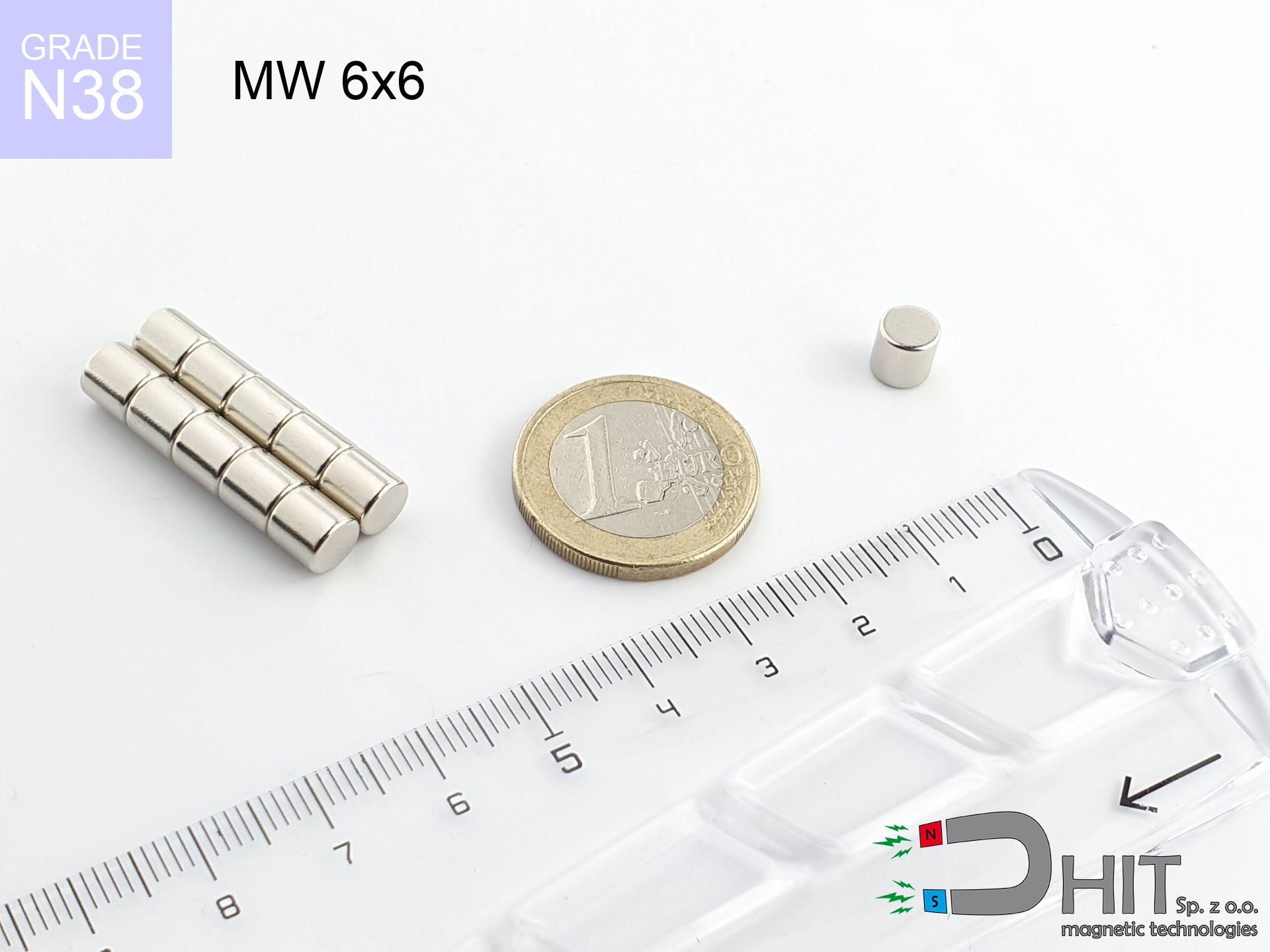
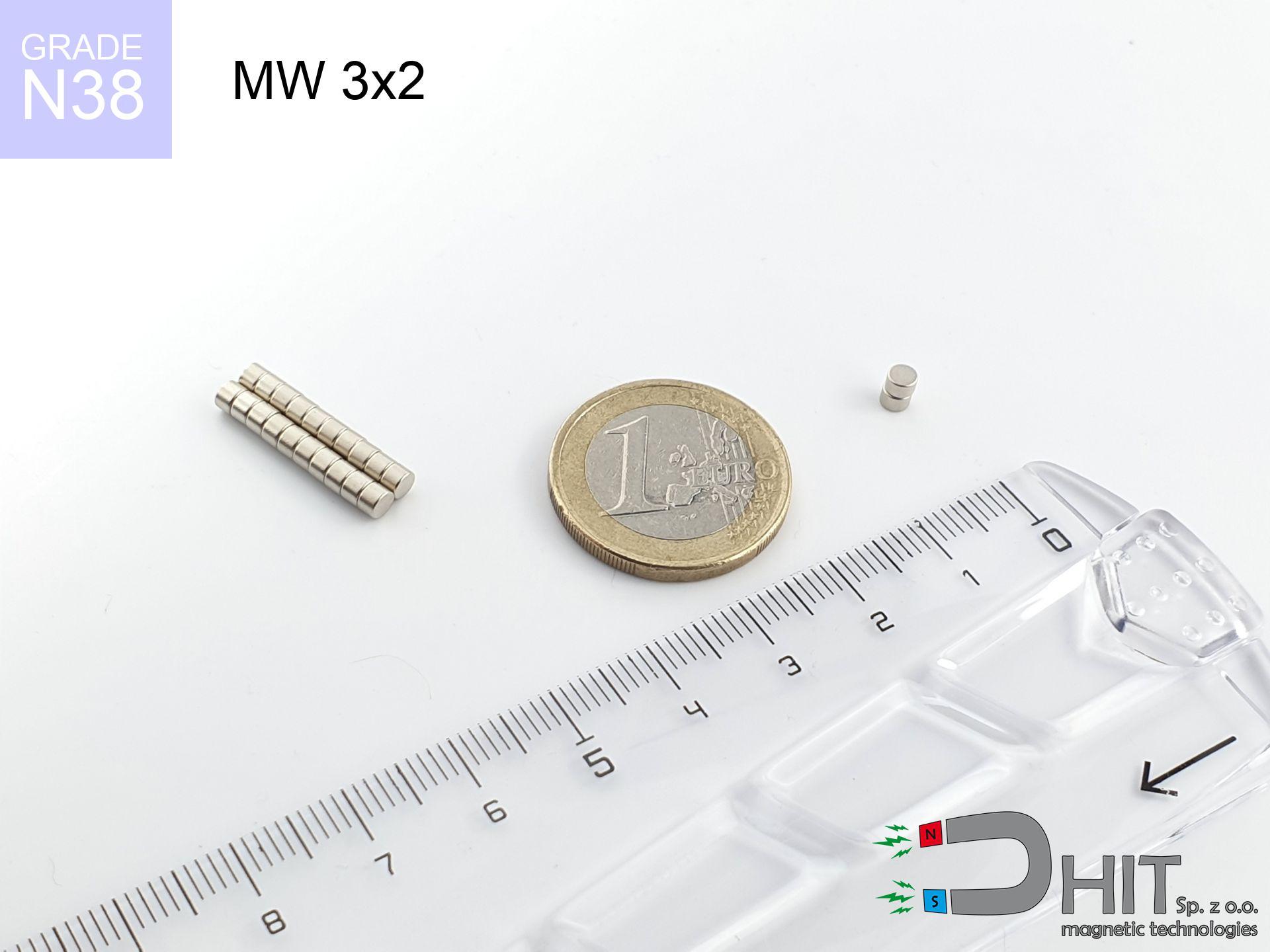


Strengths as well as weaknesses of rare earth magnets.
Benefits
- They have stable power, and over more than ten years their attraction force decreases symbolically – ~1% (according to theory),
- They maintain their magnetic properties even under strong external field,
- Thanks to the reflective finish, the coating of Ni-Cu-Ni, gold-plated, or silver-plated gives an elegant appearance,
- They show high magnetic induction at the operating surface, making them more effective,
- Neodymium magnets are characterized by extremely high magnetic induction on the magnet surface and can function (depending on the form) even at a temperature of 230°C or more...
- Thanks to flexibility in shaping and the ability to customize to client solutions,
- Key role in high-tech industry – they are utilized in hard drives, drive modules, diagnostic systems, also other advanced devices.
- Compactness – despite small sizes they offer powerful magnetic field, making them ideal for precision applications
Cons
- To avoid cracks upon strong impacts, we suggest using special steel holders. Such a solution protects the magnet and simultaneously improves its durability.
- Heat sensitivity: observe the temperature specified for this product. Overheating may permanently weaken the magnet.
- They oxidize in a humid environment - during use outdoors we recommend using waterproof magnets e.g. in rubber, plastic
- Limited possibility of producing nuts in the magnet and complex forms - recommended is cover - magnet mounting.
- Possible danger to health – tiny shards of magnets are risky, when accidentally swallowed, which becomes key in the context of child safety. It is also worth noting that small elements of these devices are able to disrupt the diagnostic process medical in case of swallowing.
- Due to neodymium price, their price is higher than average,
Lifting parameters
Maximum magnetic pulling force – what affects it?
- on a block made of mild steel, effectively closing the magnetic field
- whose transverse dimension reaches at least 10 mm
- with an ideally smooth contact surface
- with zero gap (no impurities)
- under perpendicular application of breakaway force (90-degree angle)
- in neutral thermal conditions
Magnet lifting force in use – key factors
- Distance (betwixt the magnet and the metal), as even a tiny clearance (e.g. 0.5 mm) leads to a reduction in lifting capacity by up to 50% (this also applies to varnish, corrosion or debris).
- Force direction – declared lifting capacity refers to detachment vertically. When applying parallel force, the magnet exhibits significantly lower power (typically approx. 20-30% of nominal force).
- Substrate thickness – for full efficiency, the steel must be sufficiently thick. Thin sheet restricts the attraction force (the magnet "punches through" it).
- Metal type – not every steel reacts the same. High carbon content weaken the attraction effect.
- Surface condition – ground elements guarantee perfect abutment, which increases field saturation. Rough surfaces reduce efficiency.
- Temperature influence – hot environment reduces pulling force. Exceeding the limit temperature can permanently damage the magnet.
Lifting capacity testing was carried out on plates with a smooth surface of optimal thickness, under perpendicular forces, whereas under attempts to slide the magnet the load capacity is reduced by as much as 75%. In addition, even a minimal clearance between the magnet’s surface and the plate lowers the lifting capacity.
Warnings
Fire risk
Fire warning: Neodymium dust is explosive. Do not process magnets without safety gear as this may cause fire.
Safe operation
Be careful. Neodymium magnets act from a distance and connect with huge force, often quicker than you can react.
Medical interference
Individuals with a heart stimulator should maintain an large gap from magnets. The magnetic field can disrupt the operation of the life-saving device.
Pinching danger
Protect your hands. Two large magnets will snap together instantly with a force of massive weight, destroying everything in their path. Be careful!
Heat sensitivity
Standard neodymium magnets (grade N) lose magnetization when the temperature exceeds 80°C. This process is irreversible.
Precision electronics
A powerful magnetic field negatively affects the operation of compasses in smartphones and navigation systems. Maintain magnets near a device to prevent breaking the sensors.
Beware of splinters
Despite the nickel coating, neodymium is delicate and not impact-resistant. Avoid impacts, as the magnet may shatter into sharp, dangerous pieces.
Keep away from computers
Data protection: Neodymium magnets can ruin data carriers and delicate electronics (pacemakers, medical aids, mechanical watches).
Keep away from children
These products are not suitable for play. Eating several magnets can lead to them connecting inside the digestive tract, which poses a direct threat to life and necessitates urgent medical intervention.
Allergy Warning
Warning for allergy sufferers: The nickel-copper-nickel coating consists of nickel. If redness appears, immediately stop handling magnets and wear gloves.
Tabela kosztu i czasu dostawy
Płatność przed wysyłką:

GLS kurier
Przesyłka będzie u Ciebie za 2-3 dni
14.99 ZŁ

InPost Paczkomaty 24/7
Przesyłka będzie u Ciebie za 1-2 dni
12.30 ZŁ
Płatność przy odbiorze (pobranie):
GLS kurier
Przesyłka będzie u Ciebie za 1-2 dni
23.00 ZŁ