
![Holder with hook UMH 48x11x65 [M6] / N38](https://cdn3.dhit.pl/graphics/banners/magnet.webp "Holder with hook UMH 48x11x65 [M6] / N38")
![UMH 48x11x65 [M6] / N38 - magnetic holder with hook](https://cdn3.dhit.pl/graphics/products/umh-48x11x65-m6-wiw.jpg)
![UMH 48x11x65 [M6] / N38 - magnetic holder with hook - ujęcie 2](https://cdn3.dhit.pl/graphics/products/umh-48x11x65-m6-soh.jpg)
UMH 48x11x65 [M6] / N38 - magnetic holder with hook
magnetic holder with hook
Catalog no 310430
GTIN/EAN: 5906301814597
- Diameter Ø
- 48 mm [±1 mm]
- Height
- 65 mm [±1 mm]
- Height
- 11 mm [±1 mm]
- Weight
- 145 g
- Magnetization Direction
- ↑ axial
- Coating
- [NiCuNi] Nickel
How we measure these parameters — certificates and measurements
56.00 zł net / pcs
68.88 zł with VAT (23% VAT) / pcs
bulk discounts:
Need more?Frequently asked questions
Which magnetic holder is suitable for moving metal parts in a workshop?
How do I choose a holder for hanging a heavy item and check its real grip?
Which magnetic holders can be used outdoors?
How should I choose a strong threaded holder for field work?
Call us now
+48 888 99 98 98
alternatively let us know using
contact form
the contact section.
Specifications and structure of a neodymium magnet can be estimated using our
power calculator.
Order by 14:00 and we’ll ship today!
Detailed specification - UMH 48x11x65 [M6] / N38 - magnetic holder with hook
Specification / characteristics - UMH 48x11x65 [M6] / N38 - magnetic holder with hook
| properties | values |
|---|---|
| Cat. no. | 310430 |
| GTIN/EAN | 5906301814597 |
| Production/Distribution | Dhit sp. z o.o. |
| Country of origin | Poland / China / Germany |
| Customs code | 85059029 |
| Diameter Ø | 48 mm [±1 mm] |
| Height | 65 mm [±1 mm] |
| Height | 11 mm [±1 mm] |
| Weight | 145 g |
| Magnetization Direction | ↑ axial |
| Load capacity ~ ? | 88.00 kg / 862.99 N |
| Coating | [NiCuNi] Nickel |
| Manufacturing Tolerance | ±1 mm |
Magnetic properties of material N38
| properties | values | units |
|---|---|---|
| Remanence Br ? | 12.2-12.6 | kGs |
| Remanence Br ? | 1220-1260 | mT |
| Coercivity bHc ? | 10.8-11.5 | kOe |
| Coercivity bHc ? | 860-915 | kA/m |
| Intrinsic coercivity iHc | ≥ 12 | kOe |
| Intrinsic coercivity iHc | ≥ 955 | kA/m |
| Energy product BHmax ? | 36-38 | BH max MGOe |
| Energy product BHmax ? | 287-303 | BH max KJ/m |
| Maximum working temperature ? | ≤ 80 | °C |
Physical properties of sintered neodymium magnets Nd2Fe14B at 20°C
| properties | values | units |
|---|---|---|
| Vickers hardness | ≥550 | Hv |
| Density | ≥7.4 | g/cm3 |
| Curie Temperature TC | 310 | °C |
| Curie Temperature TF | 590 | °F |
| Specific resistance | 150 | μΩ⋅cm |
| Bending strength | 250 | MPa |
| Compressive strength | 1000~1100 | MPa |
| Thermal expansion parallel (∥) to orientation (M) | (3-4) x 10-6 | °C-1 |
| Thermal expansion perpendicular (⊥) to orientation (M) | -(1-3) x 10-6 | °C-1 |
| Young's modulus | 1.7 x 10⁴ | kg/mm² |
Elemental analysis
| iron (Fe) | 64% – 68% |
| neodymium (Nd) | 29% – 32% |
| boron (B) | 1.1% – 1.2% |
| dysprosium (Dy) | 0.5% – 2.0% |
| coating (Ni-Cu-Ni) | < 0.05% |
Ecology and recycling (GPSR)
| recyclability (EoL) | 100% |
| recycled raw materials | ~10% (pre-cons) |
| carbon footprint | low / zredukowany |
| waste code (EWC) | 16 02 16 |
Other deals
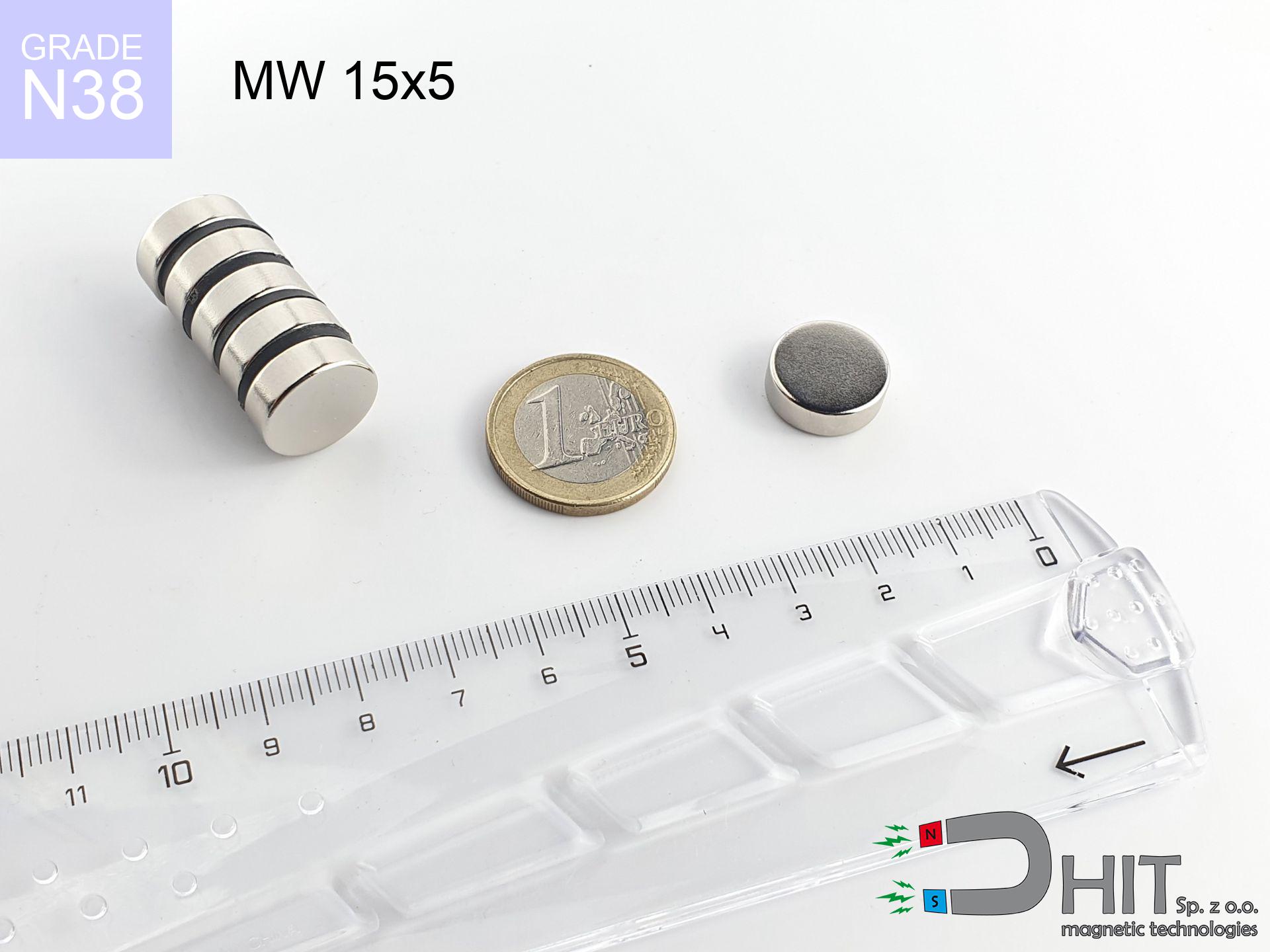
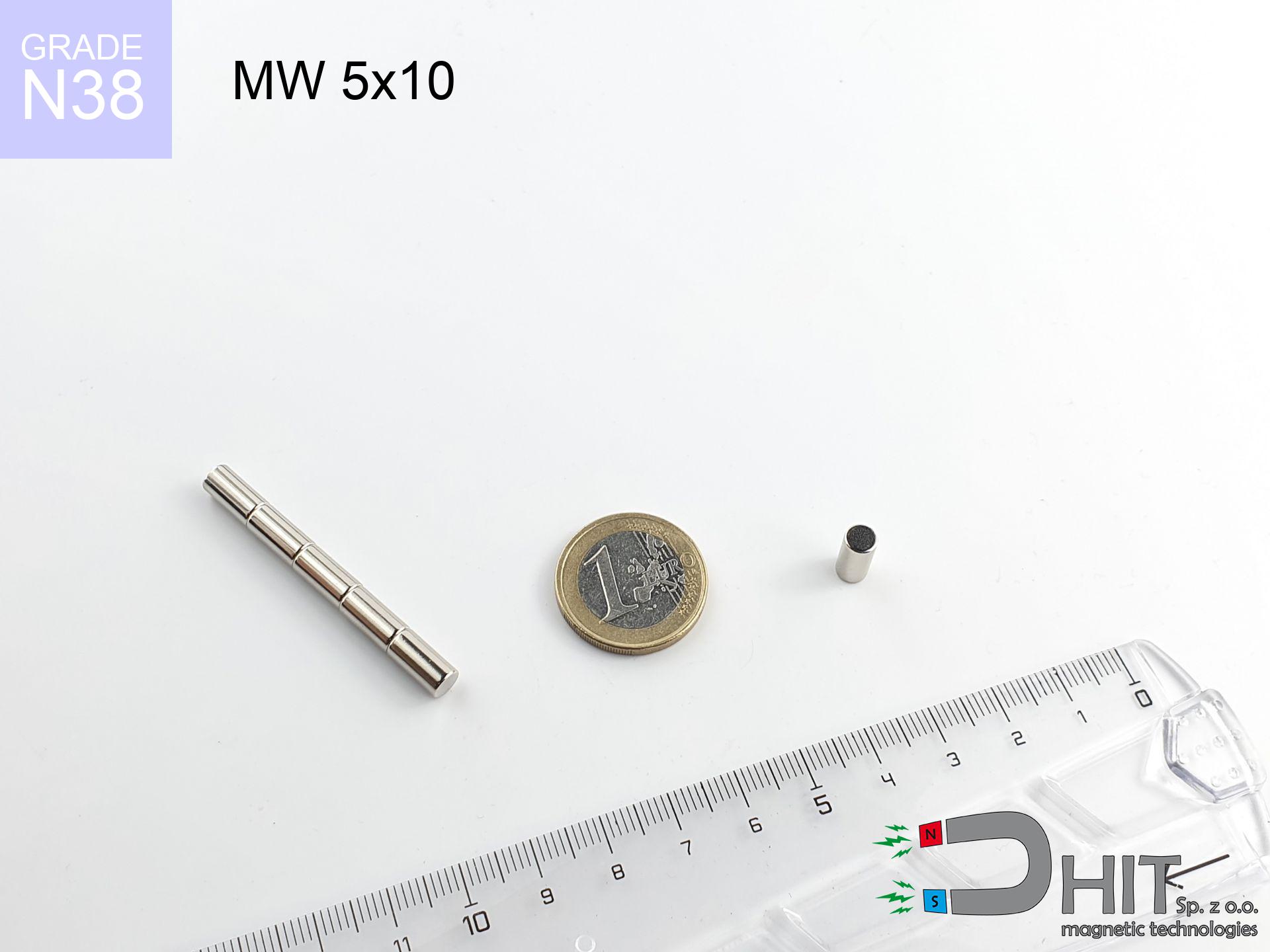

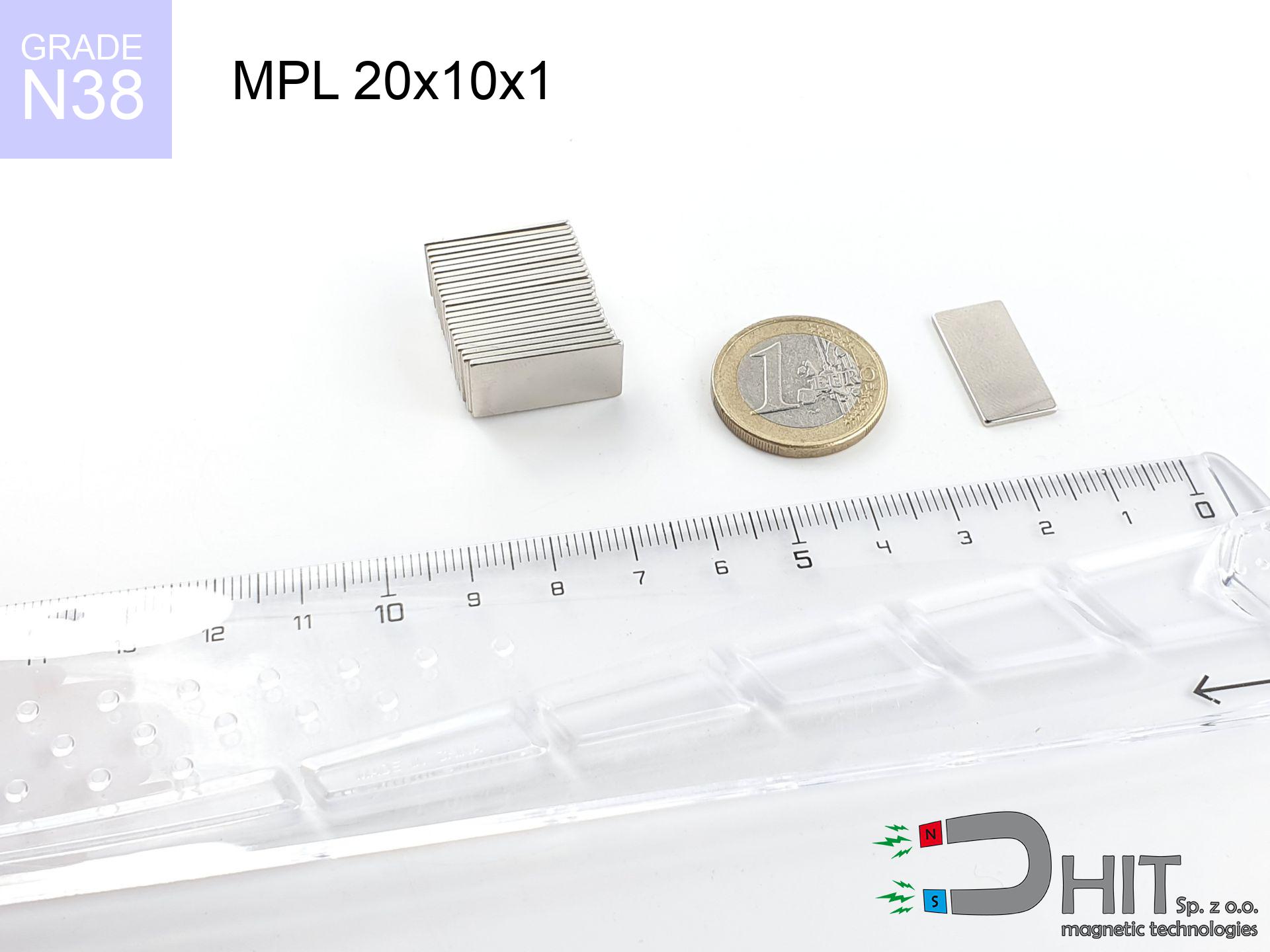
Strengths as well as weaknesses of rare earth magnets.
Strengths
- Their strength remains stable, and after around 10 years it drops only by ~1% (theoretically),
- They show high resistance to demagnetization induced by external field influence,
- In other words, due to the shiny surface of gold, the element becomes visually attractive,
- They show high magnetic induction at the operating surface, which increases their power,
- Thanks to resistance to high temperature, they are able to function (depending on the form) even at temperatures up to 230°C and higher...
- Thanks to modularity in designing and the capacity to customize to specific needs,
- Universal use in high-tech industry – they are commonly used in HDD drives, electromotive mechanisms, medical equipment, and industrial machines.
- Thanks to efficiency per cm³, small magnets offer high operating force, with minimal size,
Weaknesses
- Susceptibility to cracking is one of their disadvantages. Upon strong impact they can break. We advise keeping them in a special holder, which not only protects them against impacts but also increases their durability
- Do not exceed this material temperature limit: 80°C. Overheating may permanently weaken the magnet.
- When exposed to humidity, magnets usually rust. For applications outside, it is recommended to use protective magnets, such as those in rubber or plastics, which prevent oxidation and corrosion.
- We suggest cover - magnetic mount, due to difficulties in producing nuts inside the magnet and complex forms.
- Potential hazard to health – tiny shards of magnets are risky, in case of ingestion, which becomes key in the context of child health protection. It is also worth noting that small components of these magnets are able to be problematic in diagnostics medical after entering the body.
- Higher cost of purchase is one of the disadvantages compared to ceramic magnets, especially in budget applications
Lifting parameters
Maximum lifting capacity of the magnet – what it depends on?
- with the application of a yoke made of low-carbon steel, guaranteeing full magnetic saturation
- possessing a massiveness of min. 10 mm to ensure full flux closure
- characterized by lack of roughness
- without the slightest air gap between the magnet and steel
- under perpendicular application of breakaway force (90-degree angle)
- at temperature room level
Practical aspects of lifting capacity – factors
- Air gap (between the magnet and the plate), since even a tiny clearance (e.g. 0.5 mm) leads to a decrease in lifting capacity by up to 50% (this also applies to paint, rust or dirt).
- Pull-off angle – note that the magnet holds strongest perpendicularly. Under shear forces, the holding force drops drastically, often to levels of 20-30% of the nominal value.
- Wall thickness – thin material does not allow full use of the magnet. Part of the magnetic field passes through the material instead of generating force.
- Steel type – mild steel attracts best. Higher carbon content lower magnetic properties and holding force.
- Surface finish – ideal contact is possible only on polished steel. Rough texture reduce the real contact area, reducing force.
- Temperature – temperature increase causes a temporary drop of induction. Check the thermal limit for a given model.
Holding force was tested on a smooth steel plate of 20 mm thickness, when the force acted perpendicularly, however under parallel forces the lifting capacity is smaller. In addition, even a minimal clearance between the magnet’s surface and the plate lowers the lifting capacity.
Precautions when working with NdFeB magnets
Keep away from electronics
Be aware: rare earth magnets generate a field that confuses precision electronics. Maintain a safe distance from your phone, tablet, and GPS.
Shattering risk
NdFeB magnets are sintered ceramics, which means they are very brittle. Collision of two magnets will cause them breaking into shards.
Handling rules
Use magnets consciously. Their powerful strength can surprise even experienced users. Be vigilant and respect their power.
Keep away from computers
Intense magnetic fields can erase data on payment cards, hard drives, and storage devices. Stay away of min. 10 cm.
Allergic reactions
Certain individuals suffer from a hypersensitivity to Ni, which is the typical protective layer for neodymium magnets. Extended handling can result in an allergic reaction. It is best to use safety gloves.
Physical harm
Danger of trauma: The pulling power is so great that it can cause hematomas, crushing, and broken bones. Use thick gloves.
Flammability
Machining of NdFeB material carries a risk of fire risk. Magnetic powder reacts violently with oxygen and is hard to extinguish.
No play value
Only for adults. Small elements pose a choking risk, causing intestinal necrosis. Keep out of reach of kids and pets.
Power loss in heat
Standard neodymium magnets (N-type) undergo demagnetization when the temperature goes above 80°C. Damage is permanent.
Health Danger
People with a pacemaker have to keep an safe separation from magnets. The magnetic field can disrupt the functioning of the implant.
Tabela kosztu i czasu dostawy
Płatność przed wysyłką:

GLS kurier
Przesyłka będzie u Ciebie za 2-3 dni
14.99 ZŁ

InPost Paczkomaty 24/7
Przesyłka będzie u Ciebie za 1-2 dni
12.30 ZŁ
Płatność przy odbiorze (pobranie):
GLS kurier
Przesyłka będzie u Ciebie za 1-2 dni
23.00 ZŁ