

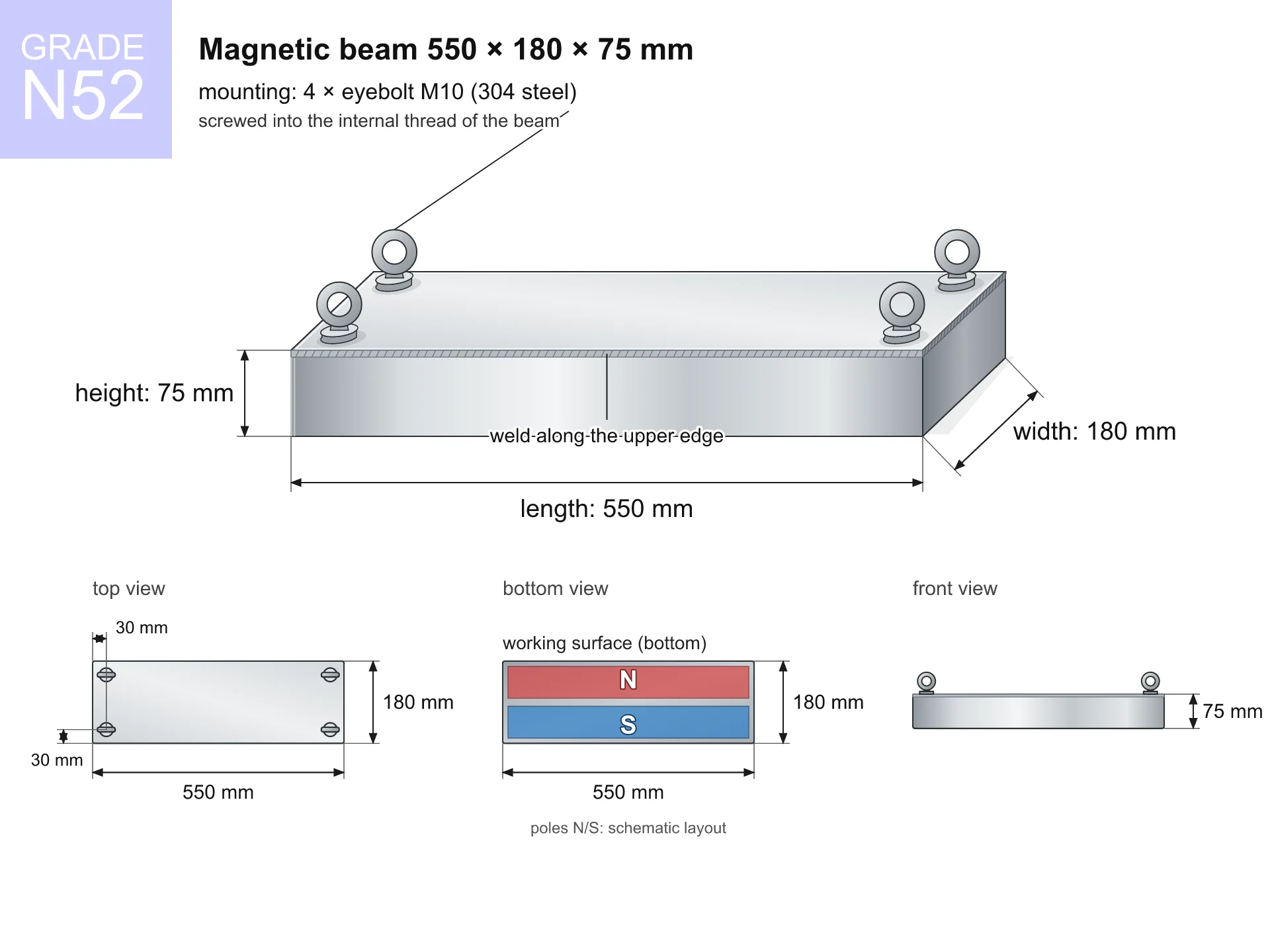
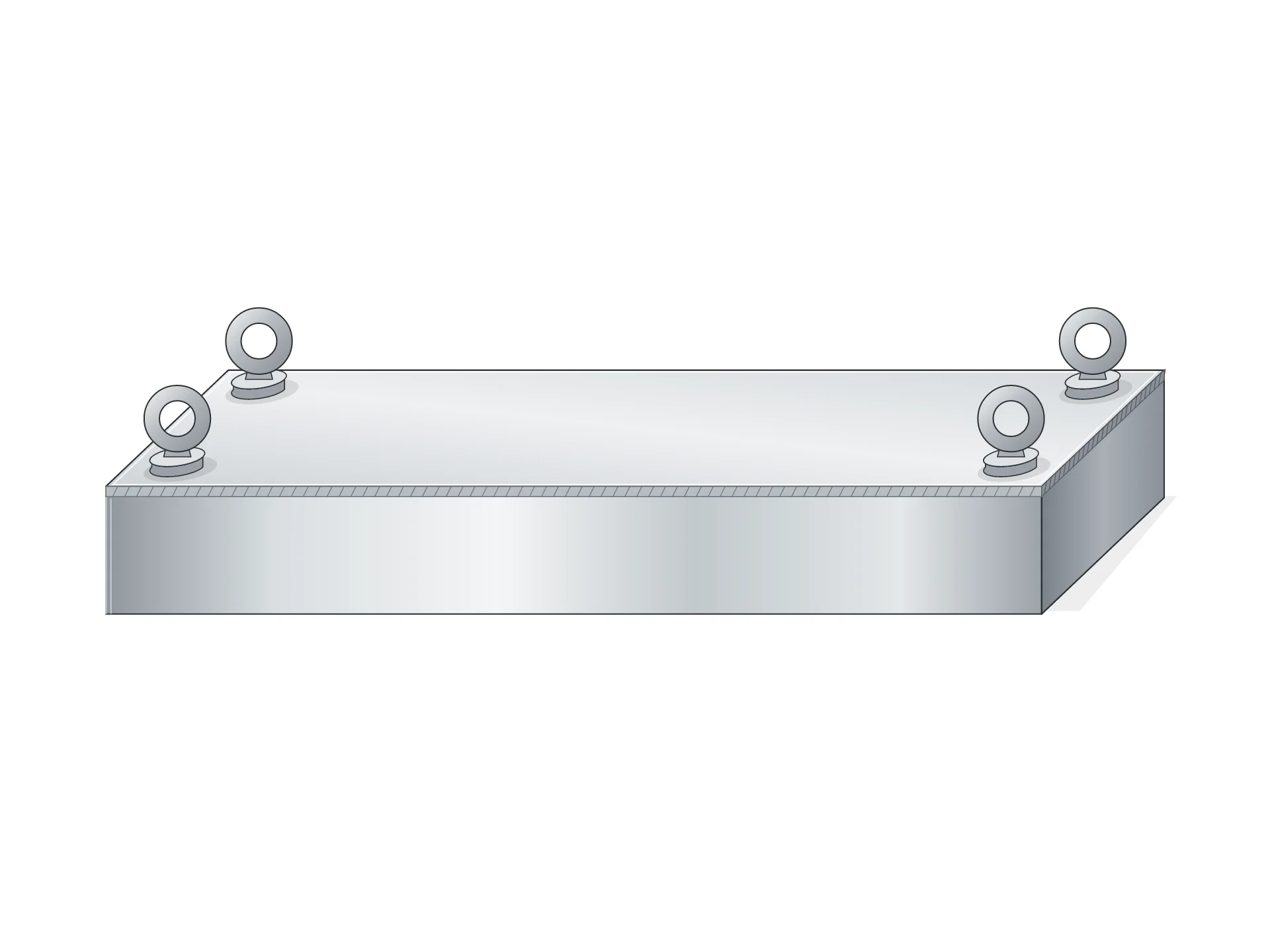
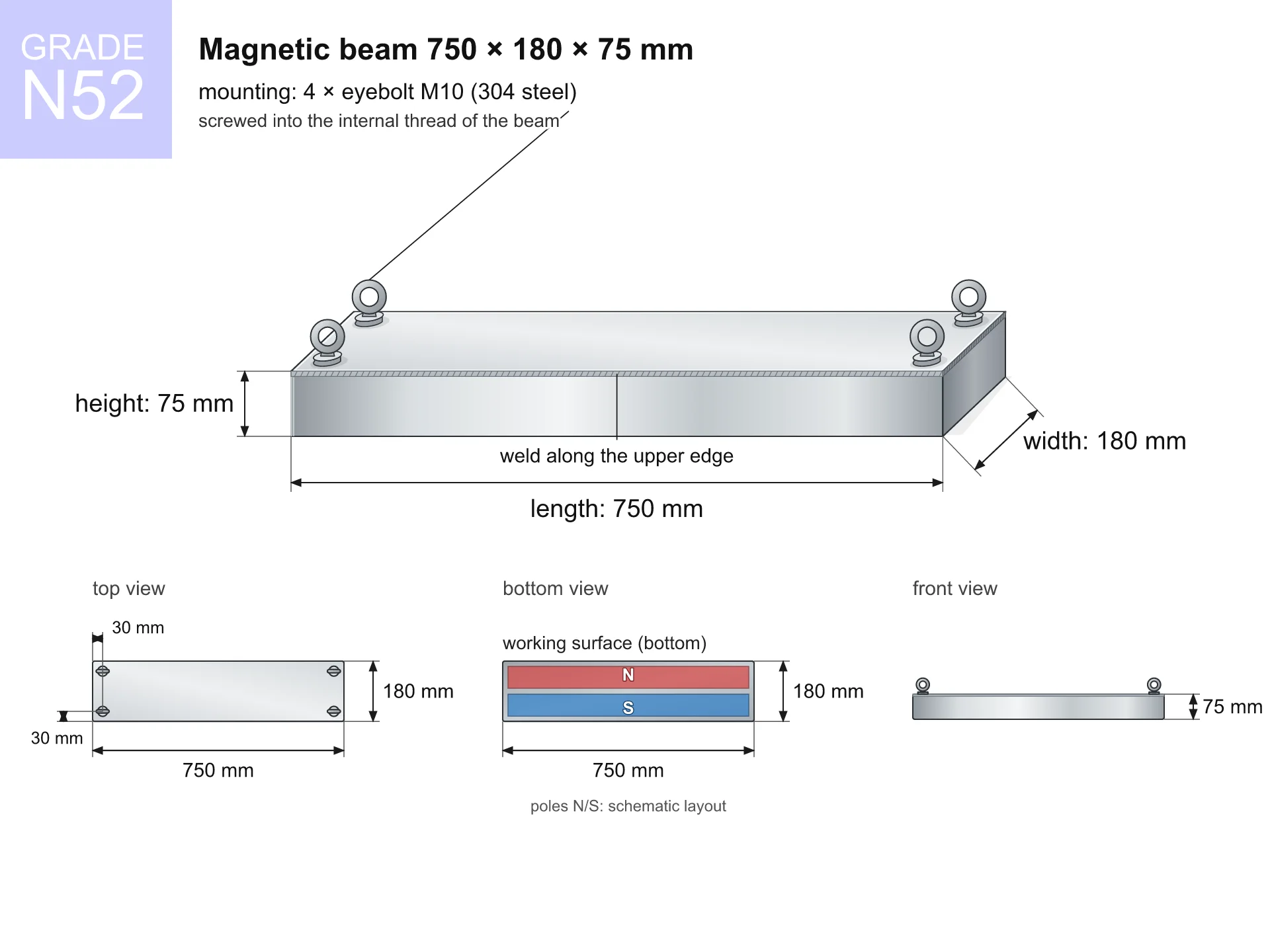
BM 550x180x75 [M10x4] - magnetic beam
magnetic beam
Catalog no 090573
GTIN/EAN: 5906301815655
- length
- 550 mm [±1 mm]
- Width
- 180 mm [±1 mm]
- Height
- 75 mm [±1 mm]
- Weight
- 37850 g
How we measure these parameters — certificates and measurements
4640.80 zł net / pcs
5708.18 zł with VAT (23% VAT) / pcs
bulk discounts:
Need more?Frequently asked questions
How do I choose a separator for fine contamination and check availability?
Where can I order a separator for a production line, and what should I check?
How can I verify a separator's declared magnetic parameters before purchase?
Can a magnetic beam withstand continuous work on a production line?
What roller design is suitable for a dusty environment?
How do I choose the size of a hand-held separator?
What is a hand-held separator for, and how is it different from a built-in rod?
Which separator type suits a small production plant?
Call us now
+48 888 99 98 98
alternatively let us know using
contact form
the contact section.
Specifications and structure of a neodymium magnet can be estimated using our
power calculator.
Order by 14:00 and we’ll ship today!
Technical of the product - BM 550x180x75 [M10x4] - magnetic beam
Specification / characteristics - BM 550x180x75 [M10x4] - magnetic beam
| properties | values |
|---|---|
| Cat. no. | 090573 |
| GTIN/EAN | 5906301815655 |
| Distributor | Dhit sp. z o.o. |
| Country of origin | Poland / China / Germany |
| Customs code | 85059029 |
| length | 550 mm [±1 mm] |
| Width | 180 mm [±1 mm] |
| Height | 75 mm [±1 mm] |
| Weight | 37850 g |
| Manufacturing Tolerance | ±1 mm |
Physical properties of sintered neodymium magnets Nd2Fe14B at 20°C
| properties | values | units |
|---|---|---|
| Vickers hardness | ≥550 | Hv |
| Density | ≥7.4 | g/cm3 |
| Curie Temperature TC | 310 | °C |
| Curie Temperature TF | 590 | °F |
| Specific resistance | 150 | μΩ⋅cm |
| Bending strength | 250 | MPa |
| Compressive strength | 1000~1100 | MPa |
| Thermal expansion parallel (∥) to orientation (M) | (3-4) x 10-6 | °C-1 |
| Thermal expansion perpendicular (⊥) to orientation (M) | -(1-3) x 10-6 | °C-1 |
| Young's modulus | 1.7 x 10⁴ | kg/mm² |
Material specification
| iron (Fe) | 64% – 68% |
| neodymium (Nd) | 29% – 32% |
| boron (B) | 1.1% – 1.2% |
| dysprosium (Dy) | 0.5% – 2.0% |
| coating (Ni-Cu-Ni) | < 0.05% |
Environmental data
| recyclability (EoL) | 100% |
| recycled raw materials | ~10% (pre-cons) |
| carbon footprint | low / zredukowany |
| waste code (EWC) | 16 02 16 |
Other proposals

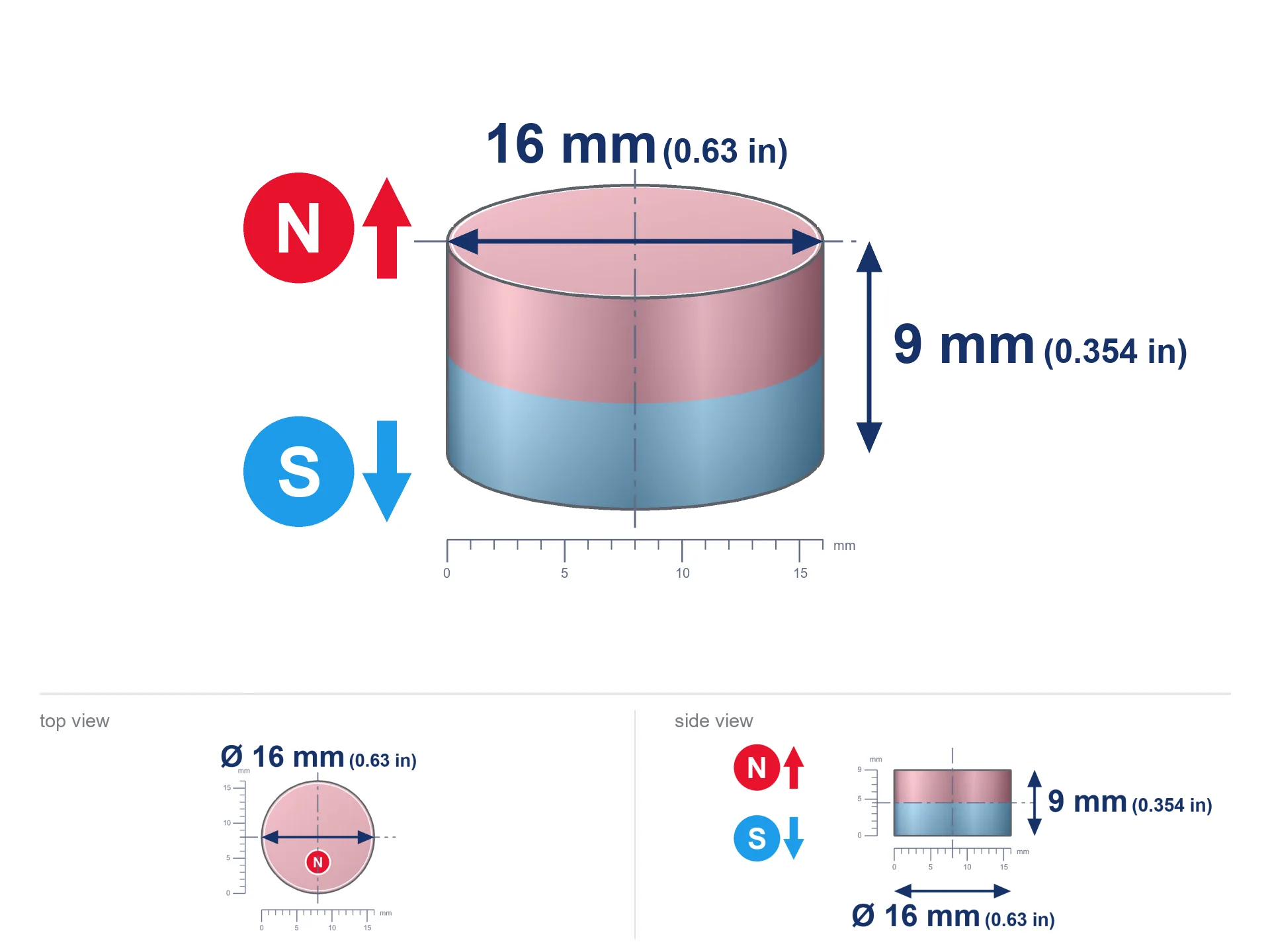
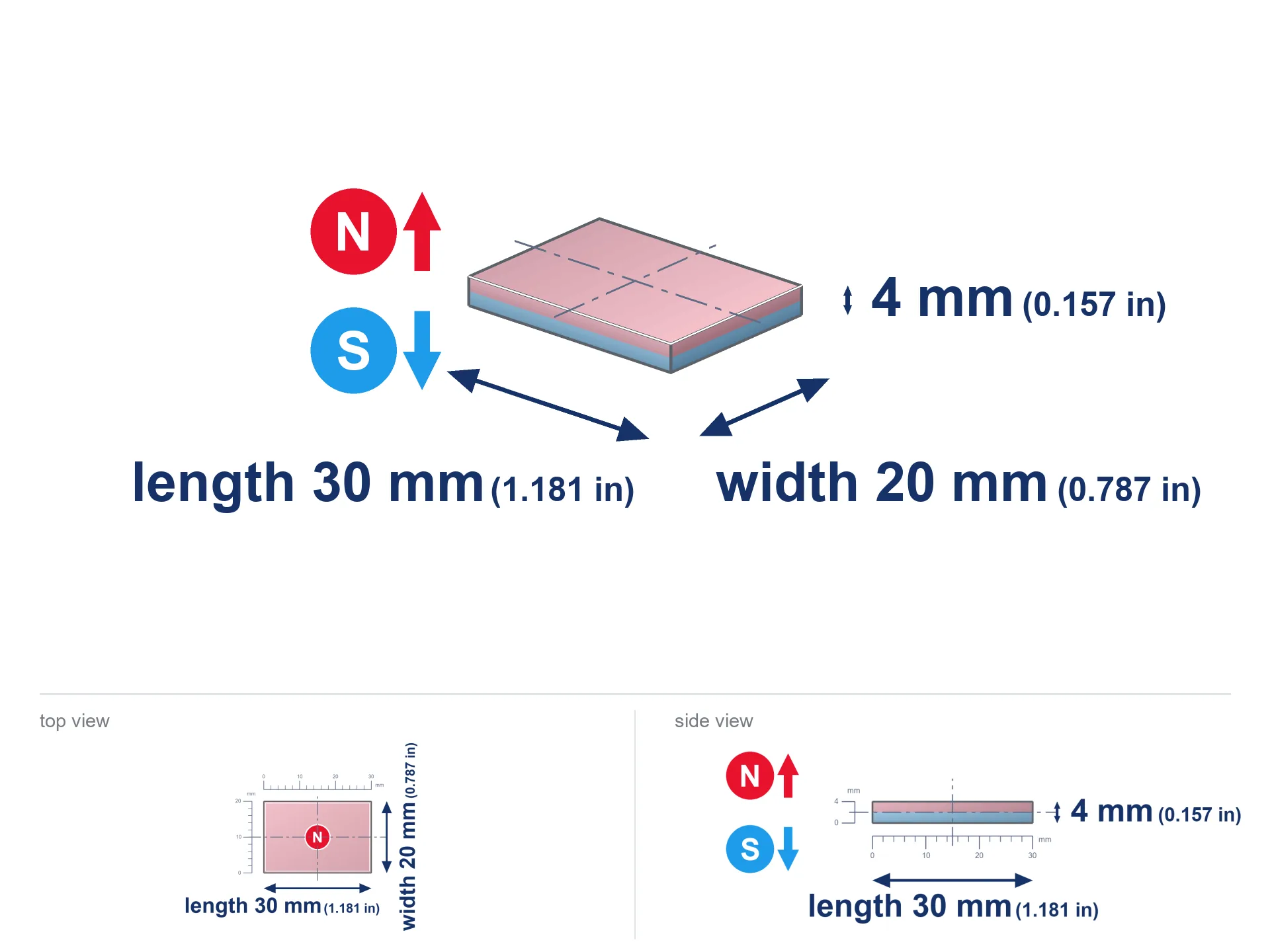
Pros as well as cons of Nd2Fe14B magnets.
Strengths
- They do not lose magnetism, even after nearly 10 years – the drop in lifting capacity is only ~1% (according to tests),
- Magnets effectively protect themselves against demagnetization caused by foreign field sources,
- A magnet with a smooth gold surface is more attractive,
- Magnets are distinguished by maximum magnetic induction on the active area,
- Thanks to resistance to high temperature, they can operate (depending on the form) even at temperatures up to 230°C and higher...
- Considering the option of flexible forming and customization to specialized projects, NdFeB magnets can be modeled in a wide range of geometric configurations, which makes them more universal,
- Fundamental importance in future technologies – they are utilized in HDD drives, brushless drives, diagnostic systems, as well as industrial machines.
- Compactness – despite small sizes they offer powerful magnetic field, making them ideal for precision applications
Cons
- At strong impacts they can crack, therefore we recommend placing them in strong housings. A metal housing provides additional protection against damage, as well as increases the magnet's durability.
- Heat sensitivity: observe the temperature specified for this product. Overheating may permanently weaken the magnet.
- Due to the susceptibility of magnets to corrosion in a humid environment, we recommend using waterproof magnets made of rubber, plastic or other material resistant to moisture, in case of application outdoors
- We recommend a housing - magnetic mechanism, due to difficulties in creating nuts inside the magnet and complex forms.
- Potential hazard to health – tiny shards of magnets are risky, in case of ingestion, which becomes key in the context of child safety. Furthermore, small elements of these devices are able to complicate diagnosis medical in case of swallowing.
- Higher cost of purchase is one of the disadvantages compared to ceramic magnets, especially in budget applications
Pull force analysis
Optimal lifting capacity of a neodymium magnet – what contributes to it?
- using a sheet made of low-carbon steel, serving as a ideal flux conductor
- whose transverse dimension reaches at least 10 mm
- with an ground touching surface
- with zero gap (without coatings)
- for force acting at a right angle (pull-off, not shear)
- in temp. approx. 20°C
Key elements affecting lifting force
- Space between surfaces – every millimeter of separation (caused e.g. by varnish or unevenness) drastically reduces the pulling force, often by half at just 0.5 mm.
- Load vector – maximum parameter is reached only during pulling at a 90° angle. The shear force of the magnet along the plate is usually many times smaller (approx. 1/5 of the lifting capacity).
- Steel thickness – insufficiently thick sheet causes magnetic saturation, causing part of the flux to be escaped to the other side.
- Material composition – different alloys attracts identically. High carbon content worsen the interaction with the magnet.
- Plate texture – smooth surfaces guarantee perfect abutment, which increases field saturation. Uneven metal reduce efficiency.
- Thermal environment – heating the magnet results in weakening of force. Check the thermal limit for a given model.
Lifting capacity testing was performed on plates with a smooth surface of optimal thickness, under a perpendicular pulling force, however under parallel forces the load capacity is reduced by as much as 75%. Moreover, even a slight gap between the magnet and the plate reduces the holding force.
Precautions when working with neodymium magnets
Do not underestimate power
Before starting, read the rules. Uncontrolled attraction can break the magnet or hurt your hand. Be predictive.
Machining danger
Powder produced during grinding of magnets is combustible. Do not drill into magnets without proper cooling and knowledge.
Choking Hazard
Only for adults. Tiny parts pose a choking risk, leading to serious injuries. Store away from kids and pets.
Threat to navigation
A powerful magnetic field disrupts the operation of compasses in smartphones and navigation systems. Maintain magnets near a smartphone to prevent damaging the sensors.
Protect data
Equipment safety: Strong magnets can ruin payment cards and delicate electronics (heart implants, hearing aids, mechanical watches).
Thermal limits
Do not exceed the maximum operating temperature stated in the specifications of the particular product. The limit depends on the material, geometry and operating arrangement; there is no single threshold for all neodymium magnets. Overheating can permanently weaken a magnet.
Metal Allergy
It is widely known that the nickel plating (standard magnet coating) is a common allergen. If you have an allergy, refrain from touching magnets with bare hands and opt for coated magnets.
Finger safety
Mind your fingers. Two large magnets will snap together instantly with a force of several hundred kilograms, destroying everything in their path. Exercise extreme caution!
Health Danger
Life threat: Strong magnets can turn off heart devices and defibrillators. Stay away if you have electronic implants.
Beware of splinters
Beware of splinters. Magnets can explode upon violent connection, launching sharp fragments into the air. Eye protection is mandatory.
Tabela kosztu i czasu dostawy
Płatność przed wysyłką:

GLS kurier
Przesyłka będzie u Ciebie za 2-3 dni
14.99 ZŁ

InPost Paczkomaty 24/7
Przesyłka będzie u Ciebie za 1-2 dni
12.30 ZŁ
Płatność przy odbiorze (pobranie):
GLS kurier
Przesyłka będzie u Ciebie za 1-2 dni
23.00 ZŁ