

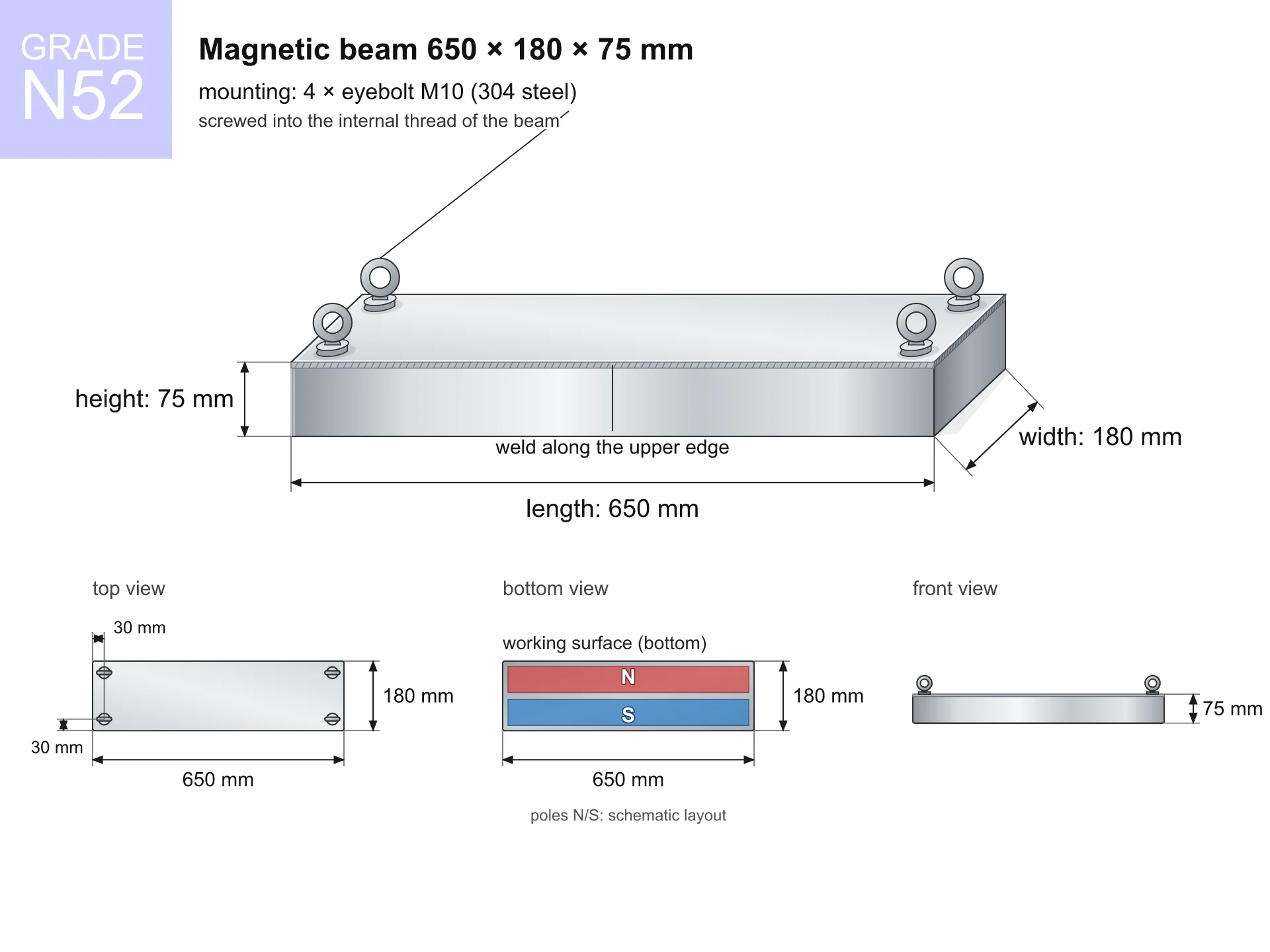
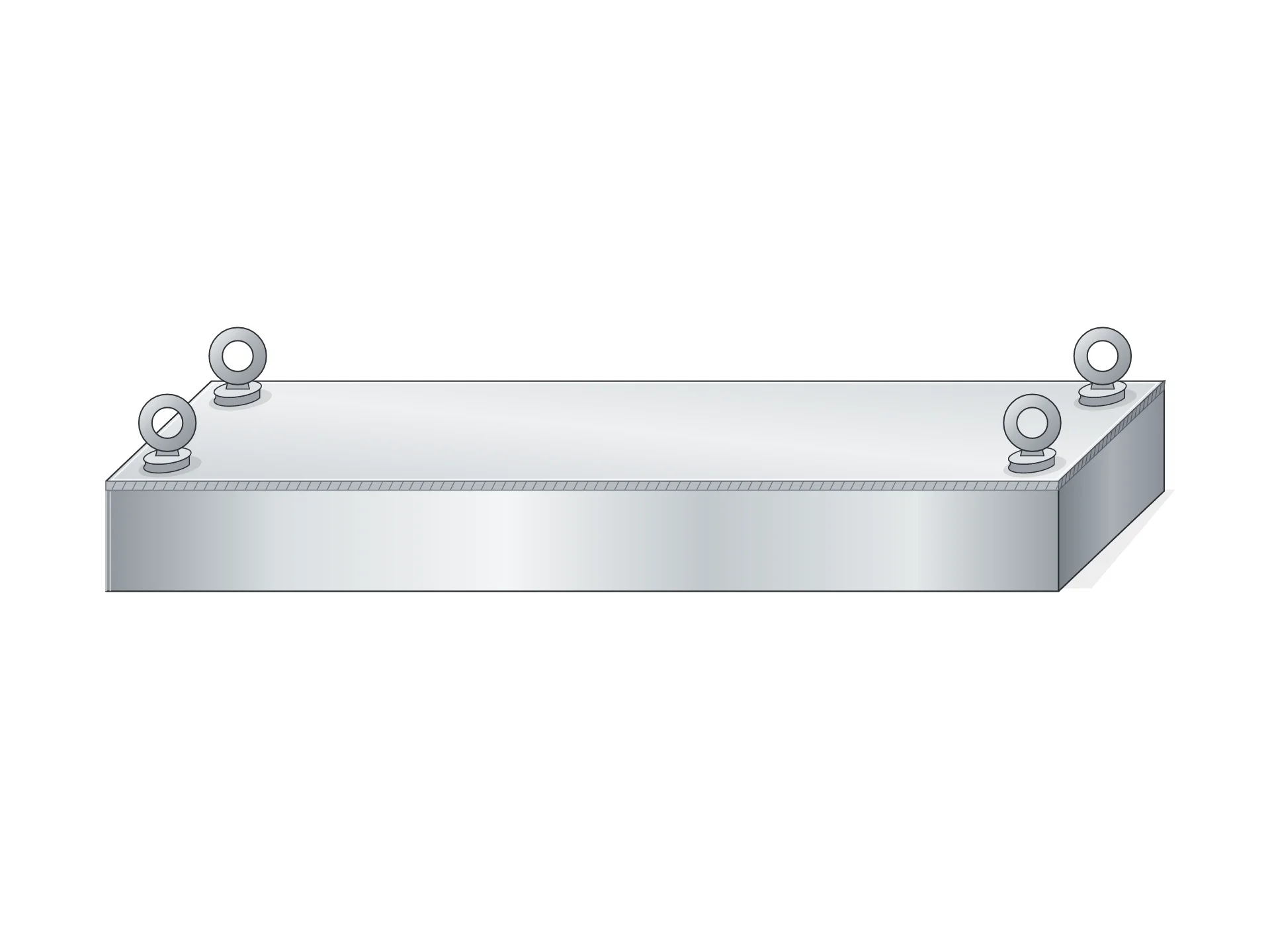
BM 650x180x75 [M10x4] - magnetic beam
magnetic beam
Catalog no 090574
GTIN/EAN: 5906301815662
- length
- 650 mm [±1 mm]
- Width
- 180 mm [±1 mm]
- Height
- 75 mm [±1 mm]
- Weight
- 44750 g
How we measure these parameters — certificates and measurements
6184.90 zł net / pcs
7607.43 zł with VAT (23% VAT) / pcs
bulk discounts:
Need more?Frequently asked questions
How do I choose a separator for fine contamination and check availability?
Where can I order a separator for a production line, and what should I check?
How can I verify a separator's declared magnetic parameters before purchase?
Can a magnetic beam withstand continuous work on a production line?
What roller design is suitable for a dusty environment?
How do I choose the size of a hand-held separator?
What is a hand-held separator for, and how is it different from a built-in rod?
Which separator type suits a small production plant?
Call us now
+48 888 99 98 98
alternatively let us know using
contact form
the contact section.
Specifications and structure of a neodymium magnet can be estimated using our
power calculator.
Order by 14:00 and we’ll ship today!
Technical parameters of the product - BM 650x180x75 [M10x4] - magnetic beam
Specification / characteristics - BM 650x180x75 [M10x4] - magnetic beam
| properties | values |
|---|---|
| Cat. no. | 090574 |
| GTIN/EAN | 5906301815662 |
| Distributor | Dhit sp. z o.o. |
| Country of origin | Poland / China / Germany |
| Customs code | 85059029 |
| length | 650 mm [±1 mm] |
| Width | 180 mm [±1 mm] |
| Height | 75 mm [±1 mm] |
| Weight | 44750 g |
| Manufacturing Tolerance | ±1 mm |
Physical properties of sintered neodymium magnets Nd2Fe14B at 20°C
| properties | values | units |
|---|---|---|
| Vickers hardness | ≥550 | Hv |
| Density | ≥7.4 | g/cm3 |
| Curie Temperature TC | 310 | °C |
| Curie Temperature TF | 590 | °F |
| Specific resistance | 150 | μΩ⋅cm |
| Bending strength | 250 | MPa |
| Compressive strength | 1000~1100 | MPa |
| Thermal expansion parallel (∥) to orientation (M) | (3-4) x 10-6 | °C-1 |
| Thermal expansion perpendicular (⊥) to orientation (M) | -(1-3) x 10-6 | °C-1 |
| Young's modulus | 1.7 x 10⁴ | kg/mm² |
Elemental analysis
| iron (Fe) | 64% – 68% |
| neodymium (Nd) | 29% – 32% |
| boron (B) | 1.1% – 1.2% |
| dysprosium (Dy) | 0.5% – 2.0% |
| coating (Ni-Cu-Ni) | < 0.05% |
Environmental data
| recyclability (EoL) | 100% |
| recycled raw materials | ~10% (pre-cons) |
| carbon footprint | low / zredukowany |
| waste code (EWC) | 16 02 16 |
See also products

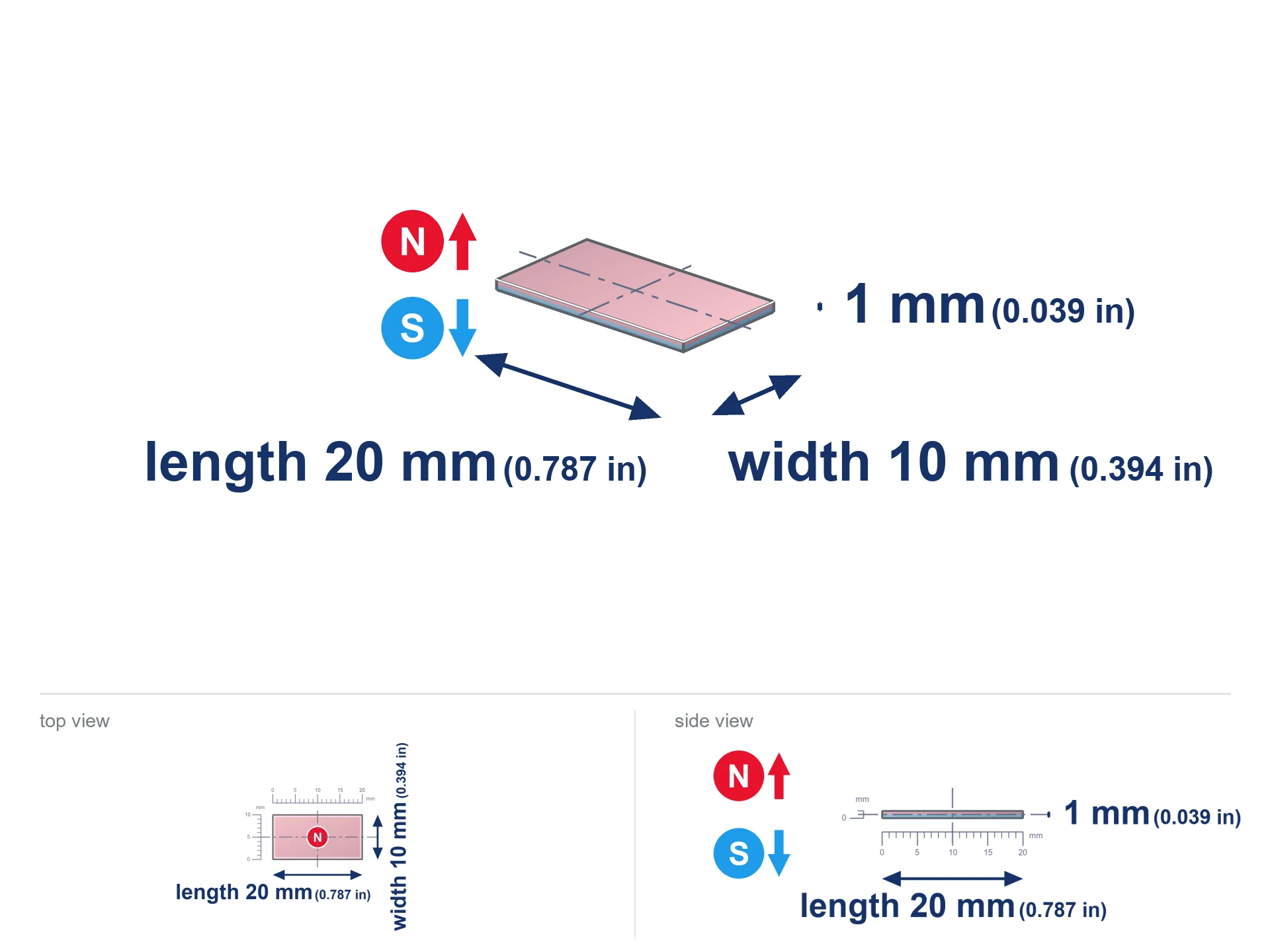
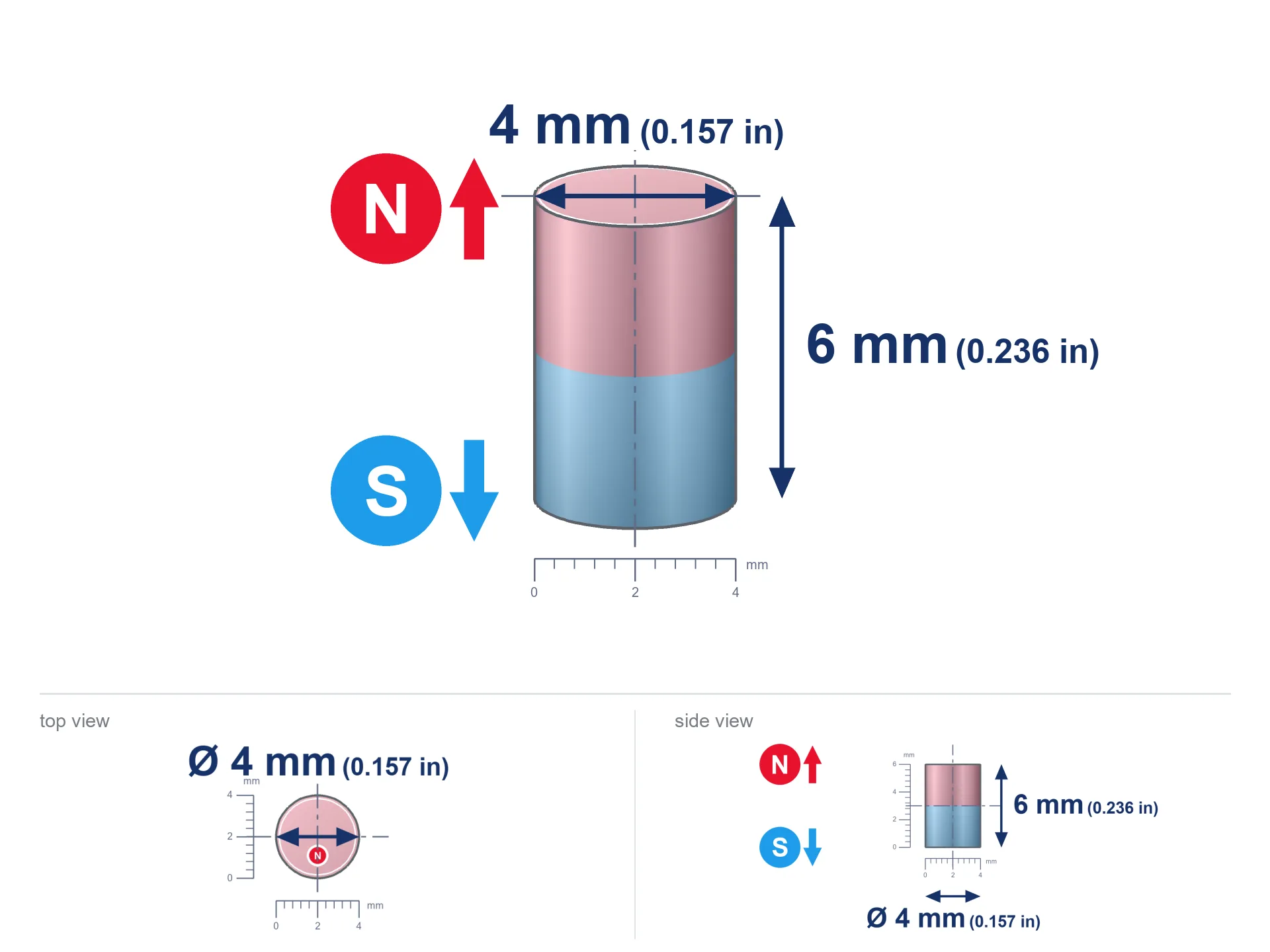
Advantages as well as disadvantages of Nd2Fe14B magnets.
Pros
- They retain magnetic properties for almost ten years – the drop is just ~1% (according to analyses),
- They are resistant to demagnetization induced by external disturbances,
- By covering with a decorative layer of nickel, the element acquires an professional look,
- Neodymium magnets ensure maximum magnetic induction on a contact point, which allows for strong attraction,
- Through (adequate) combination of ingredients, they can achieve high thermal strength, allowing for functioning at temperatures approaching 230°C and above...
- Thanks to the option of flexible molding and customization to custom needs, magnetic components can be manufactured in a variety of forms and dimensions, which makes them more universal,
- Significant place in high-tech industry – they are utilized in magnetic memories, motor assemblies, diagnostic systems, and technologically advanced constructions.
- Thanks to their power density, small magnets offer high operating force, occupying minimum space,
Disadvantages
- To avoid cracks upon strong impacts, we recommend using special steel holders. Such a solution protects the magnet and simultaneously improves its durability.
- Heat sensitivity: observe the temperature specified for this product. Overheating may permanently weaken the magnet.
- Due to the susceptibility of magnets to corrosion in a humid environment, we recommend using waterproof magnets made of rubber, plastic or other material immune to moisture, in case of application outdoors
- Due to limitations in realizing threads and complicated shapes in magnets, we propose using a housing - magnetic mount.
- Health risk to health – tiny shards of magnets are risky, in case of ingestion, which becomes key in the aspect of protecting the youngest. Additionally, small elements of these products are able to disrupt the diagnostic process medical after entering the body.
- High unit price – neodymium magnets have a higher price than other types of magnets (e.g. ferrite), which can limit application in large quantities
Pull force analysis
Maximum lifting capacity of the magnet – what affects it?
- using a sheet made of mild steel, acting as a ideal flux conductor
- possessing a massiveness of at least 10 mm to ensure full flux closure
- with an ideally smooth contact surface
- with total lack of distance (no coatings)
- under vertical application of breakaway force (90-degree angle)
- at standard ambient temperature
Practical aspects of lifting capacity – factors
- Gap between surfaces – every millimeter of distance (caused e.g. by veneer or dirt) diminishes the magnet efficiency, often by half at just 0.5 mm.
- Load vector – highest force is available only during pulling at a 90° angle. The resistance to sliding of the magnet along the surface is usually several times lower (approx. 1/5 of the lifting capacity).
- Element thickness – to utilize 100% power, the steel must be adequately massive. Thin sheet restricts the attraction force (the magnet "punches through" it).
- Material type – the best choice is high-permeability steel. Stainless steels may have worse magnetic properties.
- Smoothness – ideal contact is obtained only on polished steel. Rough texture create air cushions, weakening the magnet.
- Thermal conditions – neodymium magnets have a negative temperature coefficient. At higher temperatures they lose power, and at low temperatures gain strength (up to a certain limit).
Lifting capacity testing was conducted on plates with a smooth surface of optimal thickness, under perpendicular forces, whereas under shearing force the lifting capacity is smaller. Additionally, even a minimal clearance between the magnet’s surface and the plate decreases the lifting capacity.
Safe handling of NdFeB magnets
Medical implants
Warning for patients: Strong magnetic fields affect electronics. Keep at least 30 cm distance or request help to work with the magnets.
Maximum temperature
Do not exceed the maximum operating temperature stated in the specifications of the particular product. The limit depends on the material, geometry and operating arrangement; there is no single threshold for all neodymium magnets. Overheating can permanently weaken a magnet.
Powerful field
Handle with care. Neodymium magnets act from a long distance and connect with huge force, often quicker than you can react.
Keep away from computers
Very strong magnetic fields can corrupt files on credit cards, hard drives, and other magnetic media. Keep a distance of at least 10 cm.
Nickel allergy
Some people have a sensitization to nickel, which is the standard coating for NdFeB magnets. Frequent touching can result in an allergic reaction. We strongly advise wear protective gloves.
Finger safety
Watch your fingers. Two powerful magnets will join instantly with a force of several hundred kilograms, crushing anything in their path. Be careful!
Machining danger
Machining of NdFeB material poses a fire hazard. Neodymium dust oxidizes rapidly with oxygen and is difficult to extinguish.
GPS Danger
Note: rare earth magnets generate a field that disrupts sensitive sensors. Maintain a safe distance from your mobile, tablet, and GPS.
Do not give to children
NdFeB magnets are not suitable for play. Eating a few magnets may result in them connecting inside the digestive tract, which constitutes a critical condition and requires urgent medical intervention.
Magnets are brittle
Protect your eyes. Magnets can fracture upon violent connection, launching shards into the air. Wear goggles.
Tabela kosztu i czasu dostawy
Płatność przed wysyłką:

GLS kurier
Przesyłka będzie u Ciebie za 2-3 dni
14.99 ZŁ

InPost Paczkomaty 24/7
Przesyłka będzie u Ciebie za 1-2 dni
12.30 ZŁ
Płatność przy odbiorze (pobranie):
GLS kurier
Przesyłka będzie u Ciebie za 1-2 dni
23.00 ZŁ