
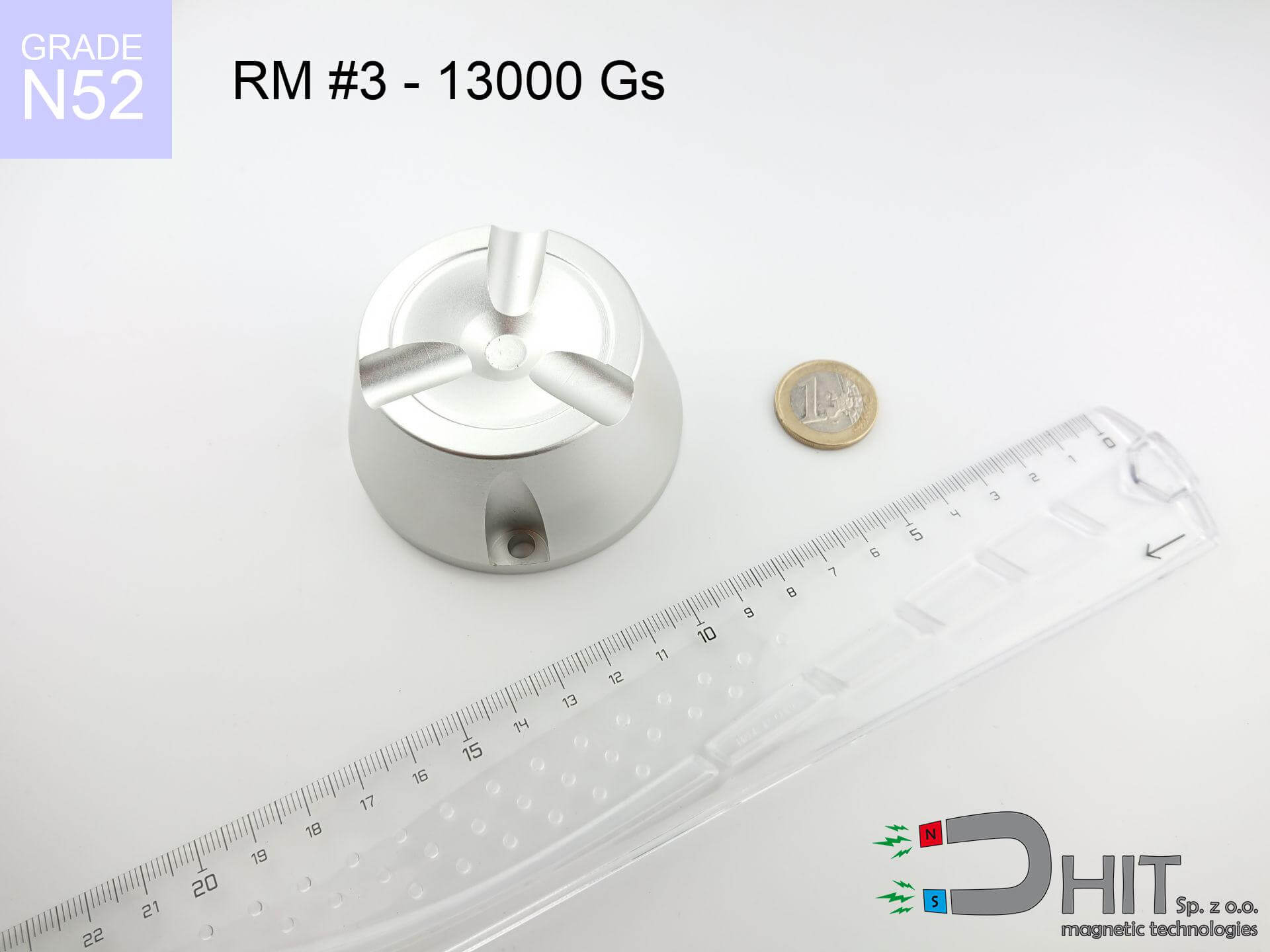
RM R3 - 10000 Gs / N52 - magnetic distributor
magnetic distributor
Catalog no 280253
GTIN/EAN: 5906301815723
- Weight
- 0.01 g
- Magnetization Direction
- ↑ axial
- Coating
- [NiCuNi] Nickel
How we measure these parameters — certificates and measurements
100.00 zł net / pcs
123.00 zł with VAT (23% VAT) / pcs
bulk discounts:
Need more?Frequently asked questions
What is the difference between a 13,000 Gs and a 5,000 Gs detacher, and which one should I choose for a clothing shop?
Will one detacher open every security tag we use in the shop?
How do I fix the detacher to the counter so it does not move around or go missing?
Will the detacher damage payment cards, phones or the payment terminal next to the till?
How do I look after a detacher, and does its strength fade over time?
How many till points should we equip, and is a spare unit worth keeping?
Who are detachers sold to, and what is needed to place an order?
Guides from the knowledge base
Call us now
+48 888 99 98 98
alternatively let us know using
contact form
the contact section.
Specifications and structure of a neodymium magnet can be estimated using our
power calculator.
Order by 14:00 and we’ll ship today!
Technical - RM R3 - 10000 Gs / N52 - magnetic distributor
Specification / characteristics - RM R3 - 10000 Gs / N52 - magnetic distributor
| properties | values |
|---|---|
| Cat. no. | 280253 |
| GTIN/EAN | 5906301815723 |
| Distributor | Dhit sp. z o.o. |
| Country of origin | Poland / China / Germany |
| Customs code | 85059029 |
| Weight | 0.01 g |
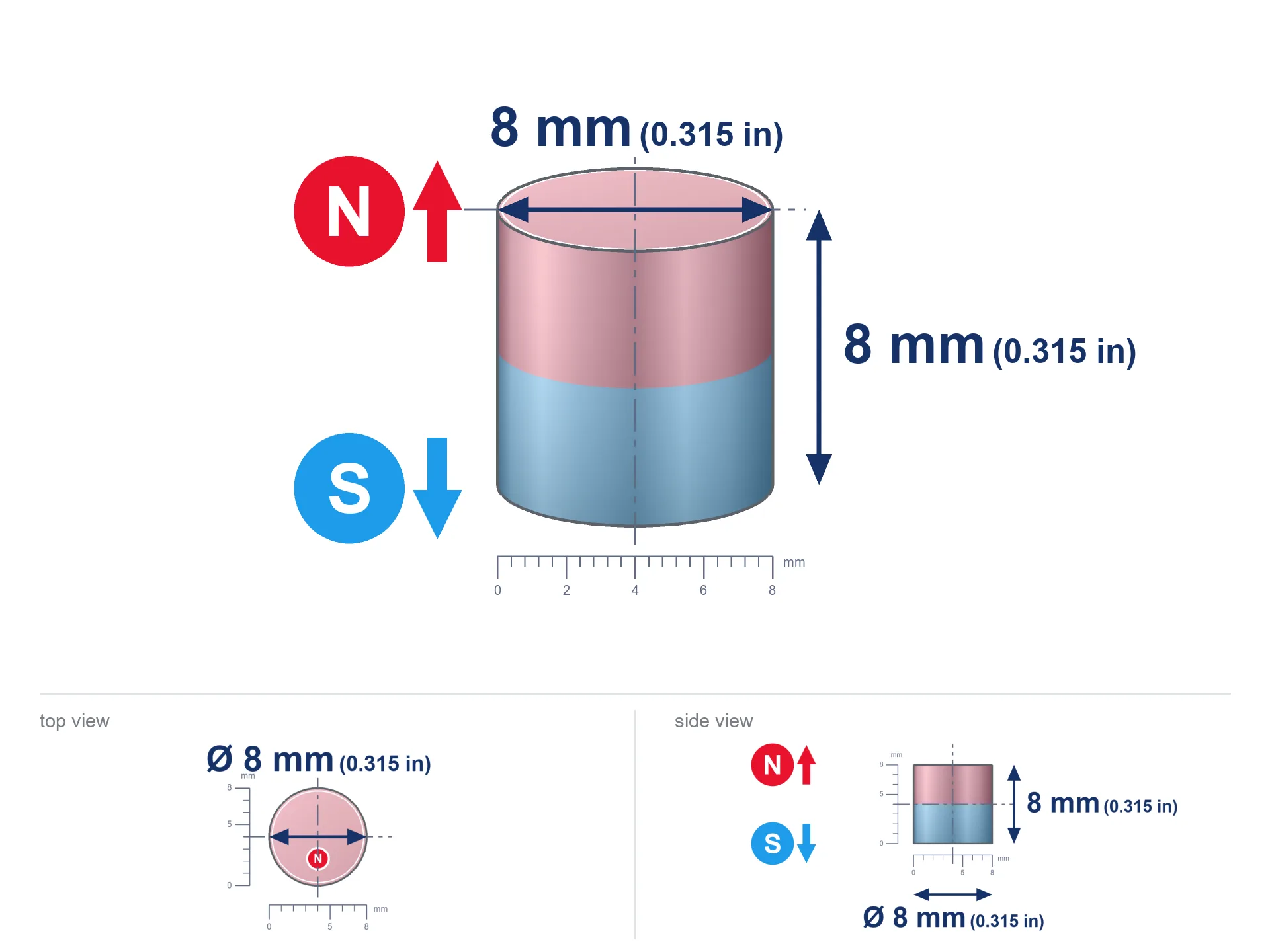
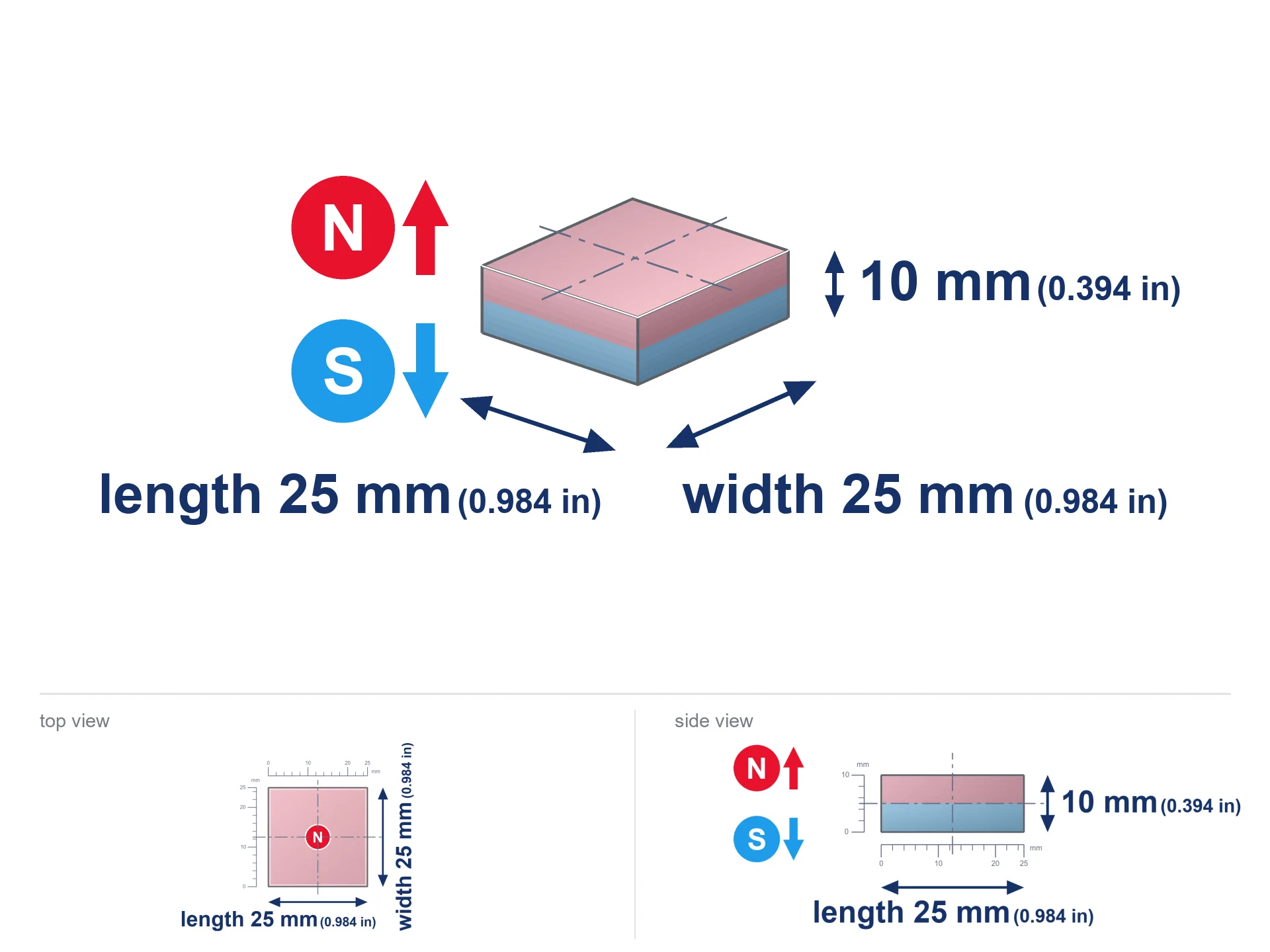
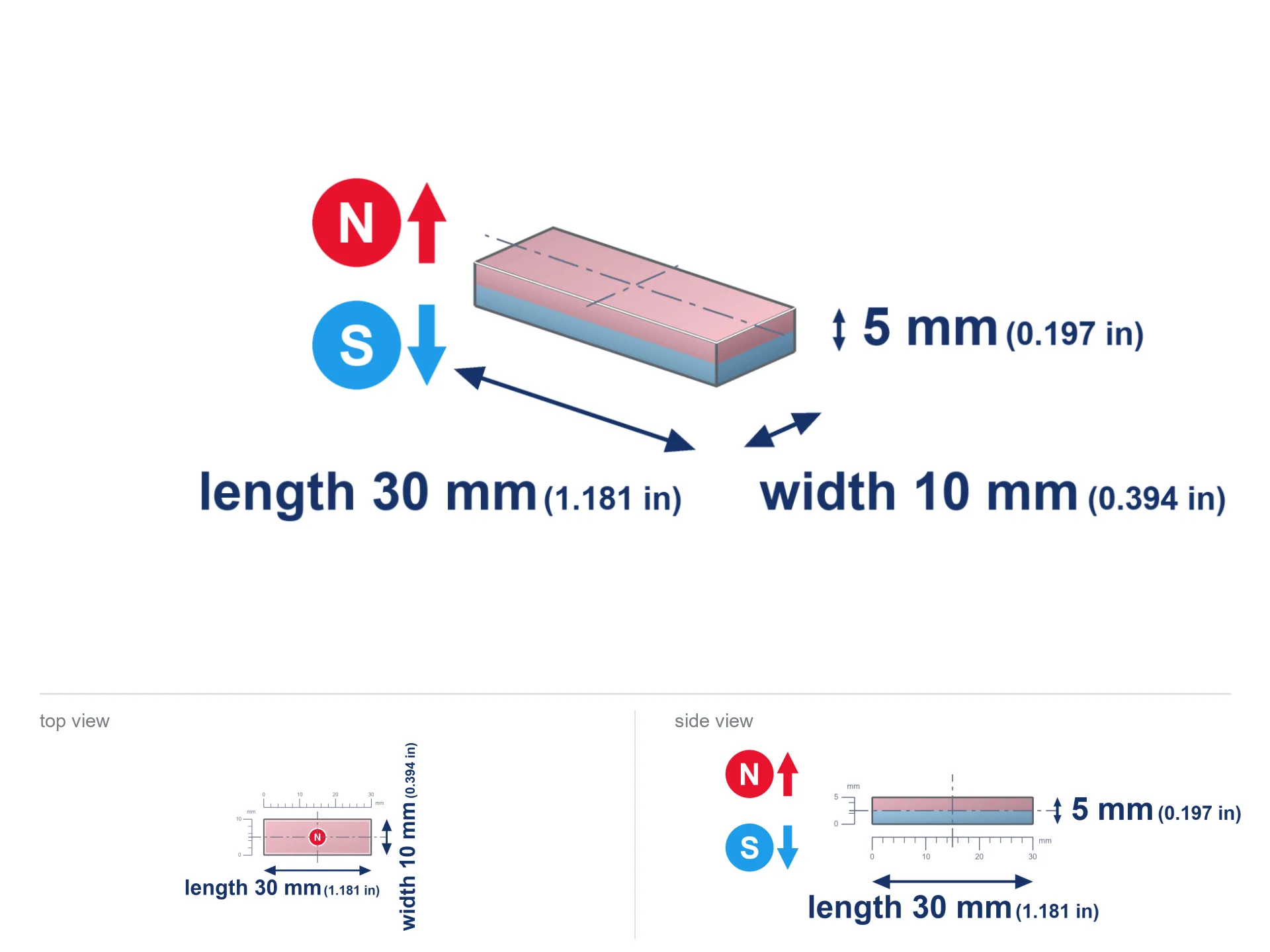
| Magnetization Direction | ↑ axial |
| Coating | [NiCuNi] Nickel |
| Manufacturing Tolerance | ±1 mm |
Magnetic properties of material N52
| properties | values | units |
|---|---|---|
| Remanence Br ? | 14.2-14.7 | kGs |
| Remanence Br ? | 1420-1470 | mT |
| Coercivity bHc ? | 10.8-12.5 | kOe |
| Coercivity bHc ? | 860-995 | kA/m |
| Intrinsic coercivity iHc | ≥ 12 | kOe |
| Intrinsic coercivity iHc | ≥ 955 | kA/m |
| Energy product BHmax ? | 48-53 | BH max MGOe |
| Energy product BHmax ? | 380-422 | BH max KJ/m |
| Maximum working temperature ? | ≤ 60 | °C |
Physical properties of sintered neodymium magnets Nd2Fe14B at 20°C
| properties | values | units |
|---|---|---|
| Vickers hardness | ≥550 | Hv |
| Density | ≥7.4 | g/cm3 |
| Curie Temperature TC | 310 | °C |
| Curie Temperature TF | 590 | °F |
| Specific resistance | 150 | μΩ⋅cm |
| Bending strength | 250 | MPa |
| Compressive strength | 1000~1100 | MPa |
| Thermal expansion parallel (∥) to orientation (M) | (3-4) x 10-6 | °C-1 |
| Thermal expansion perpendicular (⊥) to orientation (M) | -(1-3) x 10-6 | °C-1 |
| Young's modulus | 1.7 x 10⁴ | kg/mm² |
Elemental analysis
| iron (Fe) | 64% – 68% |
| neodymium (Nd) | 29% – 32% |
| boron (B) | 1.1% – 1.2% |
| dysprosium (Dy) | 0.5% – 2.0% |
| coating (Ni-Cu-Ni) | < 0.05% |
Ecology and recycling (GPSR)
| recyclability (EoL) | 100% |
| recycled raw materials | ~10% (pre-cons) |
| carbon footprint | low / zredukowany |
| waste code (EWC) | 16 02 16 |
See also deals
Advantages as well as disadvantages of rare earth magnets.
Benefits
- Their power is maintained, and after around ten years it drops only by ~1% (according to research),
- They possess excellent resistance to magnetism drop as a result of external magnetic sources,
- Thanks to the reflective finish, the coating of Ni-Cu-Ni, gold, or silver gives an visually attractive appearance,
- The surface of neodymium magnets generates a intense magnetic field – this is a key feature,
- Made from properly selected components, these magnets show impressive resistance to high heat, enabling them to function (depending on their shape) at temperatures up to 230°C and above...
- In view of the possibility of precise forming and customization to specialized requirements, NdFeB magnets can be created in a wide range of forms and dimensions, which expands the range of possible applications,
- Universal use in advanced technology sectors – they are used in data components, electric motors, precision medical tools, as well as multitasking production systems.
- Relatively small size with high pulling force – neodymium magnets offer strong magnetic field in compact dimensions, which allows their use in compact constructions
Cons
- Brittleness is one of their disadvantages. Upon strong impact they can fracture. We advise keeping them in a strong case, which not only protects them against impacts but also increases their durability
- Do not exceed this material temperature limit: 60°C. Overheating may permanently weaken the magnet.
- They rust in a humid environment - during use outdoors we advise using waterproof magnets e.g. in rubber, plastic
- We recommend cover - magnetic mechanism, due to difficulties in producing nuts inside the magnet and complex forms.
- Potential hazard to health – tiny shards of magnets pose a threat, in case of ingestion, which is particularly important in the context of child safety. Additionally, tiny parts of these products can be problematic in diagnostics medical when they are in the body.
- Due to complex production process, their price exceeds standard values,
Holding force characteristics
Highest magnetic holding force – what it depends on?
- using a plate made of low-carbon steel, functioning as a circuit closing element
- whose thickness equals approx. 10 mm
- characterized by even structure
- with zero gap (without impurities)
- for force acting at a right angle (pull-off, not shear)
- at ambient temperature approx. 20 degrees Celsius
Determinants of lifting force in real conditions
- Air gap (betwixt the magnet and the plate), because even a microscopic distance (e.g. 0.5 mm) results in a reduction in lifting capacity by up to 50% (this also applies to paint, corrosion or dirt).
- Pull-off angle – note that the magnet has greatest strength perpendicularly. Under shear forces, the holding force drops drastically, often to levels of 20-30% of the maximum value.
- Base massiveness – too thin steel does not close the flux, causing part of the flux to be escaped to the other side.
- Steel type – mild steel attracts best. Alloy admixtures lower magnetic properties and holding force.
- Surface condition – ground elements guarantee perfect abutment, which improves field saturation. Uneven metal weaken the grip.
- Thermal factor – high temperature reduces magnetic field. Too high temperature can permanently demagnetize the magnet.
Lifting capacity testing was performed on a smooth plate of suitable thickness, under perpendicular forces, whereas under parallel forces the lifting capacity is smaller. Moreover, even a slight gap between the magnet’s surface and the plate decreases the lifting capacity.
Safe handling of neodymium magnets
Eye protection
Despite metallic appearance, neodymium is delicate and not impact-resistant. Do not hit, as the magnet may shatter into sharp, dangerous pieces.
Keep away from children
Only for adults. Tiny parts can be swallowed, causing intestinal necrosis. Store away from kids and pets.
Implant safety
For implant holders: Powerful magnets affect medical devices. Keep minimum 30 cm distance or request help to handle the magnets.
Serious injuries
Big blocks can crush fingers instantly. Under no circumstances put your hand betwixt two strong magnets.
Precision electronics
An intense magnetic field disrupts the operation of magnetometers in phones and GPS navigation. Do not bring magnets near a smartphone to prevent damaging the sensors.
Sensitization to coating
It is widely known that the nickel plating (the usual finish) is a common allergen. For allergy sufferers, avoid direct skin contact or opt for coated magnets.
Demagnetization risk
Do not exceed the maximum operating temperature stated in the specifications of the particular product. The limit depends on the material, geometry and operating arrangement; there is no single threshold for all neodymium magnets. Overheating can permanently weaken a magnet.
Immense force
Handle with care. Neodymium magnets attract from a long distance and connect with massive power, often quicker than you can react.
Safe distance
Device Safety: Strong magnets can ruin data carriers and delicate electronics (pacemakers, medical aids, timepieces).
Dust is flammable
Powder generated during cutting of magnets is flammable. Avoid drilling into magnets without proper cooling and knowledge.
Tabela kosztu i czasu dostawy
Płatność przed wysyłką:

GLS kurier
Przesyłka będzie u Ciebie za 2-3 dni
14.99 ZŁ

InPost Paczkomaty 24/7
Przesyłka będzie u Ciebie za 1-2 dni
12.30 ZŁ
Płatność przy odbiorze (pobranie):
GLS kurier
Przesyłka będzie u Ciebie za 1-2 dni
23.00 ZŁ