

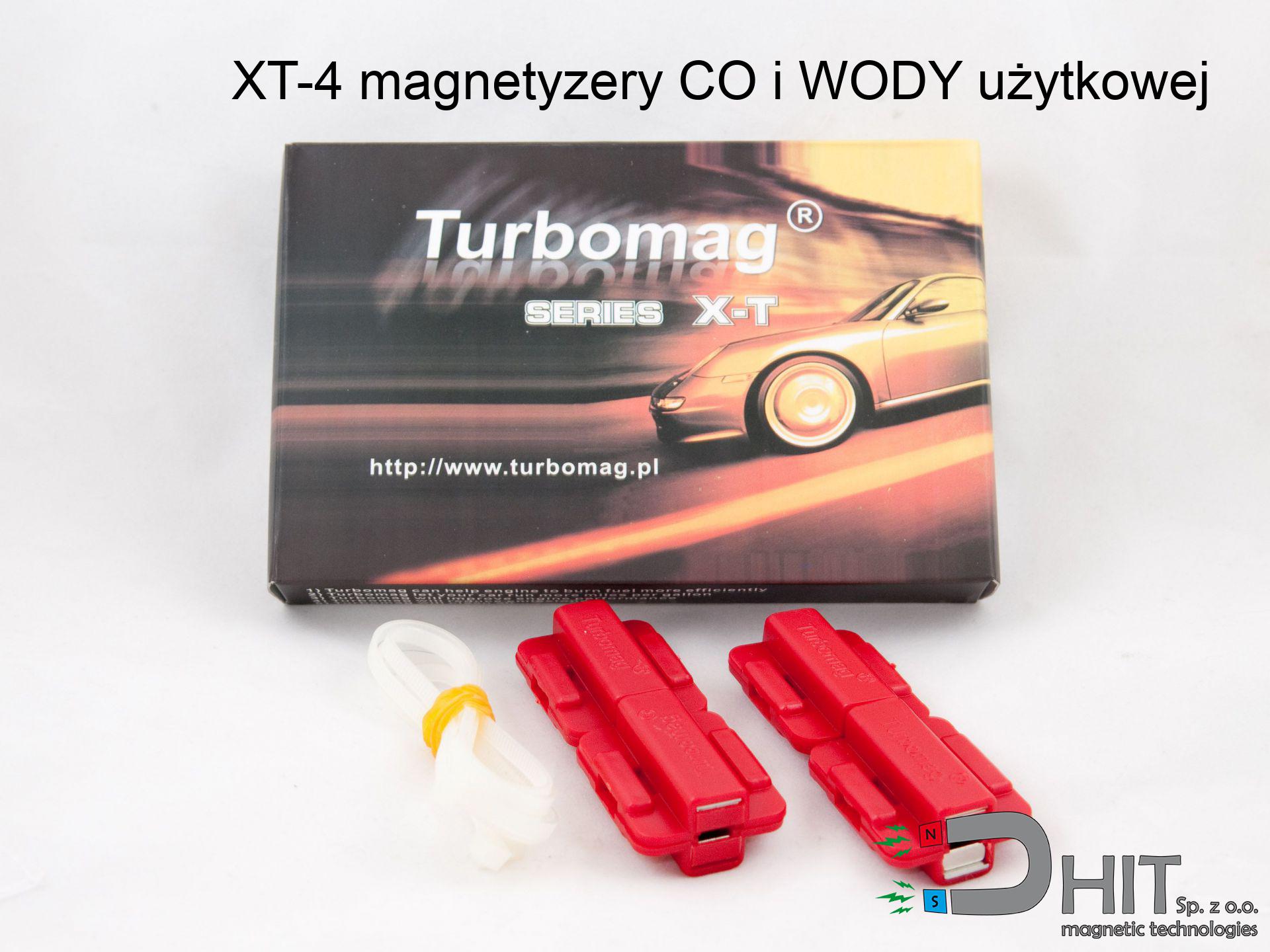
XT-4 magnetyzery CO i WODY użytkowej - XT-4 magnetizer
XT-4 magnetizer
Catalog no 050245
GTIN/EAN: 5906301812395
80.48 zł net / pcs
98.99 zł with VAT (23% VAT) / pcs
bulk discounts:
Need more?Frequently asked questions
Which Turbomag® model should I choose?
Is a magnetizer used to capture metal swarf?
How do I match a model to an installation?
Where is a magnetizer fitted?
What are the fastening parts made of?
What operating temperature is allowed?
Guides from the knowledge base
Call us now
+48 888 99 98 98
alternatively let us know using
contact form
the contact section.
Specifications and structure of a neodymium magnet can be estimated using our
power calculator.
Order by 14:00 and we’ll ship today!
Technical - XT-4 magnetyzery CO i WODY użytkowej - XT-4 magnetizer
Specification / characteristics - XT-4 magnetyzery CO i WODY użytkowej - XT-4 magnetizer
| properties | values |
|---|---|
| Cat. no. | 050245 |
| GTIN/EAN | 5906301812395 |
| Production/Distribution | Dhit sp. z o.o. |
| Country of origin | Poland / China / Germany |
| Customs code | 85059029 |
| Weight | 228 g |
| Manufacturing Tolerance | ±1 mm |
Physical properties of sintered neodymium magnets Nd2Fe14B at 20°C
| properties | values | units |
|---|---|---|
| Vickers hardness | ≥550 | Hv |
| Density | ≥7.4 | g/cm3 |
| Curie Temperature TC | 310 | °C |
| Curie Temperature TF | 590 | °F |
| Specific resistance | 150 | μΩ⋅cm |
| Bending strength | 250 | MPa |
| Compressive strength | 1000~1100 | MPa |
| Thermal expansion parallel (∥) to orientation (M) | (3-4) x 10-6 | °C-1 |
| Thermal expansion perpendicular (⊥) to orientation (M) | -(1-3) x 10-6 | °C-1 |
| Young's modulus | 1.7 x 10⁴ | kg/mm² |
Material specification
| iron (Fe) | 64% – 68% |
| neodymium (Nd) | 29% – 32% |
| boron (B) | 1.1% – 1.2% |
| dysprosium (Dy) | 0.5% – 2.0% |
| coating (Ni-Cu-Ni) | < 0.05% |
Ecology and recycling (GPSR)
| recyclability (EoL) | 100% |
| recycled raw materials | ~10% (pre-cons) |
| carbon footprint | low / zredukowany |
| waste code (EWC) | 16 02 16 |
Other deals
Strengths and weaknesses of neodymium magnets.
Benefits
- They retain full power for almost ten years – the drop is just ~1% (based on simulations),
- They are extremely resistant to demagnetization induced by presence of other magnetic fields,
- In other words, due to the metallic finish of gold, the element becomes visually attractive,
- Magnets exhibit huge magnetic induction on the working surface,
- Through (adequate) combination of ingredients, they can achieve high thermal strength, enabling operation at temperatures approaching 230°C and above...
- Thanks to versatility in constructing and the ability to customize to individual projects,
- Wide application in innovative solutions – they are commonly used in magnetic memories, drive modules, advanced medical instruments, also technologically advanced constructions.
- Thanks to their power density, small magnets offer high operating force, occupying minimum space,
Limitations
- To avoid cracks upon strong impacts, we recommend using special steel holders. Such a solution protects the magnet and simultaneously increases its durability.
- Heat sensitivity: observe the temperature specified for this product. Overheating may permanently weaken the magnet.
- Magnets exposed to a humid environment can corrode. Therefore while using outdoors, we suggest using waterproof magnets made of rubber, plastic or other material resistant to moisture
- Due to limitations in producing threads and complex shapes in magnets, we propose using cover - magnetic mechanism.
- Possible danger to health – tiny shards of magnets can be dangerous, in case of ingestion, which gains importance in the context of child health protection. Additionally, small components of these magnets can disrupt the diagnostic process medical after entering the body.
- Due to neodymium price, their price is higher than average,
Holding force characteristics
Maximum lifting force for a neodymium magnet – what contributes to it?
- with the application of a yoke made of special test steel, ensuring maximum field concentration
- whose transverse dimension equals approx. 10 mm
- with a plane free of scratches
- under conditions of gap-free contact (metal-to-metal)
- under vertical application of breakaway force (90-degree angle)
- at room temperature
Impact of factors on magnetic holding capacity in practice
- Distance – the presence of foreign body (paint, tape, gap) acts as an insulator, which lowers power rapidly (even by 50% at 0.5 mm).
- Force direction – declared lifting capacity refers to detachment vertically. When applying parallel force, the magnet exhibits much less (typically approx. 20-30% of nominal force).
- Wall thickness – thin material does not allow full use of the magnet. Part of the magnetic field penetrates through instead of generating force.
- Steel grade – the best choice is pure iron steel. Stainless steels may generate lower lifting capacity.
- Surface finish – full contact is obtained only on smooth steel. Rough texture reduce the real contact area, weakening the magnet.
- Temperature – heating the magnet causes a temporary drop of force. Check the maximum operating temperature for a given model.
Lifting capacity testing was conducted on plates with a smooth surface of suitable thickness, under a perpendicular pulling force, in contrast under shearing force the holding force is lower. Additionally, even a slight gap between the magnet and the plate decreases the load capacity.
H&S for magnets
Pinching danger
Danger of trauma: The attraction force is so immense that it can result in hematomas, crushing, and broken bones. Protective gloves are recommended.
Life threat
Life threat: Strong magnets can deactivate pacemakers and defibrillators. Do not approach if you have electronic implants.
Do not drill into magnets
Drilling and cutting of NdFeB material poses a fire risk. Magnetic powder oxidizes rapidly with oxygen and is difficult to extinguish.
Immense force
Handle with care. Rare earth magnets attract from a distance and connect with massive power, often quicker than you can react.
Magnets are brittle
Protect your eyes. Magnets can fracture upon uncontrolled impact, launching sharp fragments into the air. We recommend safety glasses.
GPS and phone interference
Note: neodymium magnets generate a field that interferes with precision electronics. Keep a separation from your mobile, device, and navigation systems.
Power loss in heat
Control the heat. Exposing the magnet above 80 degrees Celsius will ruin its magnetic structure and pulling force.
Data carriers
Device Safety: Strong magnets can ruin data carriers and delicate electronics (heart implants, hearing aids, mechanical watches).
Allergic reactions
Some people experience a contact allergy to nickel, which is the common plating for neodymium magnets. Prolonged contact can result in skin redness. We suggest use safety gloves.
Danger to the youngest
These products are not suitable for play. Eating multiple magnets can lead to them attracting across intestines, which poses a direct threat to life and requires urgent medical intervention.
Tabela kosztu i czasu dostawy
Płatność przed wysyłką:

GLS kurier
Przesyłka będzie u Ciebie za 2-3 dni
14.99 ZŁ

InPost Paczkomaty 24/7
Przesyłka będzie u Ciebie za 1-2 dni
12.30 ZŁ
Płatność przy odbiorze (pobranie):
GLS kurier
Przesyłka będzie u Ciebie za 1-2 dni
23.00 ZŁ