
![Magnetic bar SM 28x300 [2xM8] / N52](https://cdn3.dhit.pl/graphics/banners/magnet.webp "Magnetic bar SM 28x300 [2xM8] / N52")
![SM 28x300 [2xM8] / N52 - magnetic separator](https://cdn3.dhit.pl/graphics/products/sm-28x300-2xm8-paw.jpg)
SM 28x300 [2xM8] / N52 - magnetic separator
magnetic separator
Catalog no 130524
GTIN/EAN: 5906301815082
- Diameter Ø
- 28 mm [±1 mm]
- Height
- 300 mm [±1 mm]
- Weight
- 1455.1 g
- Magnetic Flux
- ~ 8 500 Gauss [±5%]
How we measure these parameters — certificates and measurements
770.00 zł net / pcs
947.10 zł with VAT (23% VAT) / pcs
bulk discounts:
Need more?Frequently asked questions
How do I choose a separator for fine contamination and check availability?
Where can I order a separator for a production line, and what should I check?
How can I verify a separator's declared magnetic parameters before purchase?
Can a magnetic beam withstand continuous work on a production line?
What roller design is suitable for a dusty environment?
How do I choose the size of a hand-held separator?
What is a hand-held separator for, and how is it different from a built-in rod?
Which separator type suits a small production plant?
Call us now
+48 888 99 98 98
alternatively let us know using
contact form
the contact section.
Specifications and structure of a neodymium magnet can be estimated using our
power calculator.
Order by 14:00 and we’ll ship today!
Technical parameters - SM 28x300 [2xM8] / N52 - magnetic separator
Specification / characteristics - SM 28x300 [2xM8] / N52 - magnetic separator
| properties | values |
|---|---|
| Cat. no. | 130524 |
| GTIN/EAN | 5906301815082 |
| Production/Distribution | Dhit sp. z o.o. |
| Country of origin | Poland / China / Germany |
| Customs code | 85059029 |
| Diameter Ø | 28 mm [±1 mm] |
| Height | 300 mm [±1 mm] |
| Weight | 1455.1 g |
| Material Type | Stainless steel AISI 304 / A2 |
| Magnetic Flux | ~ 8 500 Gauss [±5%] |
| Size/Mount Quantity | M8x2 |
| Polarity | circumferential - 11 poles |
| Casing Tube Thickness | 1 mm |
| Manufacturing Tolerance | ±1 mm |
Magnetic properties of material N52
| properties | values | units |
|---|---|---|
| Remanence Br ? | 14.2-14.7 | kGs |
| Remanence Br ? | 1420-1470 | mT |
| Coercivity bHc ? | 10.8-12.5 | kOe |
| Coercivity bHc ? | 860-995 | kA/m |
| Intrinsic coercivity iHc | ≥ 12 | kOe |
| Intrinsic coercivity iHc | ≥ 955 | kA/m |
| Energy product BHmax ? | 48-53 | BH max MGOe |
| Energy product BHmax ? | 380-422 | BH max KJ/m |
| Maximum working temperature ? | ≤ 60 | °C |
Physical properties of sintered neodymium magnets Nd2Fe14B at 20°C
| properties | values | units |
|---|---|---|
| Vickers hardness | ≥550 | Hv |
| Density | ≥7.4 | g/cm3 |
| Curie Temperature TC | 310 | °C |
| Curie Temperature TF | 590 | °F |
| Specific resistance | 150 | μΩ⋅cm |
| Bending strength | 250 | MPa |
| Compressive strength | 1000~1100 | MPa |
| Thermal expansion parallel (∥) to orientation (M) | (3-4) x 10-6 | °C-1 |
| Thermal expansion perpendicular (⊥) to orientation (M) | -(1-3) x 10-6 | °C-1 |
| Young's modulus | 1.7 x 10⁴ | kg/mm² |
Table 1: Rod construction
SM 28x300 [2xM8] / N52
| Parameter | Value | Description / Unit |
|---|---|---|
| Diameter (Ø) | 28 | mm |
| Total length | 300 | mm (L) |
| Active length | 264 | mm |
| Section count | 11 | modules |
| Dead zone | 36 | mm (2x 18mm starter) |
| Weight (est.) | ~1404 | g |
| Active area | 232 | cm² (Area) |
| Housing material | AISI 304 | 1.4301 (Inox) |
| Surface finish | Ra < 0.8 µm | Polished |
| Temp. class | 60°C | N52 |
| Force loss (at max °C) | -8.6% | Reversible loss (physics) |
| Force (calculated) | 22.7 | kg (theor.) |
| Induction (surface) | ~8 500 | Gauss (Max) |
Chart 2: Field profile (11 sections)
Chart 3: Temperature performance
Chemical composition
| iron (Fe) | 64% – 68% |
| neodymium (Nd) | 29% – 32% |
| boron (B) | 1.1% – 1.2% |
| dysprosium (Dy) | 0.5% – 2.0% |
| coating (Ni-Cu-Ni) | < 0.05% |
Ecology and recycling (GPSR)
| recyclability (EoL) | 100% |
| recycled raw materials | ~10% (pre-cons) |
| carbon footprint | low / zredukowany |
| waste code (EWC) | 16 02 16 |
Check out also deals
![SM 28x225 [2xM8] / N52 - magnetic separator](https://cdn3.dhit.pl/graphics/products/sm-28x225-2xm8-wub.jpg "SM 28x225 [2xM8] / N52 - magnetic separator")
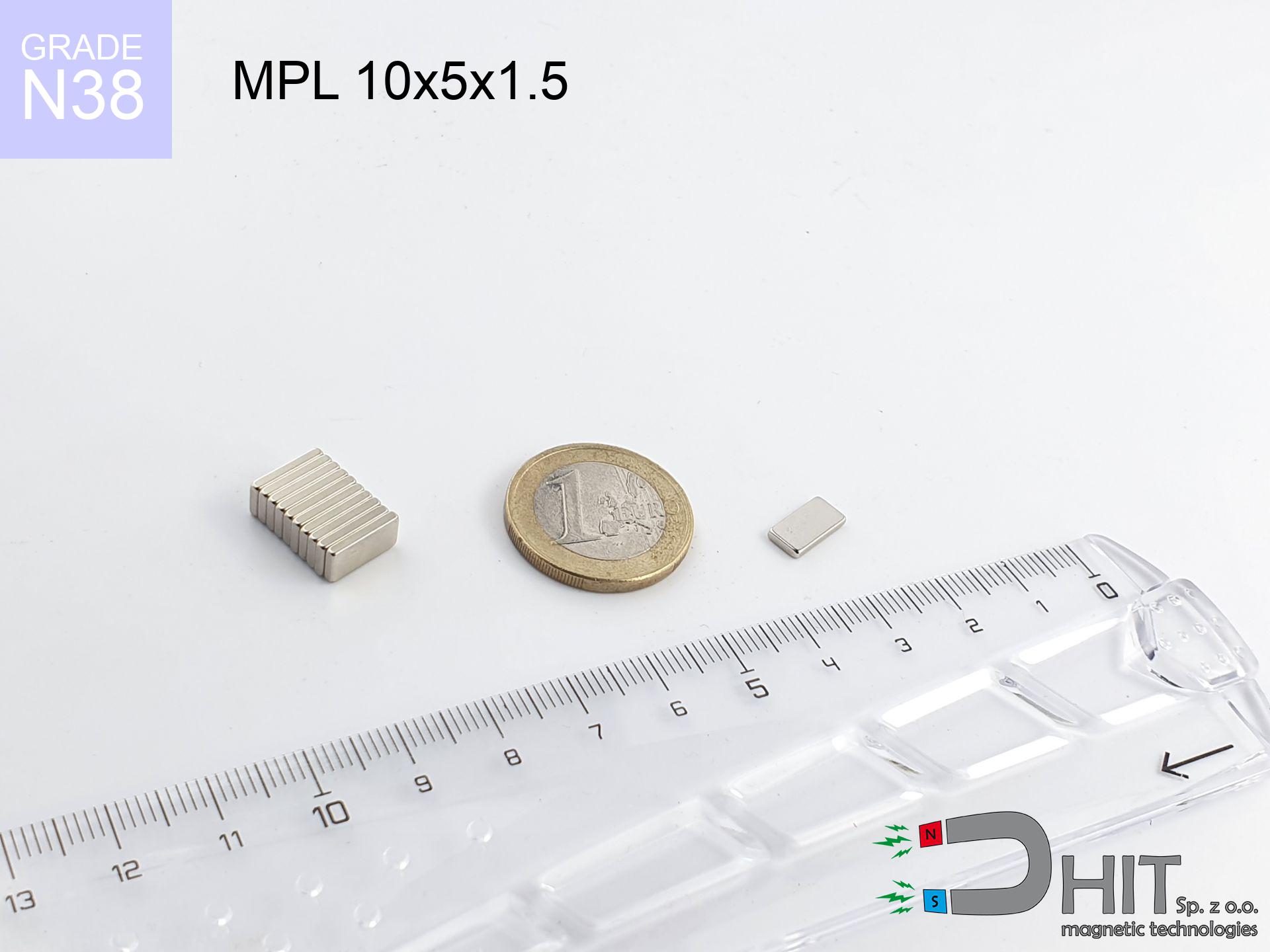
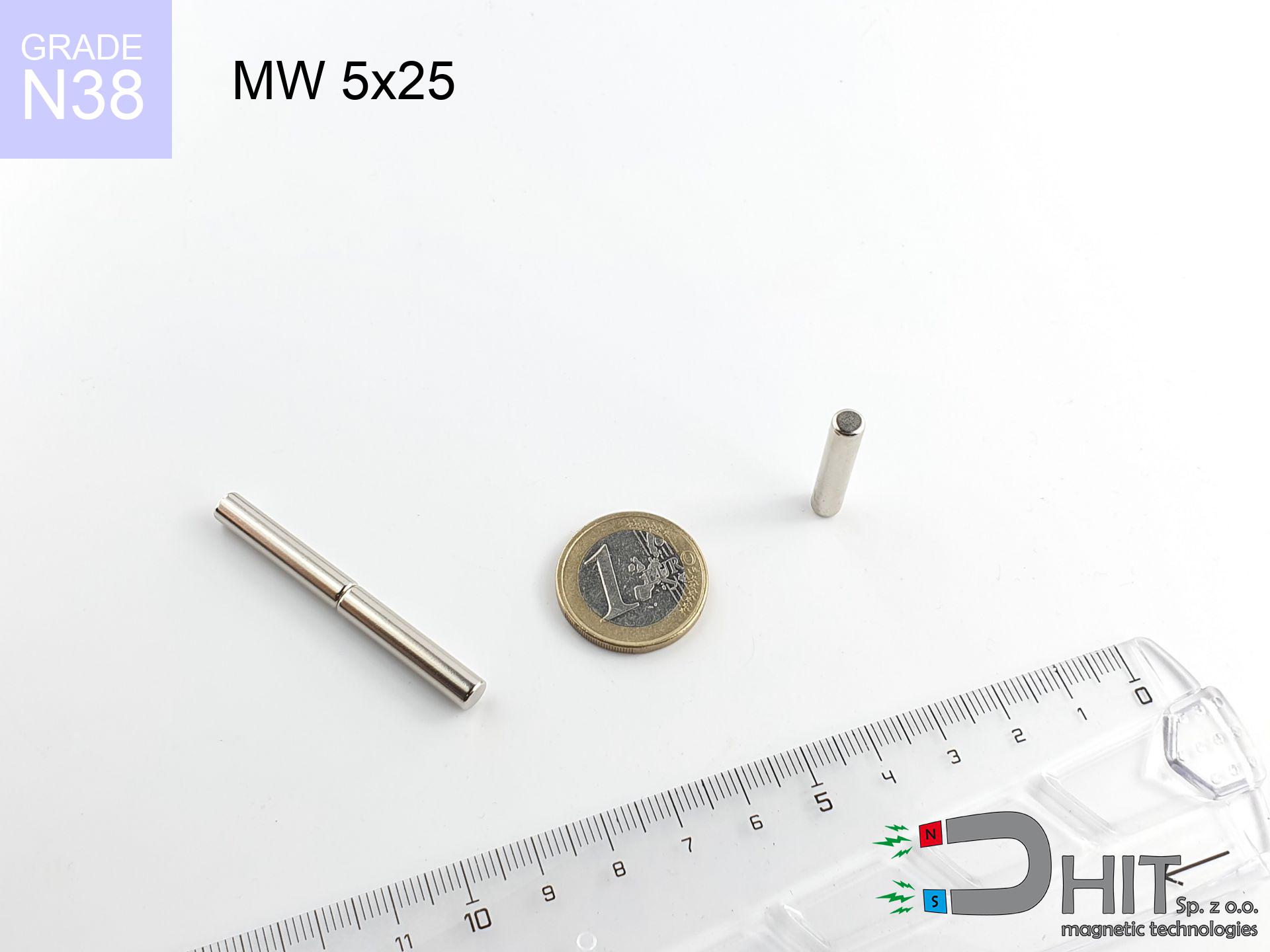
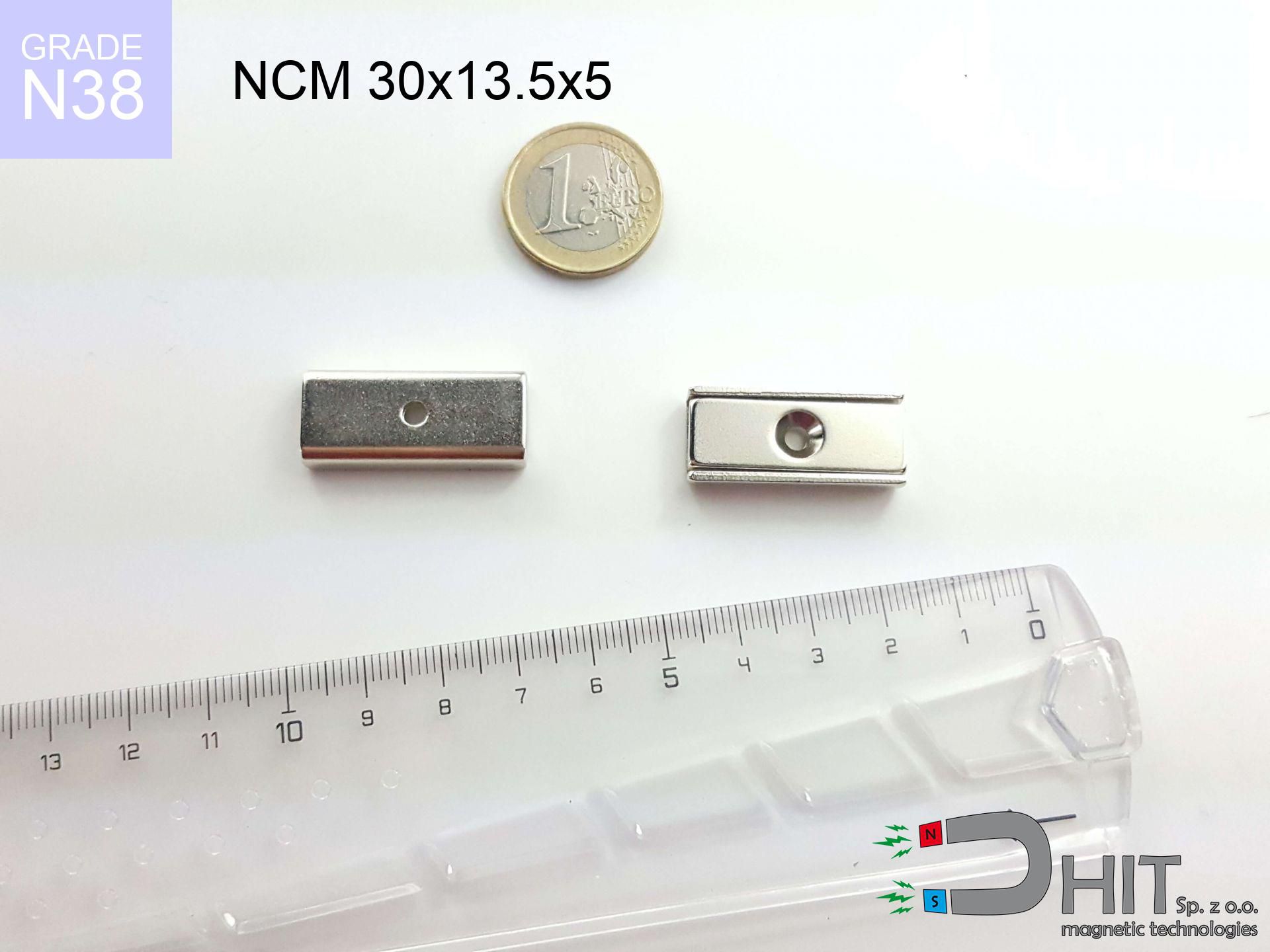
Pros as well as cons of Nd2Fe14B magnets.
Pros
- They do not lose power, even over around 10 years – the drop in strength is only ~1% (based on measurements),
- Neodymium magnets are extremely resistant to magnetic field loss caused by external magnetic fields,
- The use of an aesthetic layer of noble metals (nickel, gold, silver) causes the element to have aesthetics,
- Neodymium magnets generate maximum magnetic induction on a small area, which ensures high operational effectiveness,
- Through (appropriate) combination of ingredients, they can achieve high thermal strength, allowing for action at temperatures reaching 230°C and above...
- Thanks to freedom in constructing and the ability to modify to individual projects,
- Significant place in modern industrial fields – they are utilized in hard drives, electromotive mechanisms, medical devices, as well as complex engineering applications.
- Relatively small size with high pulling force – neodymium magnets offer high power in compact dimensions, which makes them useful in compact constructions
Weaknesses
- To avoid cracks under impact, we suggest using special steel holders. Such a solution protects the magnet and simultaneously improves its durability.
- Do not exceed this material temperature limit: 60°C. Overheating may permanently weaken the magnet.
- When exposed to humidity, magnets start to rust. To use them in conditions outside, it is recommended to use protective magnets, such as magnets in rubber or plastics, which prevent oxidation and corrosion.
- Limited ability of producing threads in the magnet and complicated shapes - recommended is cover - mounting mechanism.
- Health risk related to microscopic parts of magnets pose a threat, if swallowed, which gains importance in the aspect of protecting the youngest. It is also worth noting that small components of these magnets can be problematic in diagnostics medical when they are in the body.
- With budget limitations the cost of neodymium magnets is a challenge,
Pull force analysis
Maximum holding power of the magnet – what contributes to it?
- using a plate made of low-carbon steel, acting as a magnetic yoke
- whose transverse dimension reaches at least 10 mm
- characterized by smoothness
- under conditions of no distance (metal-to-metal)
- during detachment in a direction vertical to the plane
- in stable room temperature
Lifting capacity in practice – influencing factors
- Distance – the presence of foreign body (rust, tape, gap) interrupts the magnetic circuit, which reduces capacity steeply (even by 50% at 0.5 mm).
- Force direction – remember that the magnet holds strongest perpendicularly. Under shear forces, the holding force drops drastically, often to levels of 20-30% of the nominal value.
- Base massiveness – too thin plate does not accept the full field, causing part of the flux to be wasted into the air.
- Material composition – not every steel attracts identically. High carbon content weaken the attraction effect.
- Surface finish – full contact is obtained only on polished steel. Rough texture reduce the real contact area, reducing force.
- Thermal environment – temperature increase results in weakening of induction. It is worth remembering the thermal limit for a given model.
Lifting capacity was assessed by applying a polished steel plate of optimal thickness (min. 20 mm), under perpendicular detachment force, in contrast under attempts to slide the magnet the lifting capacity is smaller. Moreover, even a small distance between the magnet’s surface and the plate decreases the holding force.
Safe handling of NdFeB magnets
Life threat
Warning for patients: Strong magnetic fields disrupt medical devices. Keep at least 30 cm distance or ask another person to work with the magnets.
Demagnetization risk
Watch the temperature. Exposing the magnet to high heat will permanently weaken its properties and strength.
Danger to the youngest
Absolutely keep magnets out of reach of children. Risk of swallowing is high, and the effects of magnets connecting inside the body are very dangerous.
Electronic devices
Do not bring magnets near a purse, laptop, or screen. The magnetic field can permanently damage these devices and wipe information from cards.
Mechanical processing
Fire hazard: Neodymium dust is explosive. Do not process magnets in home conditions as this risks ignition.
Pinching danger
Risk of injury: The pulling power is so immense that it can cause blood blisters, crushing, and broken bones. Use thick gloves.
Precision electronics
GPS units and mobile phones are extremely susceptible to magnetism. Direct contact with a powerful NdFeB magnet can permanently damage the internal compass in your phone.
Safe operation
Before starting, check safety instructions. Sudden snapping can destroy the magnet or injure your hand. Think ahead.
Risk of cracking
Watch out for shards. Magnets can fracture upon uncontrolled impact, launching sharp fragments into the air. Eye protection is mandatory.
Allergy Warning
It is widely known that nickel (the usual finish) is a potent allergen. For allergy sufferers, refrain from touching magnets with bare hands and choose coated magnets.
Tabela kosztu i czasu dostawy
Płatność przed wysyłką:

GLS kurier
Przesyłka będzie u Ciebie za 2-3 dni
14.99 ZŁ

InPost Paczkomaty 24/7
Przesyłka będzie u Ciebie za 1-2 dni
12.30 ZŁ
Płatność przy odbiorze (pobranie):
GLS kurier
Przesyłka będzie u Ciebie za 1-2 dni
23.00 ZŁ