

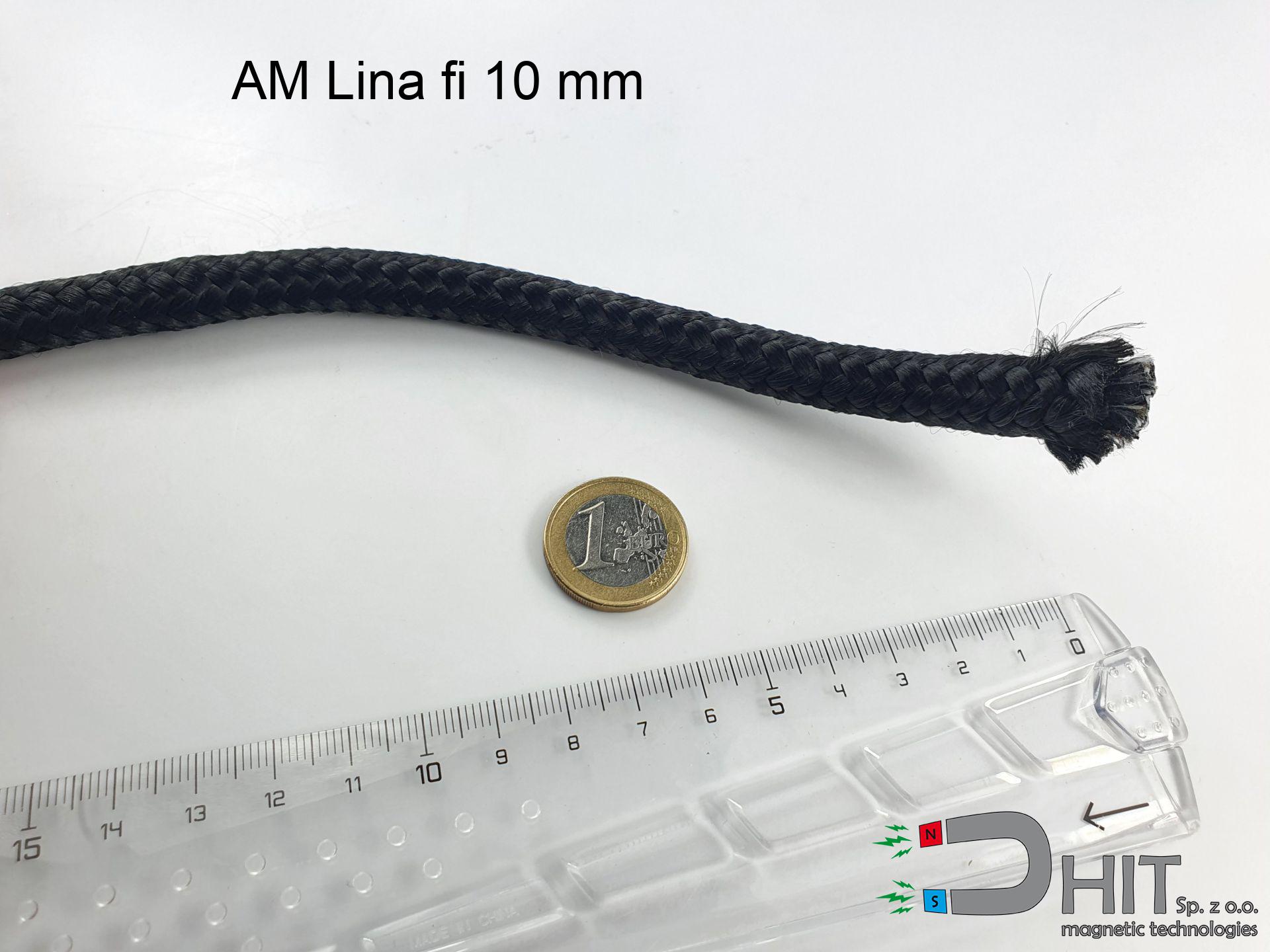
AM lina fi 10 mm - magnetic accessories
magnetic accessories
Catalog no 080216
GTIN/EAN: 5906301812456
- Weight
- 32 g
How we measure these parameters — certificates and measurements
1.200 zł net / pcs
1.476 zł with VAT (23% VAT) / pcs
bulk discounts:
Need more?Frequently asked questions
Where can I find accessories for mounting magnets?
Can I find a technical magnet with a documented pull rating?
Where can I find magnets for a higher operating temperature?
When does an N52 magnet make sense in demanding conditions?
Guides from the knowledge base
Call us now
+48 888 99 98 98
alternatively let us know using
contact form
the contact section.
Specifications and structure of a neodymium magnet can be estimated using our
power calculator.
Order by 14:00 and we’ll ship today!
Detailed specification - AM lina fi 10 mm - magnetic accessories
Specification / characteristics - AM lina fi 10 mm - magnetic accessories
| properties | values |
|---|---|
| Cat. no. | 080216 |
| GTIN/EAN | 5906301812456 |
| Production/Distribution | Dhit sp. z o.o. |
| Country of origin | Poland / China / Germany |
| Customs code | 85059029 |
| Weight | 32 g |
| Load capacity ~ ? | 1592.00 kg / 15612.19 N |
| Manufacturing Tolerance | ±1 mm |
Physical properties of sintered neodymium magnets Nd2Fe14B at 20°C
| properties | values | units |
|---|---|---|
| Vickers hardness | ≥550 | Hv |
| Density | ≥7.4 | g/cm3 |
| Curie Temperature TC | 310 | °C |
| Curie Temperature TF | 590 | °F |
| Specific resistance | 150 | μΩ⋅cm |
| Bending strength | 250 | MPa |
| Compressive strength | 1000~1100 | MPa |
| Thermal expansion parallel (∥) to orientation (M) | (3-4) x 10-6 | °C-1 |
| Thermal expansion perpendicular (⊥) to orientation (M) | -(1-3) x 10-6 | °C-1 |
| Young's modulus | 1.7 x 10⁴ | kg/mm² |
Material specification
| iron (Fe) | 64% – 68% |
| neodymium (Nd) | 29% – 32% |
| boron (B) | 1.1% – 1.2% |
| dysprosium (Dy) | 0.5% – 2.0% |
| coating (Ni-Cu-Ni) | < 0.05% |
Ecology and recycling (GPSR)
| recyclability (EoL) | 100% |
| recycled raw materials | ~10% (pre-cons) |
| carbon footprint | low / zredukowany |
| waste code (EWC) | 16 02 16 |
Other deals

![BM 850x180x70 [4x M8] - magnetic beam](https://cdn3.dhit.pl/graphics/products/bm-850x180x70-4x-m8-mep.jpg "BM 850x180x70 [4x M8] - magnetic beam")

Advantages and disadvantages of Nd2Fe14B magnets.
Pros
- They retain attractive force for almost 10 years – the loss is just ~1% (according to analyses),
- They possess excellent resistance to weakening of magnetic properties when exposed to opposing magnetic fields,
- A magnet with a metallic gold surface is more attractive,
- They show high magnetic induction at the operating surface, making them more effective,
- Through (adequate) combination of ingredients, they can achieve high thermal resistance, enabling operation at temperatures approaching 230°C and above...
- Possibility of detailed modeling as well as optimizing to concrete conditions,
- Significant place in innovative solutions – they are commonly used in computer drives, drive modules, diagnostic systems, also industrial machines.
- Thanks to efficiency per cm³, small magnets offer high operating force, with minimal size,
Disadvantages
- Brittleness is one of their disadvantages. Upon strong impact they can fracture. We recommend keeping them in a special holder, which not only protects them against impacts but also increases their durability
- Heat sensitivity: observe the temperature specified for this product. Overheating may permanently weaken the magnet.
- When exposed to humidity, magnets usually rust. To use them in conditions outside, it is recommended to use protective magnets, such as magnets in rubber or plastics, which prevent oxidation and corrosion.
- Due to limitations in creating threads and complicated shapes in magnets, we recommend using cover - magnetic holder.
- Health risk resulting from small fragments of magnets are risky, if swallowed, which gains importance in the aspect of protecting the youngest. Additionally, small components of these devices can complicate diagnosis medical when they are in the body.
- High unit price – neodymium magnets are more expensive than other types of magnets (e.g. ferrite), which can limit application in large quantities
Holding force characteristics
Magnetic strength at its maximum – what it depends on?
- on a base made of structural steel, perfectly concentrating the magnetic flux
- possessing a thickness of min. 10 mm to avoid saturation
- with an polished contact surface
- without the slightest air gap between the magnet and steel
- for force applied at a right angle (in the magnet axis)
- at standard ambient temperature
Determinants of lifting force in real conditions
- Gap between magnet and steel – every millimeter of distance (caused e.g. by varnish or unevenness) diminishes the pulling force, often by half at just 0.5 mm.
- Loading method – declared lifting capacity refers to pulling vertically. When applying parallel force, the magnet holds much less (typically approx. 20-30% of maximum force).
- Substrate thickness – to utilize 100% power, the steel must be sufficiently thick. Paper-thin metal limits the attraction force (the magnet "punches through" it).
- Material composition – not every steel attracts identically. Alloy additives weaken the attraction effect.
- Surface finish – full contact is obtained only on smooth steel. Any scratches and bumps create air cushions, weakening the magnet.
- Thermal environment – heating the magnet results in weakening of force. Check the maximum operating temperature for a given model.
Lifting capacity testing was carried out on plates with a smooth surface of suitable thickness, under perpendicular forces, whereas under shearing force the lifting capacity is smaller. In addition, even a minimal clearance between the magnet’s surface and the plate reduces the holding force.
H&S for magnets
Medical interference
Warning for patients: Powerful magnets affect medical devices. Keep at least 30 cm distance or request help to work with the magnets.
Hand protection
Mind your fingers. Two powerful magnets will join immediately with a force of massive weight, destroying everything in their path. Be careful!
Protective goggles
Despite the nickel coating, the material is brittle and not impact-resistant. Avoid impacts, as the magnet may shatter into sharp, dangerous pieces.
Metal Allergy
Allergy Notice: The nickel-copper-nickel coating contains nickel. If an allergic reaction appears, cease working with magnets and use protective gear.
Heat sensitivity
Do not overheat. Neodymium magnets are susceptible to temperature. If you need operation above 80°C, inquire about special high-temperature series (H, SH, UH).
Powerful field
Handle magnets consciously. Their huge power can surprise even professionals. Be vigilant and do not underestimate their force.
This is not a toy
Adult use only. Small elements can be swallowed, causing severe trauma. Keep out of reach of children and animals.
Machining danger
Combustion risk: Neodymium dust is highly flammable. Do not process magnets without safety gear as this risks ignition.
Magnetic interference
GPS units and smartphones are highly susceptible to magnetic fields. Direct contact with a strong magnet can decalibrate the internal compass in your phone.
Protect data
Do not bring magnets near a wallet, laptop, or screen. The magnetism can irreversibly ruin these devices and wipe information from cards.
Tabela kosztu i czasu dostawy
Płatność przed wysyłką:

GLS kurier
Przesyłka będzie u Ciebie za 2-3 dni
14.99 ZŁ

InPost Paczkomaty 24/7
Przesyłka będzie u Ciebie za 1-2 dni
12.30 ZŁ
Płatność przy odbiorze (pobranie):
GLS kurier
Przesyłka będzie u Ciebie za 1-2 dni
23.00 ZŁ