


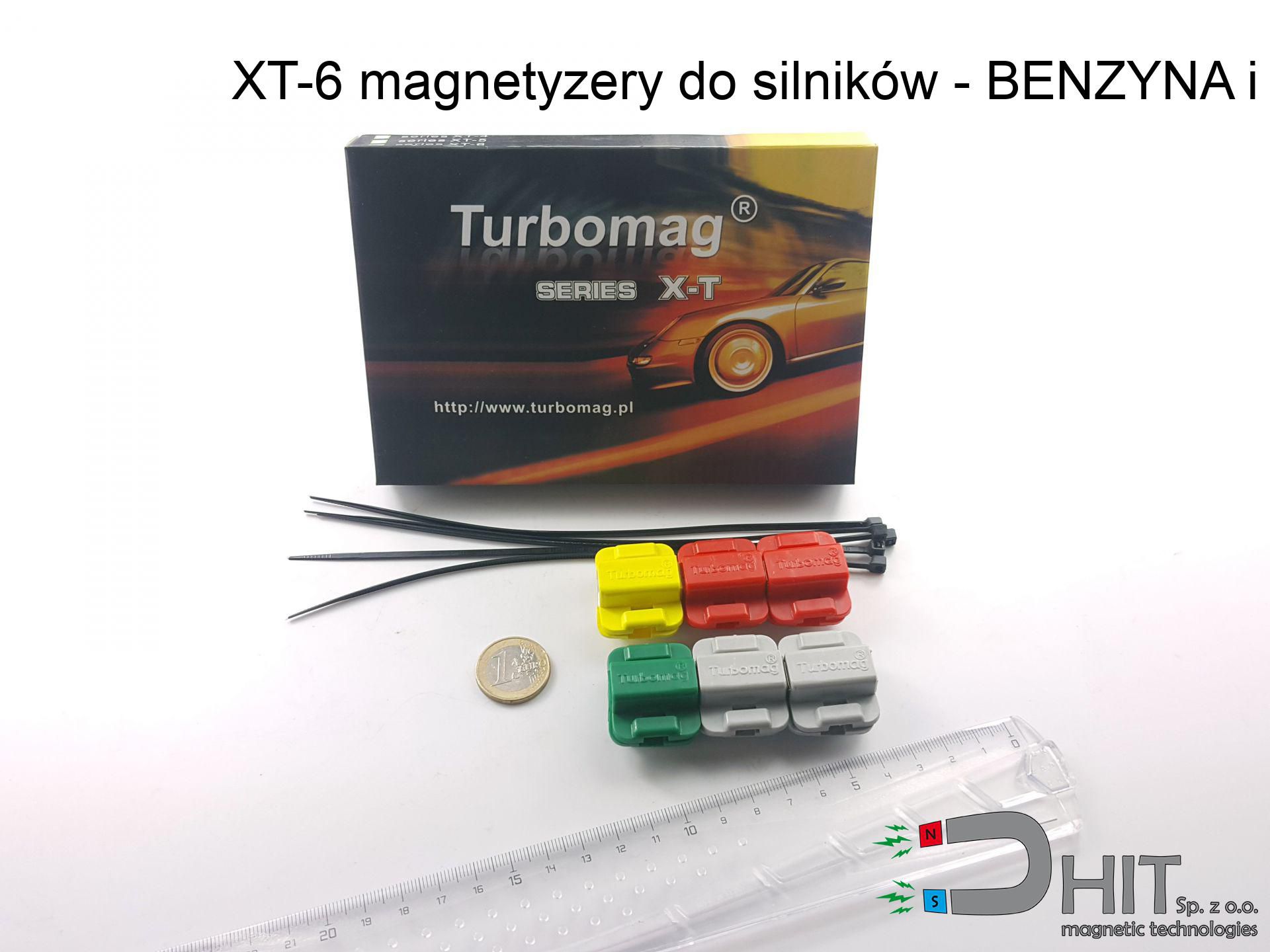
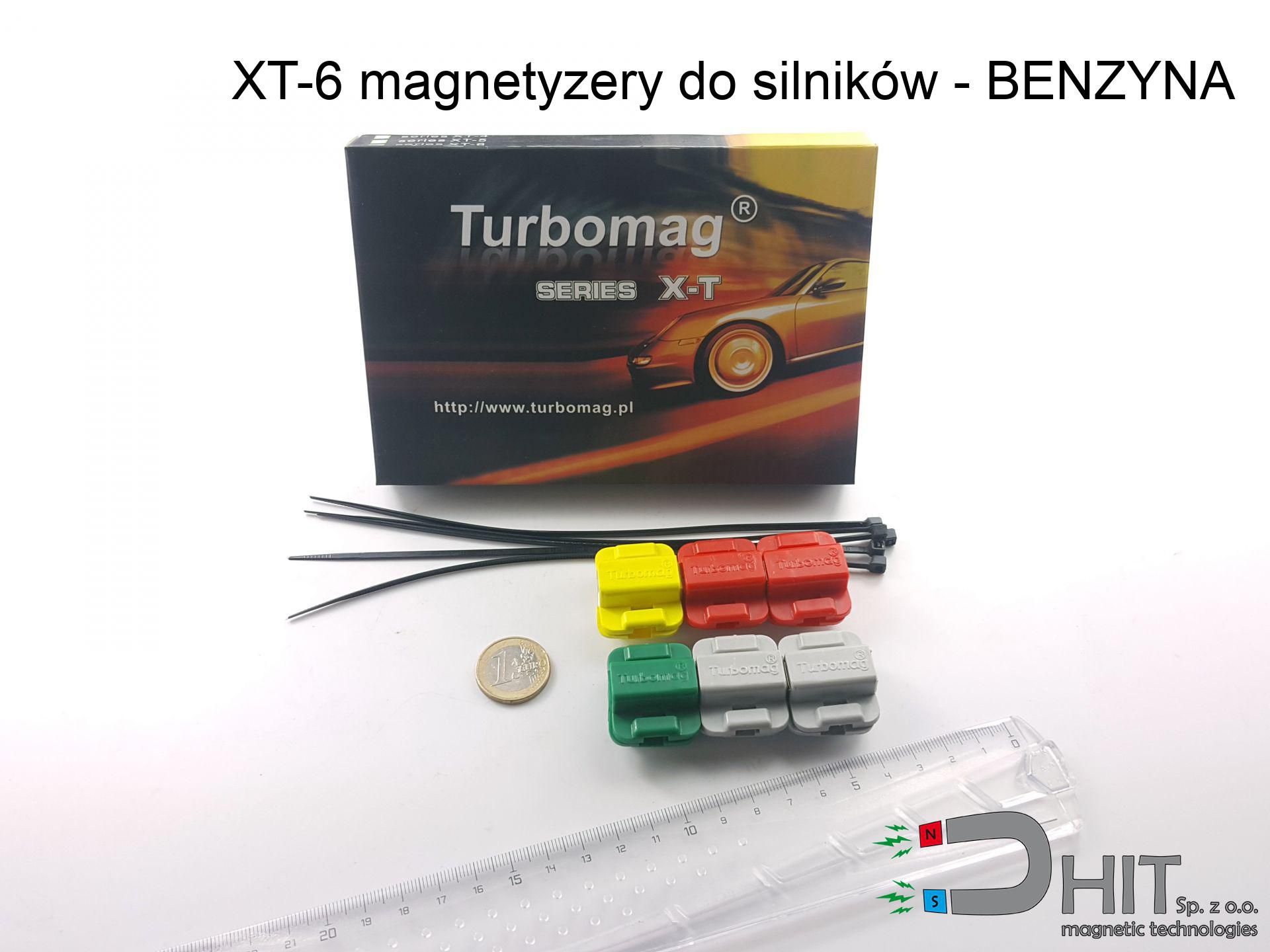
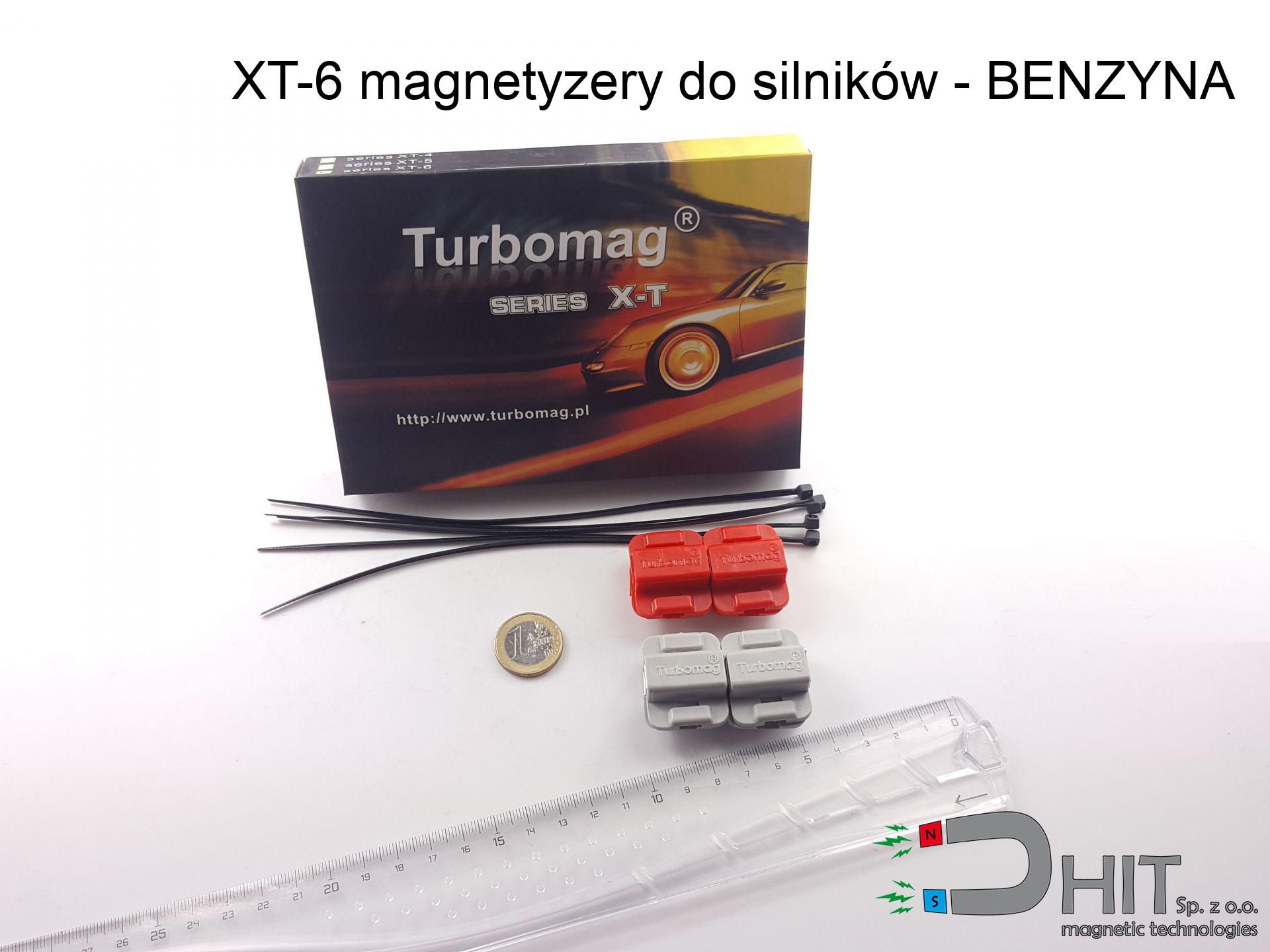
XT-6 magnetyzery do silników - BENZYNA i LPG + olej - XT-6 magnetizer
XT-6 magnetizer
Catalog no 070242
GTIN/EAN: 5906301812425
80.48 zł net / pcs
98.99 zł with VAT (23% VAT) / pcs
bulk discounts:
Need more?Frequently asked questions
Which Turbomag® model should I choose?
Is a magnetizer used to capture metal swarf?
How do I match a model to an installation?
Where is a magnetizer fitted?
What are the fastening parts made of?
What operating temperature is allowed?
Guides from the knowledge base
Call us now
+48 888 99 98 98
alternatively let us know using
contact form
the contact section.
Specifications and structure of a neodymium magnet can be estimated using our
power calculator.
Order by 14:00 and we’ll ship today!
Technical of the product - XT-6 magnetyzery do silników - BENZYNA i LPG + olej - XT-6 magnetizer
Specification / characteristics - XT-6 magnetyzery do silników - BENZYNA i LPG + olej - XT-6 magnetizer
| properties | values |
|---|---|
| Cat. no. | 070242 |
| GTIN/EAN | 5906301812425 |
| Production/Distribution | Dhit sp. z o.o. |
| Country of origin | Poland / China / Germany |
| Customs code | 85059029 |
| Weight | 209 g |
| Manufacturing Tolerance | ±1 mm |
Physical properties of sintered neodymium magnets Nd2Fe14B at 20°C
| properties | values | units |
|---|---|---|
| Vickers hardness | ≥550 | Hv |
| Density | ≥7.4 | g/cm3 |
| Curie Temperature TC | 310 | °C |
| Curie Temperature TF | 590 | °F |
| Specific resistance | 150 | μΩ⋅cm |
| Bending strength | 250 | MPa |
| Compressive strength | 1000~1100 | MPa |
| Thermal expansion parallel (∥) to orientation (M) | (3-4) x 10-6 | °C-1 |
| Thermal expansion perpendicular (⊥) to orientation (M) | -(1-3) x 10-6 | °C-1 |
| Young's modulus | 1.7 x 10⁴ | kg/mm² |
Material specification
| iron (Fe) | 64% – 68% |
| neodymium (Nd) | 29% – 32% |
| boron (B) | 1.1% – 1.2% |
| dysprosium (Dy) | 0.5% – 2.0% |
| coating (Ni-Cu-Ni) | < 0.05% |
Sustainability
| recyclability (EoL) | 100% |
| recycled raw materials | ~10% (pre-cons) |
| carbon footprint | low / zredukowany |
| waste code (EWC) | 16 02 16 |
Other products
![UMGGZ 34x6 [M4] GZ / N38 - rubber magnetic holder external thread](https://cdn3.dhit.pl/graphics/products/umg-34x6-m4-gz-rad.jpg "UMGGZ 34x6 [M4] GZ / N38 - rubber magnetic holder external thread")
Advantages and disadvantages of neodymium magnets.
Benefits
- Their magnetic field remains stable, and after around 10 years it decreases only by ~1% (according to research),
- They retain their magnetic properties even under close interference source,
- In other words, due to the glossy surface of silver, the element becomes visually attractive,
- Magnets are distinguished by impressive magnetic induction on the outer layer,
- Thanks to resistance to high temperature, they are able to function (depending on the shape) even at temperatures up to 230°C and higher...
- Due to the ability of flexible shaping and customization to individualized solutions, neodymium magnets can be produced in a broad palette of geometric configurations, which amplifies use scope,
- Fundamental importance in electronics industry – they are used in computer drives, electromotive mechanisms, medical equipment, as well as multitasking production systems.
- Compactness – despite small sizes they provide effective action, making them ideal for precision applications
Weaknesses
- To avoid cracks upon strong impacts, we suggest using special steel holders. Such a solution protects the magnet and simultaneously increases its durability.
- Heat sensitivity: observe the temperature specified for this product. Overheating may permanently weaken the magnet.
- They oxidize in a humid environment - during use outdoors we recommend using waterproof magnets e.g. in rubber, plastic
- We recommend a housing - magnetic mechanism, due to difficulties in producing threads inside the magnet and complicated shapes.
- Possible danger resulting from small fragments of magnets can be dangerous, if swallowed, which gains importance in the context of child health protection. It is also worth noting that small elements of these products are able to complicate diagnosis medical when they are in the body.
- With mass production the cost of neodymium magnets can be a barrier,
Lifting parameters
Best holding force of the magnet in ideal parameters – what it depends on?
- on a base made of structural steel, effectively closing the magnetic field
- possessing a thickness of minimum 10 mm to avoid saturation
- with a plane cleaned and smooth
- without any air gap between the magnet and steel
- for force applied at a right angle (pull-off, not shear)
- at conditions approx. 20°C
What influences lifting capacity in practice
- Air gap (between the magnet and the metal), as even a microscopic distance (e.g. 0.5 mm) can cause a decrease in lifting capacity by up to 50% (this also applies to varnish, rust or debris).
- Loading method – declared lifting capacity refers to pulling vertically. When slipping, the magnet holds much less (often approx. 20-30% of nominal force).
- Substrate thickness – for full efficiency, the steel must be sufficiently thick. Thin sheet restricts the attraction force (the magnet "punches through" it).
- Material type – the best choice is high-permeability steel. Cast iron may generate lower lifting capacity.
- Smoothness – ideal contact is obtained only on polished steel. Any scratches and bumps reduce the real contact area, weakening the magnet.
- Temperature – temperature increase causes a temporary drop of induction. Check the maximum operating temperature for a given model.
Holding force was measured on the plate surface of 20 mm thickness, when the force acted perpendicularly, however under parallel forces the holding force is lower. In addition, even a small distance between the magnet and the plate decreases the lifting capacity.
Safe handling of NdFeB magnets
Finger safety
Risk of injury: The attraction force is so immense that it can result in hematomas, crushing, and even bone fractures. Use thick gloves.
Threat to navigation
GPS units and smartphones are highly susceptible to magnetism. Close proximity with a strong magnet can permanently damage the sensors in your phone.
Choking Hazard
Neodymium magnets are not suitable for play. Accidental ingestion of several magnets may result in them connecting inside the digestive tract, which poses a critical condition and requires urgent medical intervention.
Nickel allergy
Allergy Notice: The nickel-copper-nickel coating consists of nickel. If skin irritation appears, immediately stop handling magnets and wear gloves.
Dust is flammable
Dust generated during grinding of magnets is flammable. Do not drill into magnets without proper cooling and knowledge.
Life threat
Individuals with a heart stimulator have to maintain an large gap from magnets. The magnetic field can disrupt the functioning of the life-saving device.
Protect data
Powerful magnetic fields can erase data on credit cards, HDDs, and storage devices. Maintain a gap of min. 10 cm.
Beware of splinters
NdFeB magnets are ceramic materials, meaning they are fragile like glass. Impact of two magnets leads to them shattering into small pieces.
Immense force
Before use, check safety instructions. Uncontrolled attraction can destroy the magnet or injure your hand. Think ahead.
Power loss in heat
Watch the temperature. Exposing the magnet above 80 degrees Celsius will permanently weaken its magnetic structure and pulling force.
Tabela kosztu i czasu dostawy
Płatność przed wysyłką:

GLS kurier
Przesyłka będzie u Ciebie za 2-3 dni
14.99 ZŁ

InPost Paczkomaty 24/7
Przesyłka będzie u Ciebie za 1-2 dni
12.30 ZŁ
Płatność przy odbiorze (pobranie):
GLS kurier
Przesyłka będzie u Ciebie za 1-2 dni
23.00 ZŁ