

MP 32x16x3 / N38 - ring magnet
ring magnet
Catalog no 030198
GTIN/EAN: 5906301812159
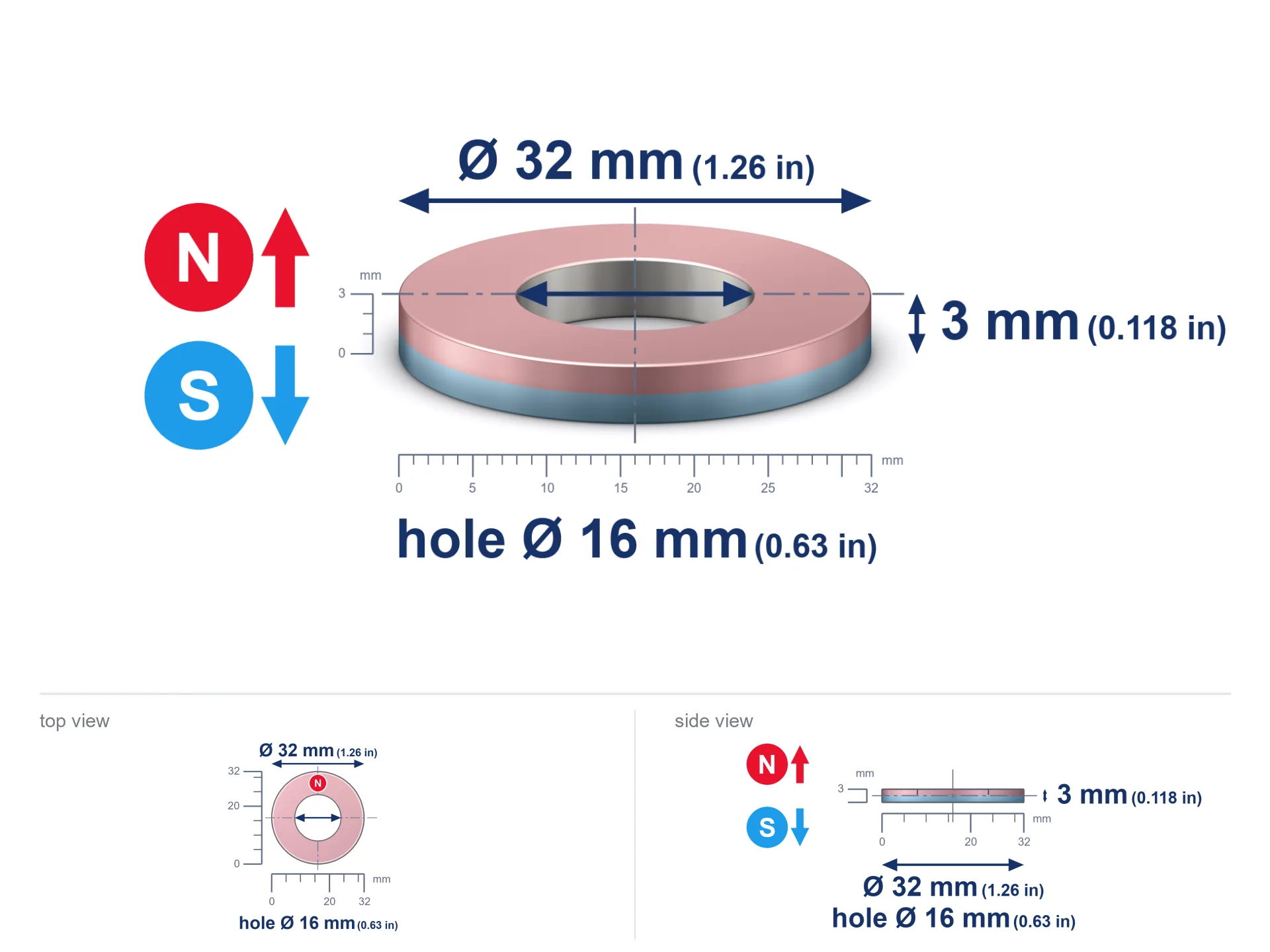
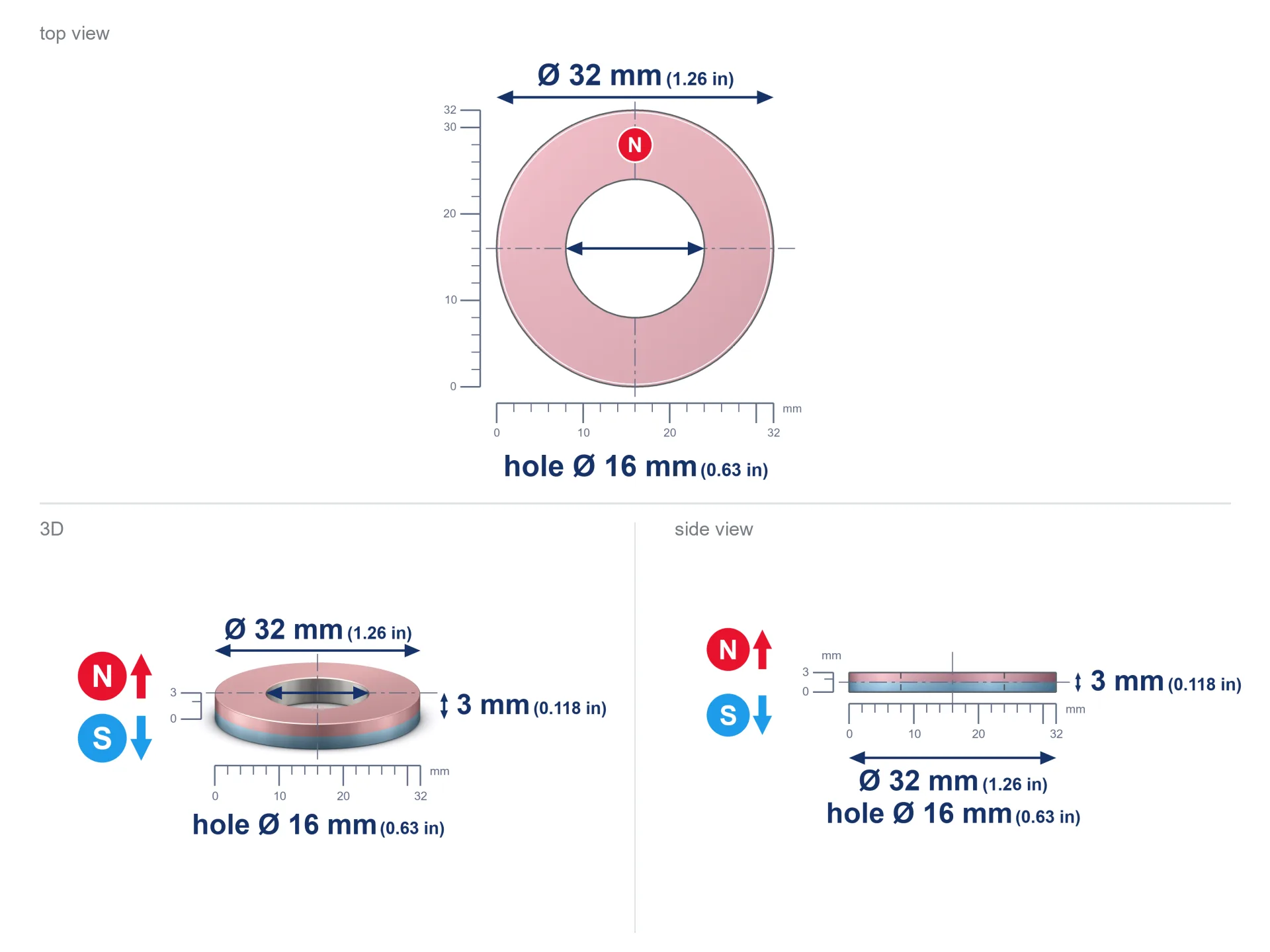
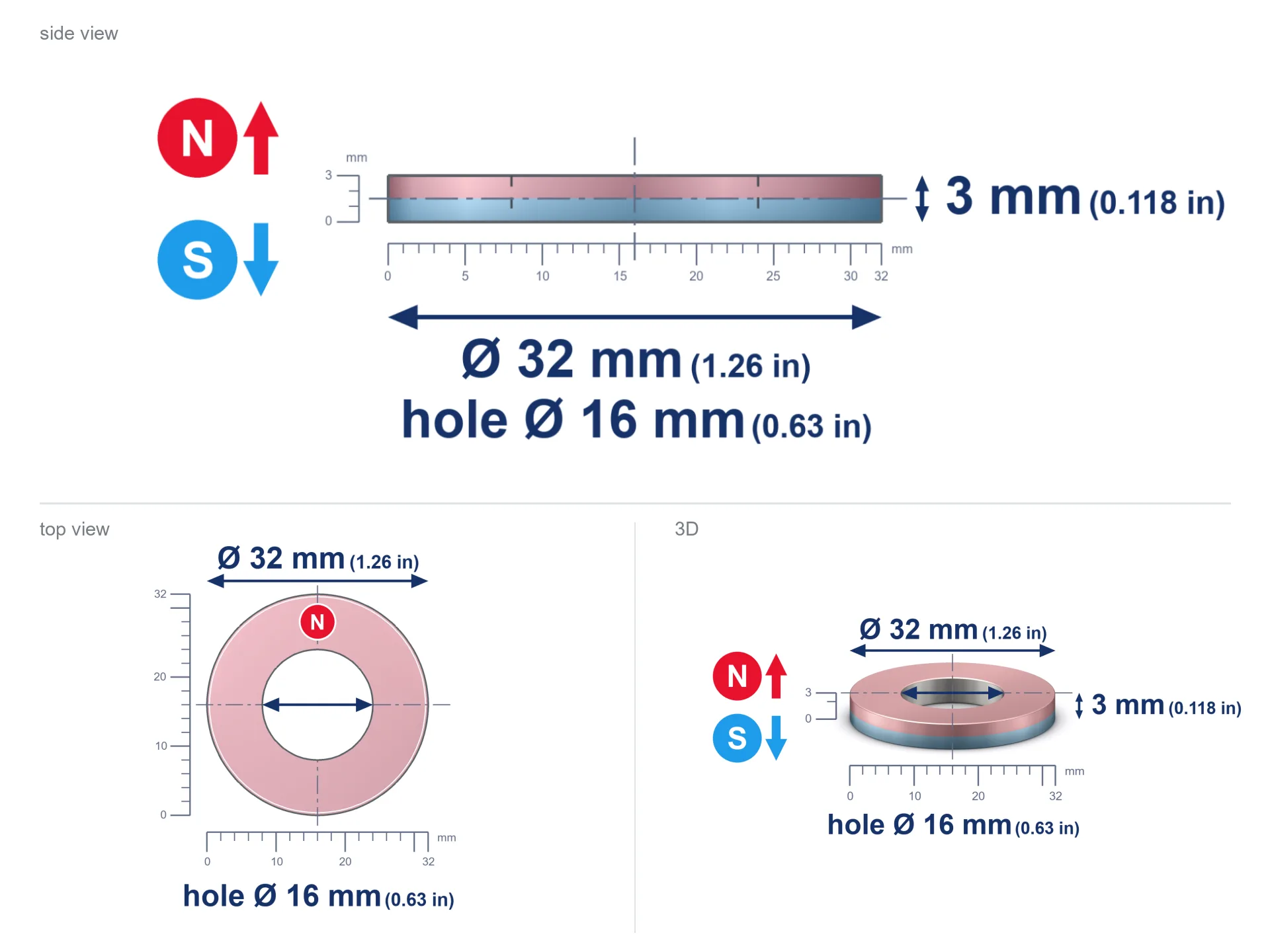
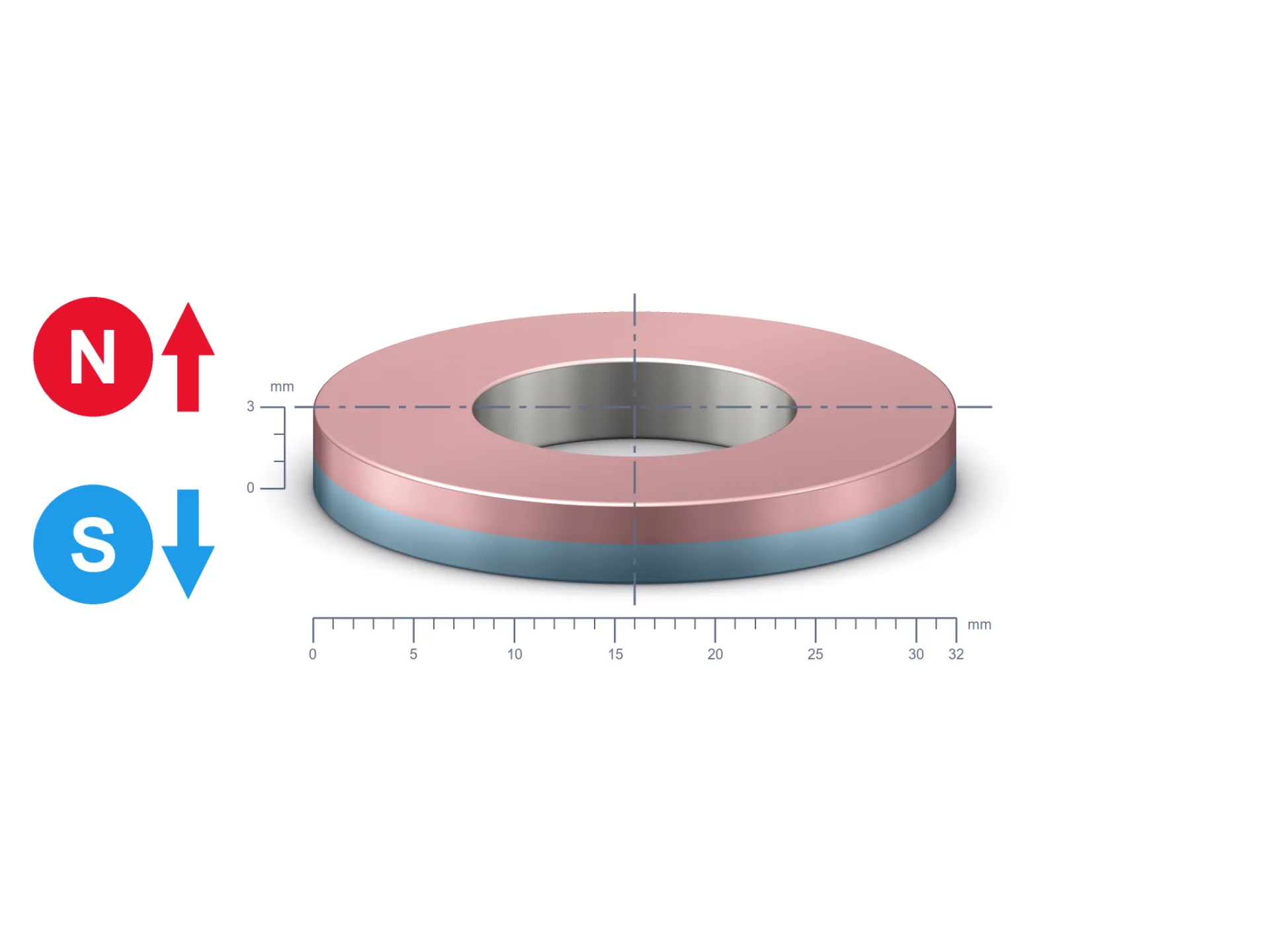
- Diameter
- 32 mm [±0,1 mm]
- internal diameter Ø
- 16 mm [±0,1 mm]
- Height
- 3 mm [±0,1 mm]
- Weight
- 13.57 g
- Magnetization Direction
- ↑ axial
- Coating
- [NiCuNi] Nickel
How we measure these parameters — certificates and measurements
7.82 zł net / pcs
9.62 zł with VAT (23% VAT) / pcs
4.26 zł net was the lowest price in the last 30 days
bulk discounts:
Need more?Frequently asked questions
Where can I compare prices of ring magnets for mounting in Poland?
Are ring magnets resistant to damage?
Which ring magnet is suitable for an outdoor structure?
Where can I check the available sizes of neodymium ring magnets?
Engineering report for this magnet
Full PDF analysis: pull and shear force, effect of distance, temperature and plate thickness, safety distances and the demagnetization curve.
Call us now
+48 888 99 98 98
alternatively let us know using
contact form
the contact section.
Specifications and structure of a neodymium magnet can be estimated using our
power calculator.
Order by 14:00 and we’ll ship today!
Technical specification of the product - MP 32x16x3 / N38 - ring magnet
Specification / characteristics - MP 32x16x3 / N38 - ring magnet
| properties | values |
|---|---|
| Cat. no. | 030198 |
| GTIN/EAN | 5906301812159 |
| Distributor | Dhit sp. z o.o. |
| Country of origin | Poland / China / Germany |
| Customs code | 85059029 |
| Diameter | 32 mm [±0,1 mm] |
| internal diameter Ø | 16 mm [±0,1 mm] |
| Height | 3 mm [±0,1 mm] |
| Weight | 13.57 g |
| Magnetization Direction | ↑ axial |
| Load capacity ~ ? | 2.79 kg / 27.40 N |
| Magnetic Induction ~ ? | 114.25 mT / 1142 Gs |
| Coating | [NiCuNi] Nickel |
| Manufacturing Tolerance | ±0.1 mm |
Magnetic properties of material N38
| properties | values | units |
|---|---|---|
| Remanence Br ? | 12.2-12.6 | kGs |
| Remanence Br ? | 1220-1260 | mT |
| Coercivity bHc ? | 10.8-11.5 | kOe |
| Coercivity bHc ? | 860-915 | kA/m |
| Intrinsic coercivity iHc | ≥ 12 | kOe |
| Intrinsic coercivity iHc | ≥ 955 | kA/m |
| Energy product BHmax ? | 36-38 | BH max MGOe |
| Energy product BHmax ? | 287-303 | BH max KJ/m |
| Maximum working temperature ? | ≤ 80 | °C |
Physical properties of sintered neodymium magnets Nd2Fe14B at 20°C
| properties | values | units |
|---|---|---|
| Vickers hardness | ≥550 | Hv |
| Density | ≥7.4 | g/cm3 |
| Curie Temperature TC | 310 | °C |
| Curie Temperature TF | 590 | °F |
| Specific resistance | 150 | μΩ⋅cm |
| Bending strength | 250 | MPa |
| Compressive strength | 1000~1100 | MPa |
| Thermal expansion parallel (∥) to orientation (M) | (3-4) x 10-6 | °C-1 |
| Thermal expansion perpendicular (⊥) to orientation (M) | -(1-3) x 10-6 | °C-1 |
| Young's modulus | 1.7 x 10⁴ | kg/mm² |
Technical simulation of the magnet - data
The following data are the result of a mathematical calculation. Results rely on models for the material Nd2Fe14B. Real-world conditions may deviate from the simulation results. Use these data as a reference point when designing systems.
Table 1: Static pull force (force vs distance) - power drop
MP 32x16x3 / N38
| Distance (mm) | Induction (Gauss) / mT | Pull Force (kg/lbs/g/N) | Risk Status |
|---|---|---|---|
| 0 mm |
1142 Gs
114.2 mT
|
2.79 kg / 6.15 lbs
2790.0 g / 27.4 N
|
warning |
| 1 mm |
1117 Gs
111.7 mT
|
2.67 kg / 5.88 lbs
2667.2 g / 26.2 N
|
warning |
| 2 mm |
1080 Gs
108.0 mT
|
2.49 kg / 5.50 lbs
2494.9 g / 24.5 N
|
warning |
| 3 mm |
1034 Gs
103.4 mT
|
2.29 kg / 5.04 lbs
2287.3 g / 22.4 N
|
warning |
| 5 mm |
923 Gs
92.3 mT
|
1.82 kg / 4.02 lbs
1822.9 g / 17.9 N
|
safe |
| 10 mm |
624 Gs
62.4 mT
|
0.83 kg / 1.83 lbs
831.6 g / 8.2 N
|
safe |
| 15 mm |
394 Gs
39.4 mT
|
0.33 kg / 0.73 lbs
331.0 g / 3.2 N
|
safe |
| 20 mm |
248 Gs
24.8 mT
|
0.13 kg / 0.29 lbs
131.7 g / 1.3 N
|
safe |
| 30 mm |
108 Gs
10.8 mT
|
0.03 kg / 0.06 lbs
25.1 g / 0.2 N
|
safe |
| 50 mm |
30 Gs
3.0 mT
|
0.00 kg / 0.00 lbs
2.0 g / 0.0 N
|
safe |
Table 2: Shear hold (wall)
MP 32x16x3 / N38
| Distance (mm) | Friction coefficient | Pull Force (kg/lbs/g/N) |
|---|---|---|
| 0 mm | Raw steel (µ ≈ 0.2) |
0.56 kg / 1.23 lbs
558.0 g / 5.5 N
|
| 1 mm | Raw steel (µ ≈ 0.2) |
0.53 kg / 1.18 lbs
534.0 g / 5.2 N
|
| 2 mm | Raw steel (µ ≈ 0.2) |
0.50 kg / 1.10 lbs
498.0 g / 4.9 N
|
| 3 mm | Raw steel (µ ≈ 0.2) |
0.46 kg / 1.01 lbs
458.0 g / 4.5 N
|
| 5 mm | Raw steel (µ ≈ 0.2) |
0.36 kg / 0.80 lbs
364.0 g / 3.6 N
|
| 10 mm | Raw steel (µ ≈ 0.2) |
0.17 kg / 0.37 lbs
166.0 g / 1.6 N
|
| 15 mm | Raw steel (µ ≈ 0.2) |
0.07 kg / 0.15 lbs
66.0 g / 0.6 N
|
| 20 mm | Raw steel (µ ≈ 0.2) |
0.03 kg / 0.06 lbs
26.0 g / 0.3 N
|
| 30 mm | Raw steel (µ ≈ 0.2) |
0.01 kg / 0.01 lbs
6.0 g / 0.1 N
|
| 50 mm | Raw steel (µ ≈ 0.2) |
0.00 kg / 0.00 lbs
0.0 g / 0.0 N
|
Table 3: Wall mounting (sliding) - behavior on slippery surfaces
MP 32x16x3 / N38
| Surface type | Friction coefficient / % | Max load (kg/lbs/g/N) |
|---|---|---|
| Raw steel |
µ = 0.3
30% of nominal force
|
0.84 kg / 1.85 lbs
837.0 g / 8.2 N
|
| Painted steel (standard) |
µ = 0.2
20% of nominal force
|
0.56 kg / 1.23 lbs
558.0 g / 5.5 N
|
| Oily/slippery steel |
µ = 0.1
10% of nominal force
|
0.28 kg / 0.62 lbs
279.0 g / 2.7 N
|
| Magnet with anti-slip rubber |
µ = 0.5
50% of nominal force
|
1.40 kg / 3.08 lbs
1395.0 g / 13.7 N
|
Table 4: Steel thickness (substrate influence) - power losses
MP 32x16x3 / N38
| Steel thickness (mm) | % power | Real pull force (kg/lbs/g/N) |
|---|---|---|
| 0.5 mm |
|
0.28 kg / 0.62 lbs
279.0 g / 2.7 N
|
| 1 mm |
|
0.70 kg / 1.54 lbs
697.5 g / 6.8 N
|
| 2 mm |
|
1.40 kg / 3.08 lbs
1395.0 g / 13.7 N
|
| 3 mm |
|
2.09 kg / 4.61 lbs
2092.5 g / 20.5 N
|
| 5 mm |
|
2.79 kg / 6.15 lbs
2790.0 g / 27.4 N
|
| 10 mm |
|
2.79 kg / 6.15 lbs
2790.0 g / 27.4 N
|
| 11 mm |
|
2.79 kg / 6.15 lbs
2790.0 g / 27.4 N
|
| 12 mm |
|
2.79 kg / 6.15 lbs
2790.0 g / 27.4 N
|
Table 5: Working in heat (stability) - thermal limit
MP 32x16x3 / N38
| Magnet temperature (°C) | Force change relative to 20°C | Remaining pull (kg/lbs/g/N) | Status |
|---|---|---|---|
| 20 °C | 0.0% |
2.79 kg / 6.15 lbs
2790.0 g / 27.4 N
|
Estimate |
| 40 °C | -4.4% |
2.67 kg / 5.88 lbs
2668.6 g / 26.2 N
|
Estimate |
| 60 °C | -8.6% |
2.55 kg / 5.62 lbs
2549.9 g / 25.0 N
|
Estimate |
| 80 °C | -12.8% |
2.43 kg / 5.37 lbs
2433.9 g / 23.9 N
|
Material limit |
| 100 °C | — | — | Out of range — no model |
Table 6: Magnet-Magnet interaction (attraction) - forces in the system
MP 32x16x3 / N38
| Gap (mm) | Attraction (kg/lbs) (N-S) | Lateral Force (kg/lbs/g/N) | Repulsion (kg/lbs) (N-N) |
|---|---|---|---|
| 0 mm |
4.85 kg / 10.70 lbs
2 176 Gs
|
0.73 kg / 1.60 lbs
728 g / 7.1 N
|
N/A |
| 1 mm |
4.76 kg / 10.49 lbs
2 263 Gs
|
0.71 kg / 1.57 lbs
714 g / 7.0 N
|
4.28 kg / 9.44 lbs
~0 Gs
|
| 2 mm |
4.64 kg / 10.23 lbs
2 234 Gs
|
0.70 kg / 1.53 lbs
696 g / 6.8 N
|
4.18 kg / 9.21 lbs
~0 Gs
|
| 3 mm |
4.50 kg / 9.92 lbs
2 200 Gs
|
0.67 kg / 1.49 lbs
675 g / 6.6 N
|
4.05 kg / 8.93 lbs
~0 Gs
|
| 5 mm |
4.17 kg / 9.18 lbs
2 117 Gs
|
0.62 kg / 1.38 lbs
625 g / 6.1 N
|
3.75 kg / 8.26 lbs
~0 Gs
|
| 10 mm |
3.17 kg / 6.99 lbs
1 847 Gs
|
0.48 kg / 1.05 lbs
476 g / 4.7 N
|
2.85 kg / 6.29 lbs
~0 Gs
|
| 20 mm |
1.45 kg / 3.19 lbs
1 247 Gs
|
0.22 kg / 0.48 lbs
217 g / 2.1 N
|
1.30 kg / 2.87 lbs
~0 Gs
|
| 50 mm |
0.10 kg / 0.21 lbs
322 Gs
|
0.01 kg / 0.03 lbs
14 g / 0.1 N
|
0.09 kg / 0.19 lbs
~0 Gs
|
| 60 mm |
0.04 kg / 0.10 lbs
217 Gs
|
0.01 kg / 0.01 lbs
7 g / 0.1 N
|
0.04 kg / 0.09 lbs
~0 Gs
|
| 70 mm |
0.02 kg / 0.05 lbs
151 Gs
|
0.00 kg / 0.01 lbs
3 g / 0.0 N
|
0.02 kg / 0.04 lbs
~0 Gs
|
| 80 mm |
0.01 kg / 0.02 lbs
108 Gs
|
0.00 kg / 0.00 lbs
2 g / 0.0 N
|
0.01 kg / 0.02 lbs
~0 Gs
|
| 90 mm |
0.01 kg / 0.01 lbs
80 Gs
|
0.00 kg / 0.00 lbs
1 g / 0.0 N
|
0.00 kg / 0.00 lbs
~0 Gs
|
| 100 mm |
0.00 kg / 0.01 lbs
61 Gs
|
0.00 kg / 0.00 lbs
1 g / 0.0 N
|
0.00 kg / 0.00 lbs
~0 Gs
|
Table 7: Axial field levels — not safety zones
MP 32x16x3 / N38
| Field level (Gs) | mT | Model distance (cm) |
|---|---|---|
| < 5 Gs | < 0.5 mT | 10.0 cm |
| < 10 Gs | < 1.0 mT | 7.5 cm |
| < 20 Gs | < 2.0 mT | 6.0 cm |
| < 40 Gs | < 4.0 mT | 5.0 cm |
| < 50 Gs | < 5.0 mT | 4.5 cm |
| < 400 Gs | < 40.0 mT | 1.5 cm |
| < 600 Gs | < 60.0 mT | 1.5 cm |
Table 8: Dynamics (cracking risk) - warning
MP 32x16x3 / N38
| Start from (mm) | Speed (km/h) | Energy (J) | Predicted outcome |
|---|---|---|---|
| 10 mm |
18.50 km/h
(5.14 m/s)
|
0.18 J | |
| 30 mm |
20.63 km/h
(5.73 m/s)
|
0.22 J | |
| 50 mm |
20.70 km/h
(5.75 m/s)
|
0.22 J | |
| 100 mm |
20.71 km/h
(5.75 m/s)
|
0.22 J |
Table 9: Surface protection spec
MP 32x16x3 / N38
| Technical parameter | Value / Description |
|---|---|
| Coating type | [NiCuNi] Nickel |
| Layer structure | Nickel - Copper - Nickel |
| Layer thickness | 10-20 µm |
| Salt spray test (SST) ? | 24 h |
| Recommended environment | Indoors only (dry) |
Table 10: Electrical data (Pc)
MP 32x16x3 / N38
| Parameter | Value | SI Unit / Description |
|---|---|---|
| Magnetic Flux | 10 300 Mx | 103.0 µWb |
| Pc Coefficient | 0.17 | Low (Flat) |
Table 11: Submerged application
MP 32x16x3 / N38
| Environment | Effective steel pull | Effect |
|---|---|---|
| Air (land) | 2.79 kg | Standard |
| Water (riverbed) |
3.19 kg
(+0.40 kg buoyancy gain)
|
+14.5% |
1. Vertical hold
*Warning: On a vertical surface, the magnet holds just approx. 20-30% of its max power.
2. Efficiency vs thickness
*Thin steel (e.g. 0.5mm PC case) severely weakens the holding force.
3. Heat tolerance
N38: the maximum material working temperature is 80°C. Permitted conditions also depend on the shape and magnetic circuit.
4. Demagnetization curve and operating point (B-H)
chart generated for the permeance coefficient Pc (Permeance Coefficient) = 0.17
This simulation demonstrates the magnetic stability of the selected magnet under specific geometric conditions. The solid red line represents the demagnetization curve (material potential), while the dashed blue line is the load line based on the magnet's geometry. The Pc (Permeance Coefficient), also known as the load line slope, is a dimensionless value that describes the relationship between the magnet's shape and its magnetic stability. The intersection of these two lines (the black dot) is the operating point — it determines the actual magnetic flux density generated by the magnet in this specific configuration. A higher Pc value means the magnet is more 'slender' (tall relative to its area), resulting in a higher operating point and better resistance to irreversible demagnetization caused by external fields or temperature. At low Pc values (typical for flat magnets, below about 1) the operating point is closer to the 'knee' of the curve — caution is advised when operating at temperatures near the maximum limit to avoid strength loss.
Material specification
| iron (Fe) | 64% – 68% |
| neodymium (Nd) | 29% – 32% |
| boron (B) | 1.1% – 1.2% |
| dysprosium (Dy) | 0.5% – 2.0% |
| coating (Ni-Cu-Ni) | < 0.05% |
Ecology and recycling (GPSR)
| recyclability (EoL) | 100% |
| recycled raw materials | ~10% (pre-cons) |
| carbon footprint | low / zredukowany |
| waste code (EWC) | 16 02 16 |
Other proposals
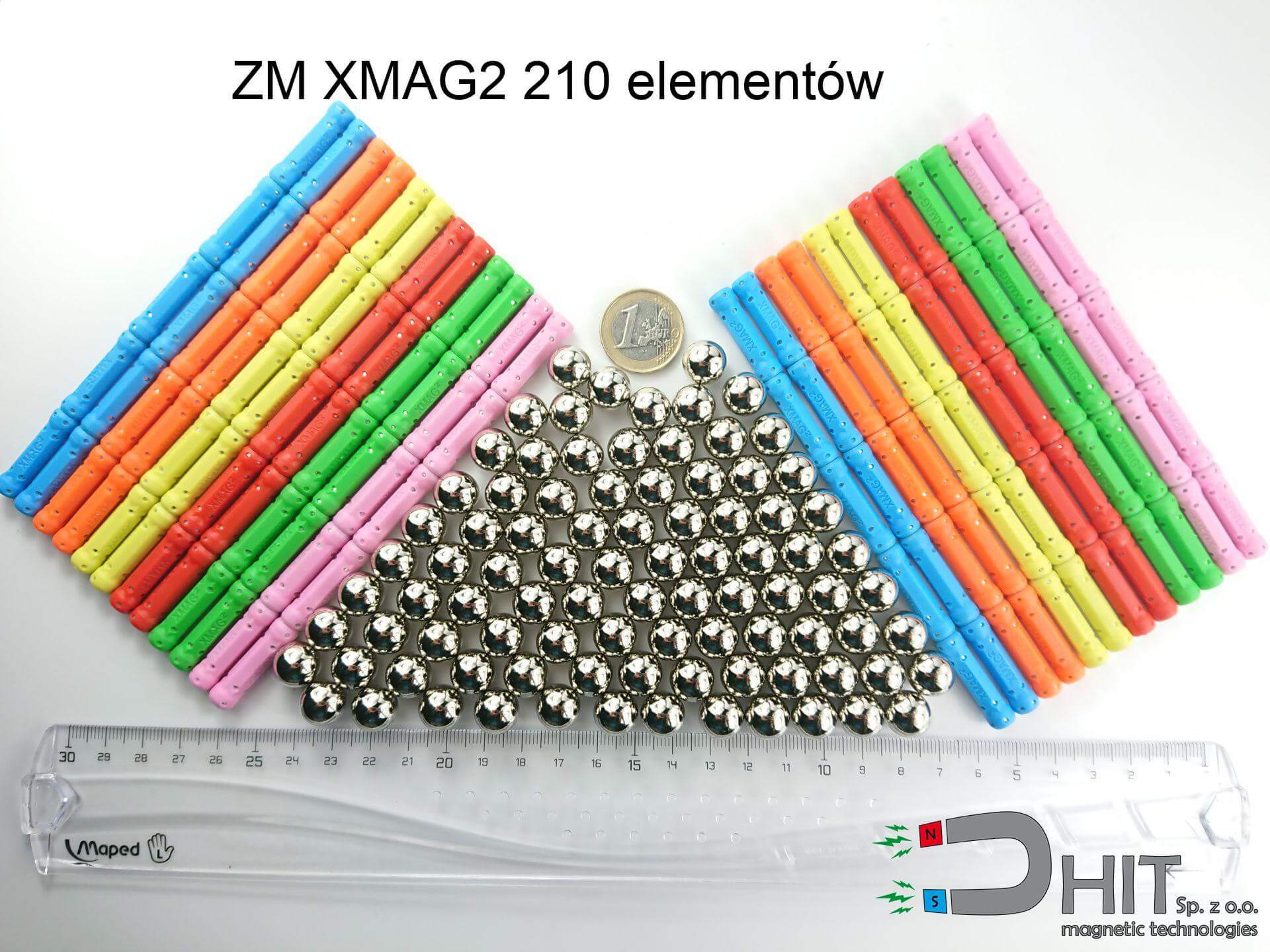
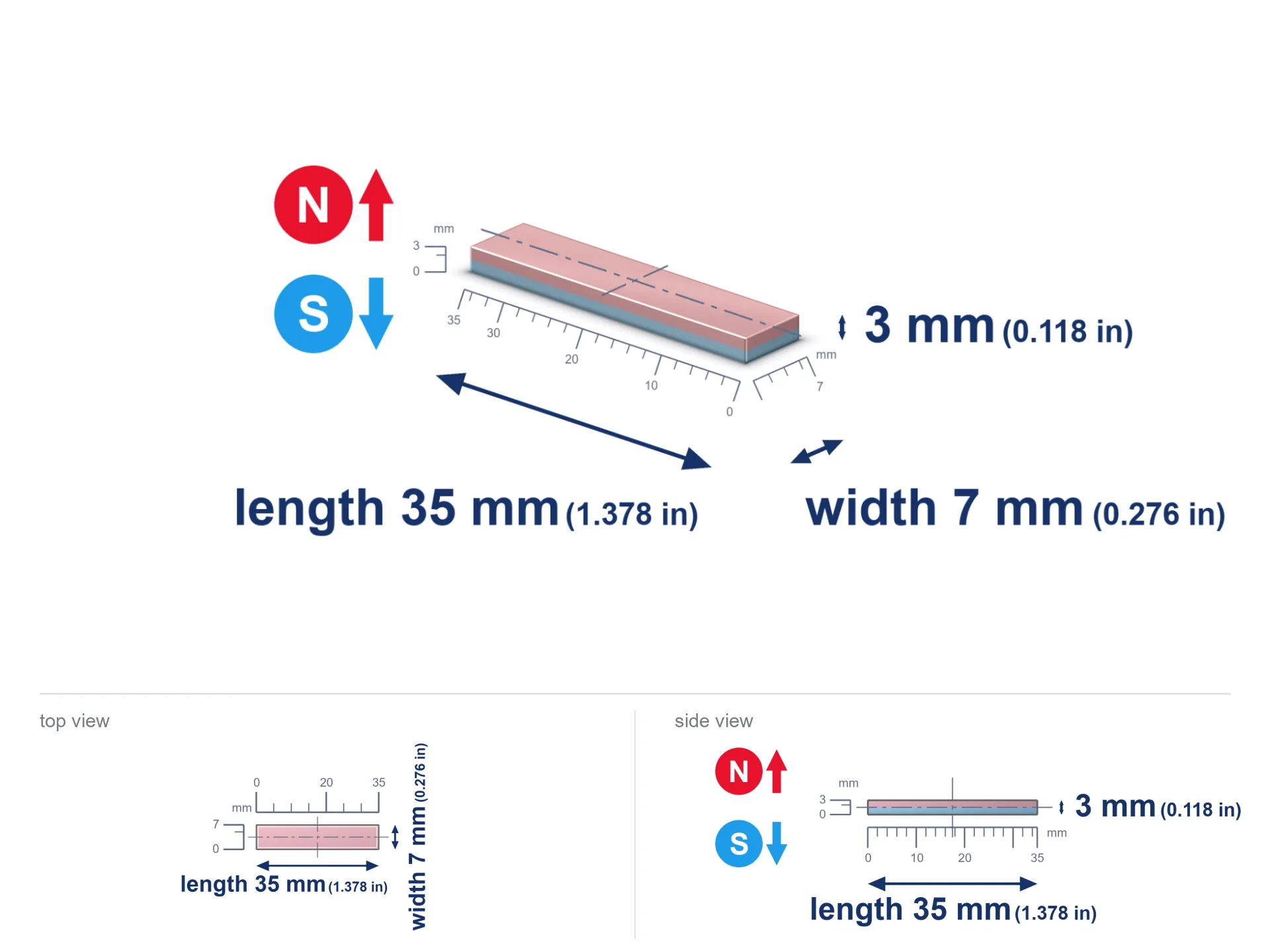
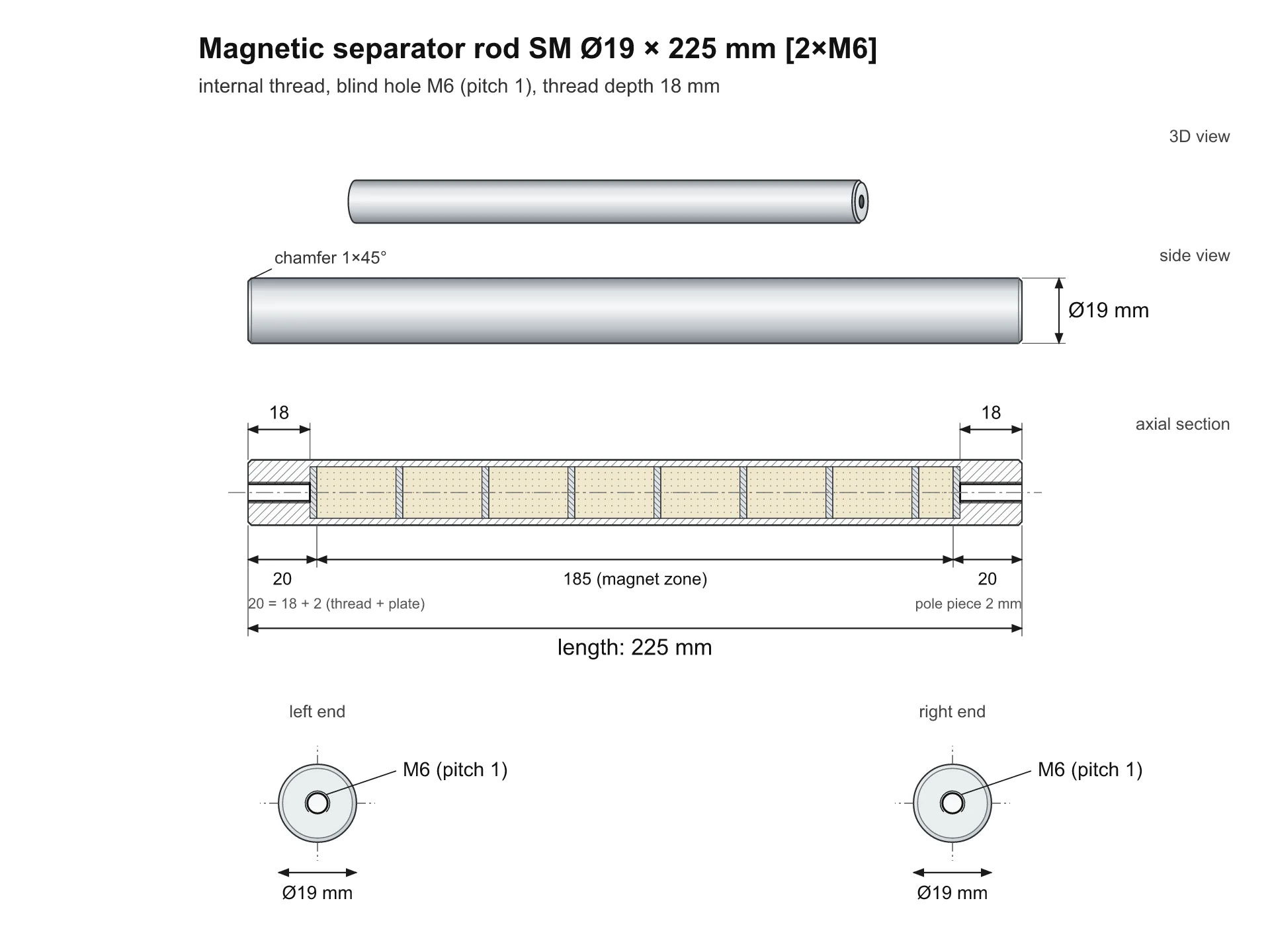
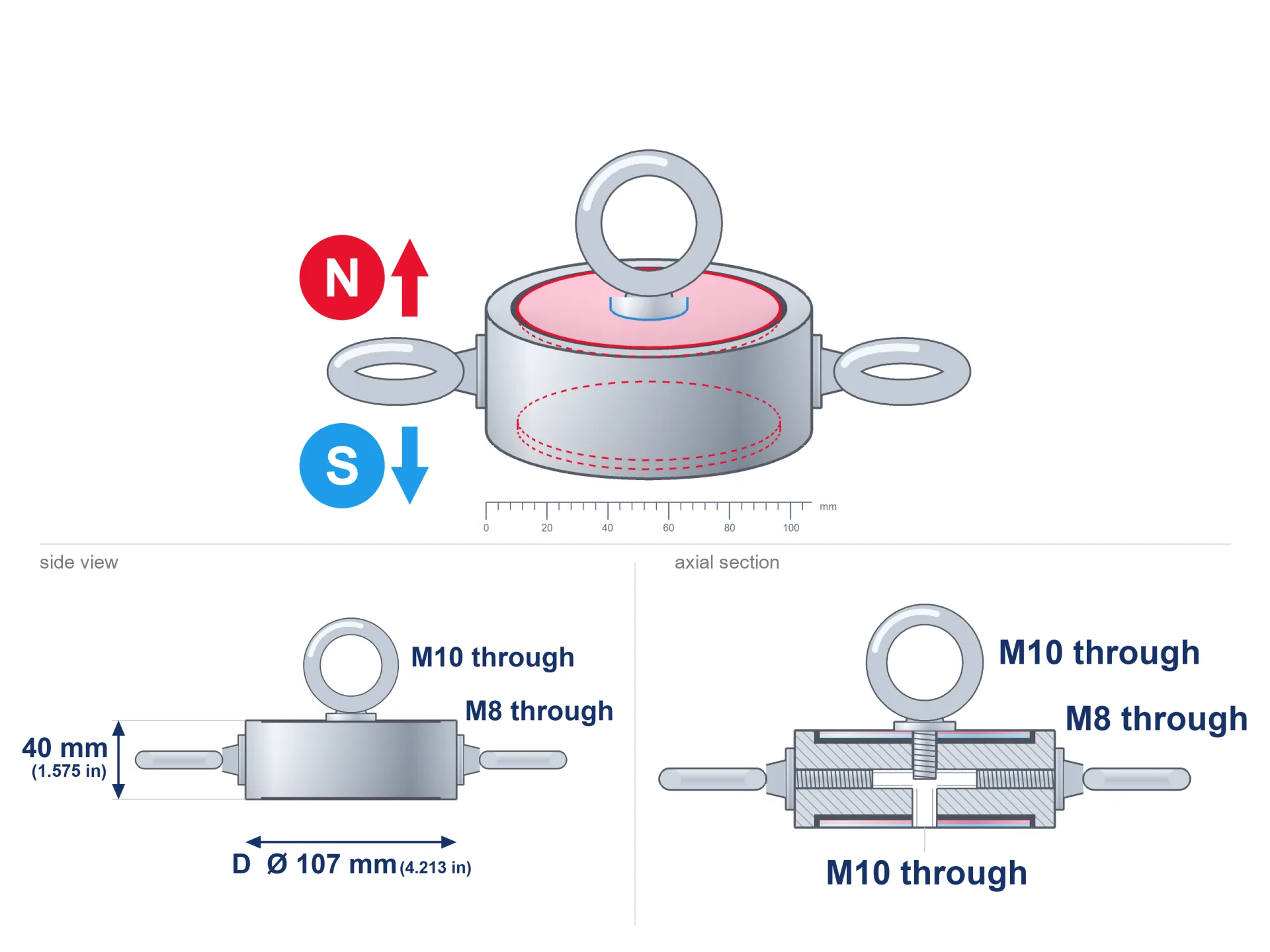
Strengths and weaknesses of neodymium magnets.
Strengths
- They do not lose power, even over around ten years – the drop in power is only ~1% (theoretically),
- Neodymium magnets are characterized by highly resistant to demagnetization caused by external interference,
- By covering with a shiny coating of silver, the element gains an modern look,
- Neodymium magnets create maximum magnetic induction on a contact point, which allows for strong attraction,
- Through (appropriate) combination of ingredients, they can achieve high thermal resistance, allowing for operation at temperatures reaching 230°C and above...
- Possibility of accurate forming and optimizing to complex conditions,
- Significant place in innovative solutions – they find application in computer drives, drive modules, medical equipment, as well as modern systems.
- Thanks to efficiency per cm³, small magnets offer high operating force, occupying minimum space,
Limitations
- They are fragile upon too strong impacts. To avoid cracks, it is worth protecting magnets in a protective case. Such protection not only shields the magnet but also improves its resistance to damage
- Do not exceed this material temperature limit: 80°C. Overheating may permanently weaken the magnet.
- When exposed to humidity, magnets usually rust. To use them in conditions outside, it is recommended to use protective magnets, such as those in rubber or plastics, which secure oxidation as well as corrosion.
- Limited ability of producing threads in the magnet and complicated shapes - recommended is a housing - mounting mechanism.
- Possible danger resulting from small fragments of magnets can be dangerous, in case of ingestion, which becomes key in the context of child health protection. Additionally, small components of these products can complicate diagnosis medical in case of swallowing.
- Due to complex production process, their price is higher than average,
Pull force analysis
Highest magnetic holding force – what it depends on?
- using a base made of mild steel, serving as a magnetic yoke
- possessing a thickness of at least 10 mm to avoid saturation
- with a plane perfectly flat
- under conditions of ideal adhesion (surface-to-surface)
- during detachment in a direction perpendicular to the mounting surface
- at standard ambient temperature
Impact of factors on magnetic holding capacity in practice
- Distance – the presence of foreign body (paint, dirt, air) interrupts the magnetic circuit, which lowers power rapidly (even by 50% at 0.5 mm).
- Load vector – highest force is obtained only during pulling at a 90° angle. The resistance to sliding of the magnet along the plate is typically many times smaller (approx. 1/5 of the lifting capacity).
- Base massiveness – too thin steel does not accept the full field, causing part of the flux to be lost into the air.
- Plate material – mild steel gives the best results. Alloy steels lower magnetic properties and lifting capacity.
- Base smoothness – the more even the plate, the better the adhesion and stronger the hold. Unevenness acts like micro-gaps.
- Operating temperature – neodymium magnets have a sensitivity to temperature. At higher temperatures they lose power, and in frost they can be stronger (up to a certain limit).
Lifting capacity testing was carried out on plates with a smooth surface of suitable thickness, under perpendicular forces, whereas under attempts to slide the magnet the holding force is lower. Additionally, even a small distance between the magnet’s surface and the plate lowers the load capacity.
Safe handling of neodymium magnets
Threat to navigation
GPS units and mobile phones are extremely susceptible to magnetic fields. Direct contact with a powerful NdFeB magnet can ruin the internal compass in your phone.
Protect data
Powerful magnetic fields can destroy records on credit cards, HDDs, and other magnetic media. Stay away of min. 10 cm.
Warning for allergy sufferers
Nickel alert: The nickel-copper-nickel coating consists of nickel. If skin irritation happens, cease working with magnets and wear gloves.
Medical interference
Warning for patients: Powerful magnets disrupt medical devices. Maintain at least 30 cm distance or ask another person to work with the magnets.
Safe operation
Before starting, read the rules. Uncontrolled attraction can break the magnet or hurt your hand. Be predictive.
This is not a toy
These products are not intended for children. Accidental ingestion of several magnets can lead to them connecting inside the digestive tract, which poses a direct threat to life and necessitates immediate surgery.
Bodily injuries
Big blocks can break fingers instantly. Under no circumstances put your hand between two strong magnets.
Thermal limits
Do not exceed the maximum operating temperature stated in the specifications of the particular product. The limit depends on the material, geometry and operating arrangement; there is no single threshold for all neodymium magnets. Overheating can permanently weaken a magnet.
Dust is flammable
Powder produced during cutting of magnets is combustible. Avoid drilling into magnets unless you are an expert.
Magnets are brittle
Beware of splinters. Magnets can fracture upon uncontrolled impact, launching sharp fragments into the air. We recommend safety glasses.
Tabela kosztu i czasu dostawy
Płatność przed wysyłką:

GLS kurier
Przesyłka będzie u Ciebie za 2-3 dni
14.99 ZŁ

InPost Paczkomaty 24/7
Przesyłka będzie u Ciebie za 1-2 dni
12.30 ZŁ
Płatność przy odbiorze (pobranie):
GLS kurier
Przesyłka będzie u Ciebie za 1-2 dni
23.00 ZŁ