
![Holder with hook UMH 25x8x45 [M5] / N38](https://cdn3.dhit.pl/graphics/banners/magnet.webp "Holder with hook UMH 25x8x45 [M5] / N38")
![UMH 25x8x45 [M5] / N38 - magnetic holder with hook](https://cdn3.dhit.pl/graphics/products/umh-25x8x45-m5-cep.jpg)
![UMH 25x8x45 [M5] / N38 - magnetic holder with hook - ujęcie 2](https://cdn3.dhit.pl/graphics/products/umh-25x8x45-m5-pib.jpg)
UMH 25x8x45 [M5] / N38 - magnetic holder with hook
magnetic holder with hook
Catalog no 310426
GTIN/EAN: 5906301814559
- Diameter Ø
- 25 mm [±1 mm]
- Height
- 45 mm [±1 mm]
- Height
- 8 mm [±1 mm]
- Weight
- 33 g
- Magnetization Direction
- ↑ axial
- Coating
- [NiCuNi] Nickel
How we measure these parameters — certificates and measurements
11.78 zł net / pcs
14.49 zł with VAT (23% VAT) / pcs
bulk discounts:
Need more?Frequently asked questions
Which magnetic holder is suitable for moving metal parts in a workshop?
How do I choose a holder for hanging a heavy item and check its real grip?
Which magnetic holders can be used outdoors?
How should I choose a strong threaded holder for field work?
Call us now
+48 888 99 98 98
alternatively let us know using
contact form
the contact section.
Specifications and structure of a neodymium magnet can be estimated using our
power calculator.
Order by 14:00 and we’ll ship today!
Technical details - UMH 25x8x45 [M5] / N38 - magnetic holder with hook
Specification / characteristics - UMH 25x8x45 [M5] / N38 - magnetic holder with hook
| properties | values |
|---|---|
| Cat. no. | 310426 |
| GTIN/EAN | 5906301814559 |
| Production/Distribution | Dhit sp. z o.o. |
| Country of origin | Poland / China / Germany |
| Customs code | 85059029 |
| Diameter Ø | 25 mm [±1 mm] |
| Height | 45 mm [±1 mm] |
| Height | 8 mm [±1 mm] |
| Weight | 33 g |
| Magnetization Direction | ↑ axial |
| Load capacity ~ ? | 25.00 kg / 245.17 N |
| Coating | [NiCuNi] Nickel |
| Manufacturing Tolerance | ±1 mm |
Magnetic properties of material N38
| properties | values | units |
|---|---|---|
| Remanence Br ? | 12.2-12.6 | kGs |
| Remanence Br ? | 1220-1260 | mT |
| Coercivity bHc ? | 10.8-11.5 | kOe |
| Coercivity bHc ? | 860-915 | kA/m |
| Intrinsic coercivity iHc | ≥ 12 | kOe |
| Intrinsic coercivity iHc | ≥ 955 | kA/m |
| Energy product BHmax ? | 36-38 | BH max MGOe |
| Energy product BHmax ? | 287-303 | BH max KJ/m |
| Maximum working temperature ? | ≤ 80 | °C |
Physical properties of sintered neodymium magnets Nd2Fe14B at 20°C
| properties | values | units |
|---|---|---|
| Vickers hardness | ≥550 | Hv |
| Density | ≥7.4 | g/cm3 |
| Curie Temperature TC | 310 | °C |
| Curie Temperature TF | 590 | °F |
| Specific resistance | 150 | μΩ⋅cm |
| Bending strength | 250 | MPa |
| Compressive strength | 1000~1100 | MPa |
| Thermal expansion parallel (∥) to orientation (M) | (3-4) x 10-6 | °C-1 |
| Thermal expansion perpendicular (⊥) to orientation (M) | -(1-3) x 10-6 | °C-1 |
| Young's modulus | 1.7 x 10⁴ | kg/mm² |
Chemical composition
| iron (Fe) | 64% – 68% |
| neodymium (Nd) | 29% – 32% |
| boron (B) | 1.1% – 1.2% |
| dysprosium (Dy) | 0.5% – 2.0% |
| coating (Ni-Cu-Ni) | < 0.05% |
Ecology and recycling (GPSR)
| recyclability (EoL) | 100% |
| recycled raw materials | ~10% (pre-cons) |
| carbon footprint | low / zredukowany |
| waste code (EWC) | 16 02 16 |
Check out also deals

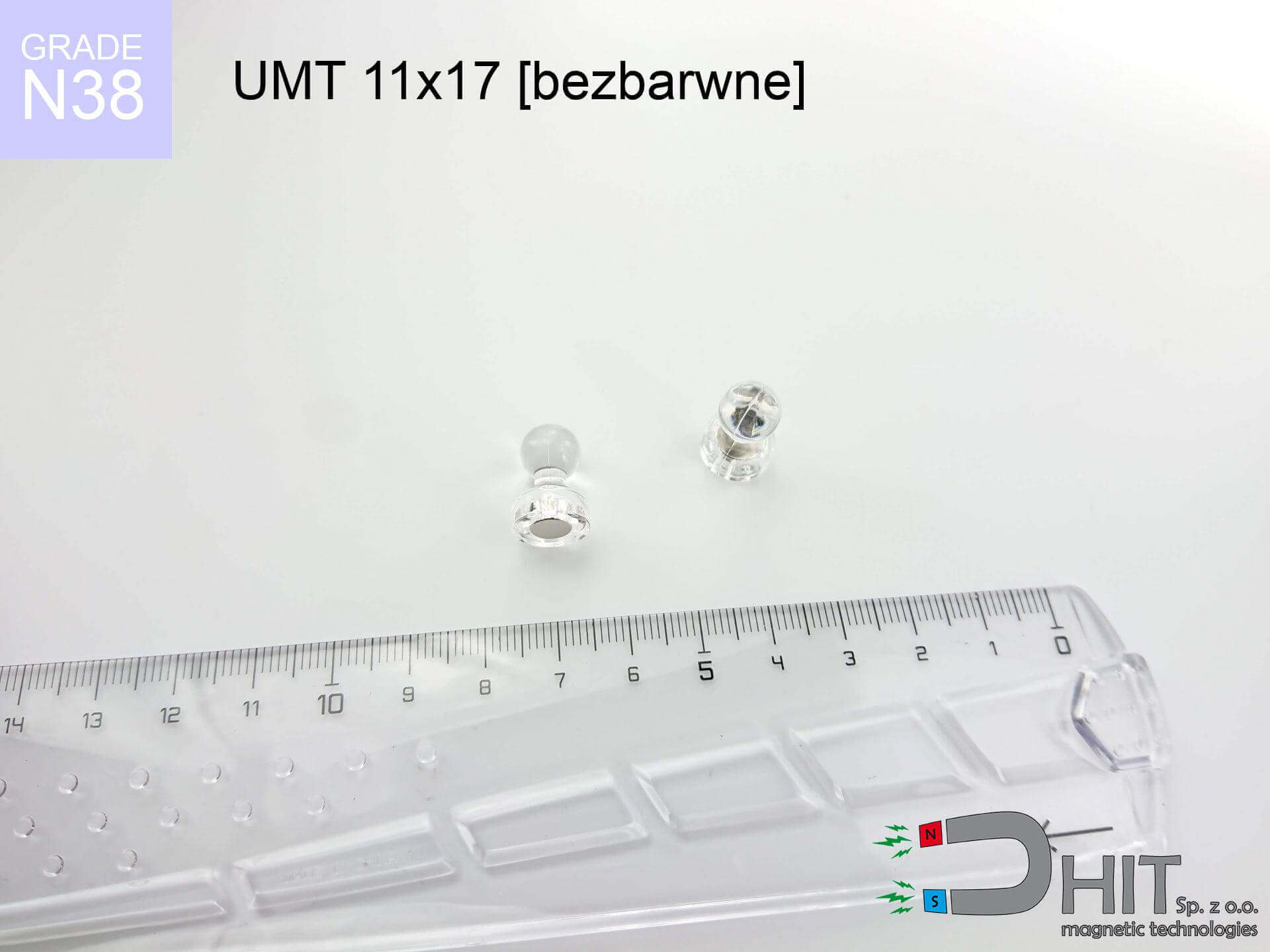
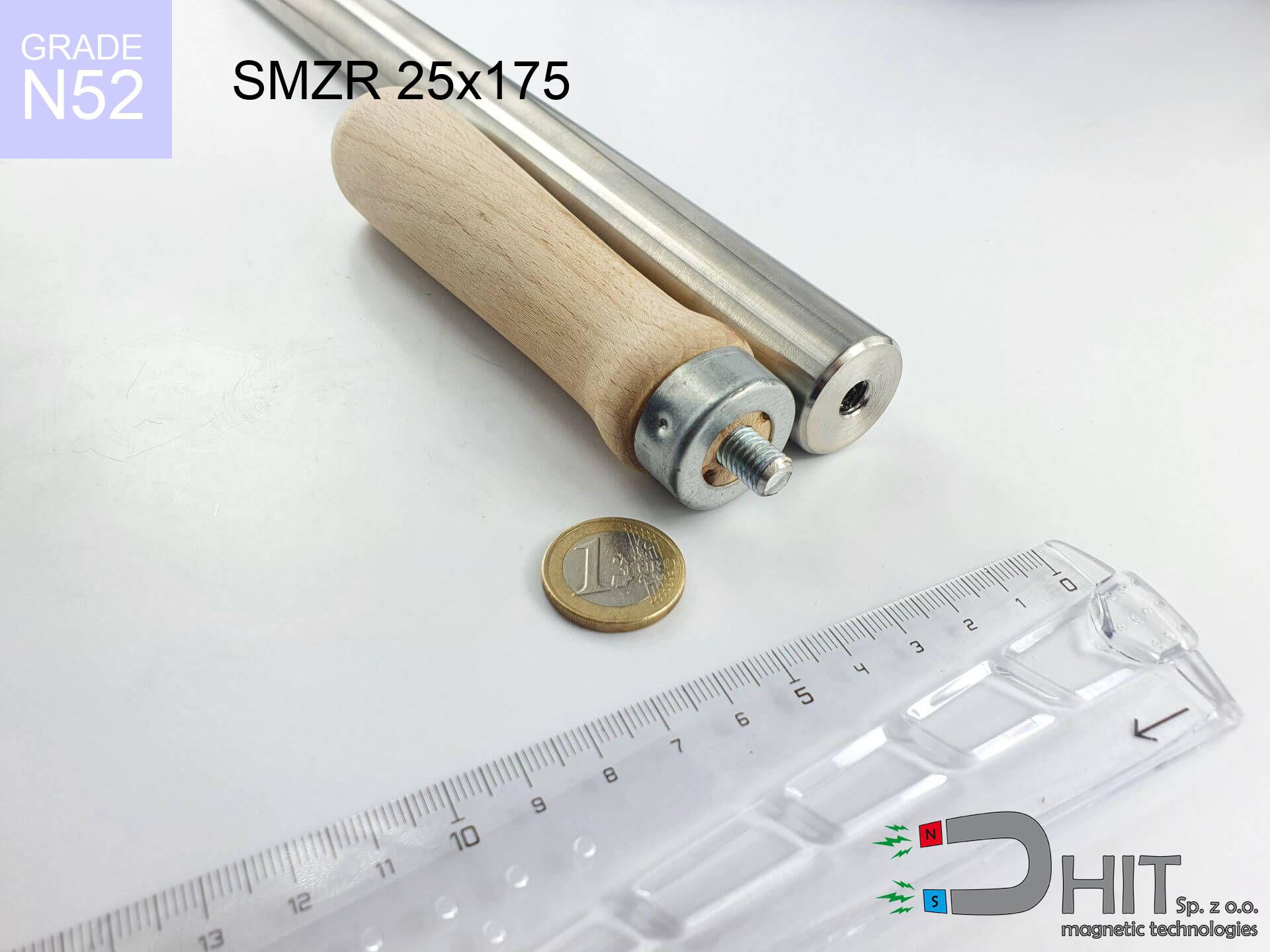
![SM 32x275 [2xM8] / N52 - magnetic separator](https://cdn3.dhit.pl/graphics/products/sm-32x275-2xm8-get.jpg "SM 32x275 [2xM8] / N52 - magnetic separator")
Pros and cons of rare earth magnets.
Benefits
- They do not lose power, even after approximately ten years – the drop in lifting capacity is only ~1% (theoretically),
- Magnets effectively protect themselves against demagnetization caused by ambient magnetic noise,
- Thanks to the shimmering finish, the layer of nickel, gold-plated, or silver gives an modern appearance,
- Magnetic induction on the working part of the magnet is maximum,
- Thanks to resistance to high temperature, they are able to function (depending on the shape) even at temperatures up to 230°C and higher...
- Considering the potential of precise forming and adaptation to unique needs, magnetic components can be manufactured in a variety of geometric configurations, which increases their versatility,
- Key role in modern technologies – they are utilized in magnetic memories, electric motors, medical devices, and modern systems.
- Thanks to concentrated force, small magnets offer high operating force, occupying minimum space,
Limitations
- At very strong impacts they can break, therefore we recommend placing them in strong housings. A metal housing provides additional protection against damage and increases the magnet's durability.
- Do not exceed this material temperature limit: 80°C. Overheating may permanently weaken the magnet.
- When exposed to humidity, magnets usually rust. To use them in conditions outside, it is recommended to use protective magnets, such as those in rubber or plastics, which prevent oxidation and corrosion.
- Limited possibility of producing threads in the magnet and complex shapes - recommended is casing - magnetic holder.
- Health risk related to microscopic parts of magnets can be dangerous, when accidentally swallowed, which becomes key in the context of child health protection. Furthermore, small elements of these devices can be problematic in diagnostics medical in case of swallowing.
- With mass production the cost of neodymium magnets is a challenge,
Lifting parameters
Maximum lifting force for a neodymium magnet – what affects it?
- using a base made of high-permeability steel, serving as a ideal flux conductor
- possessing a thickness of minimum 10 mm to avoid saturation
- with a plane free of scratches
- with zero gap (without paint)
- under vertical force vector (90-degree angle)
- at standard ambient temperature
Practical lifting capacity: influencing factors
- Clearance – the presence of foreign body (paint, tape, air) interrupts the magnetic circuit, which lowers power steeply (even by 50% at 0.5 mm).
- Force direction – catalog parameter refers to pulling vertically. When attempting to slide, the magnet exhibits much less (often approx. 20-30% of maximum force).
- Wall thickness – thin material does not allow full use of the magnet. Magnetic flux passes through the material instead of converting into lifting capacity.
- Metal type – not every steel reacts the same. Alloy additives worsen the interaction with the magnet.
- Surface condition – ground elements guarantee perfect abutment, which improves field saturation. Uneven metal reduce efficiency.
- Temperature – heating the magnet causes a temporary drop of induction. It is worth remembering the thermal limit for a given model.
Lifting capacity was determined with the use of a polished steel plate of optimal thickness (min. 20 mm), under vertically applied force, in contrast under shearing force the lifting capacity is smaller. In addition, even a slight gap between the magnet’s surface and the plate reduces the lifting capacity.
Warnings
Adults only
Product intended for adults. Small elements pose a choking risk, causing intestinal necrosis. Store out of reach of kids and pets.
Dust is flammable
Machining of neodymium magnets carries a risk of fire risk. Magnetic powder oxidizes rapidly with oxygen and is difficult to extinguish.
GPS Danger
A strong magnetic field disrupts the functioning of magnetometers in smartphones and GPS navigation. Do not bring magnets close to a device to avoid breaking the sensors.
Keep away from computers
Powerful magnetic fields can destroy records on payment cards, HDDs, and other magnetic media. Stay away of at least 10 cm.
Warning for allergy sufferers
Studies show that the nickel plating (standard magnet coating) is a potent allergen. For allergy sufferers, avoid direct skin contact or choose encased magnets.
Safe operation
Use magnets consciously. Their powerful strength can shock even professionals. Stay alert and respect their power.
Medical implants
For implant holders: Powerful magnets affect medical devices. Maintain at least 30 cm distance or request help to work with the magnets.
Demagnetization risk
Avoid heat. Neodymium magnets are susceptible to heat. If you need operation above 80°C, look for special high-temperature series (H, SH, UH).
Eye protection
NdFeB magnets are ceramic materials, which means they are very brittle. Collision of two magnets will cause them cracking into shards.
Bodily injuries
Pinching hazard: The attraction force is so immense that it can result in blood blisters, crushing, and even bone fractures. Protective gloves are recommended.
Tabela kosztu i czasu dostawy
Płatność przed wysyłką:

GLS kurier
Przesyłka będzie u Ciebie za 2-3 dni
14.99 ZŁ

InPost Paczkomaty 24/7
Przesyłka będzie u Ciebie za 1-2 dni
12.30 ZŁ
Płatność przy odbiorze (pobranie):
GLS kurier
Przesyłka będzie u Ciebie za 1-2 dni
23.00 ZŁ