

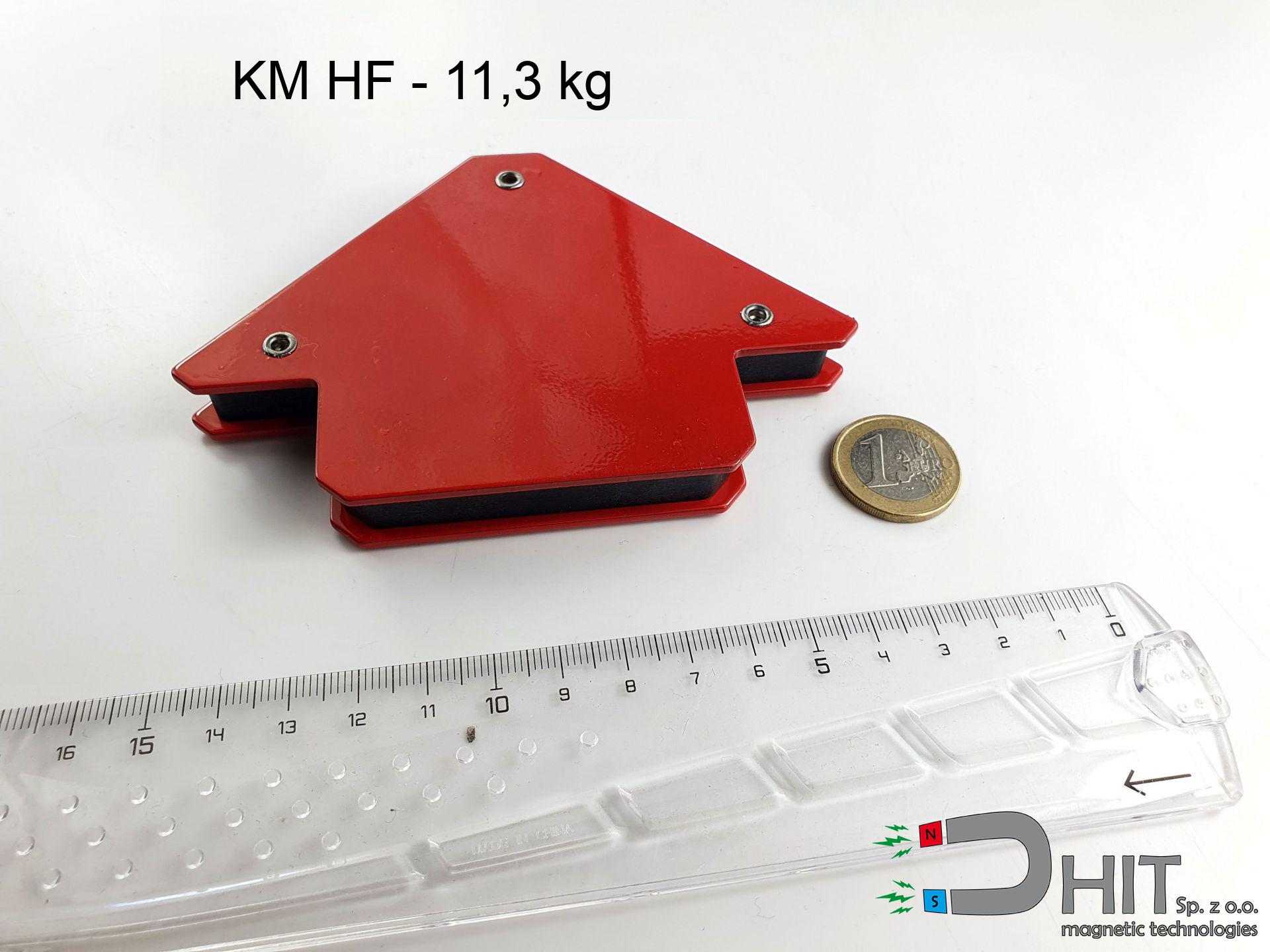
KM HF - 11,3 kg - magnetic bracket
magnetic bracket
Catalog no 170256
GTIN/EAN: 5906301813682
- Weight
- 304 g
How we measure these parameters — certificates and measurements
20.00 zł net / pcs
24.60 zł with VAT (23% VAT) / pcs
bulk discounts:
Need more?Frequently asked questions
Which magnetic holder is suitable for moving metal parts in a workshop?
How do I choose a holder for hanging a heavy item and check its real grip?
Which magnetic holders can be used outdoors?
How should I choose a strong threaded holder for field work?
Call us now
+48 888 99 98 98
alternatively let us know using
contact form
the contact section.
Specifications and structure of a neodymium magnet can be estimated using our
power calculator.
Order by 14:00 and we’ll ship today!
Technical details - KM HF - 11,3 kg - magnetic bracket
Specification / characteristics - KM HF - 11,3 kg - magnetic bracket
| properties | values |
|---|---|
| Cat. no. | 170256 |
| GTIN/EAN | 5906301813682 |
| Production/Distribution | Dhit sp. z o.o. |
| Country of origin | Poland / China / Germany |
| Customs code | 85059029 |
| Weight | 304 g |
| Load capacity ~ ? | 11.30 kg / 110.82 N |
| Manufacturing Tolerance | ±1 mm |
Physical properties of sintered neodymium magnets Nd2Fe14B at 20°C
| properties | values | units |
|---|---|---|
| Vickers hardness | ≥550 | Hv |
| Density | ≥7.4 | g/cm3 |
| Curie Temperature TC | 310 | °C |
| Curie Temperature TF | 590 | °F |
| Specific resistance | 150 | μΩ⋅cm |
| Bending strength | 250 | MPa |
| Compressive strength | 1000~1100 | MPa |
| Thermal expansion parallel (∥) to orientation (M) | (3-4) x 10-6 | °C-1 |
| Thermal expansion perpendicular (⊥) to orientation (M) | -(1-3) x 10-6 | °C-1 |
| Young's modulus | 1.7 x 10⁴ | kg/mm² |
Elemental analysis
| iron (Fe) | 64% – 68% |
| neodymium (Nd) | 29% – 32% |
| boron (B) | 1.1% – 1.2% |
| dysprosium (Dy) | 0.5% – 2.0% |
| coating (Ni-Cu-Ni) | < 0.05% |
Sustainability
| recyclability (EoL) | 100% |
| recycled raw materials | ~10% (pre-cons) |
| carbon footprint | low / zredukowany |
| waste code (EWC) | 16 02 16 |
Check out also deals
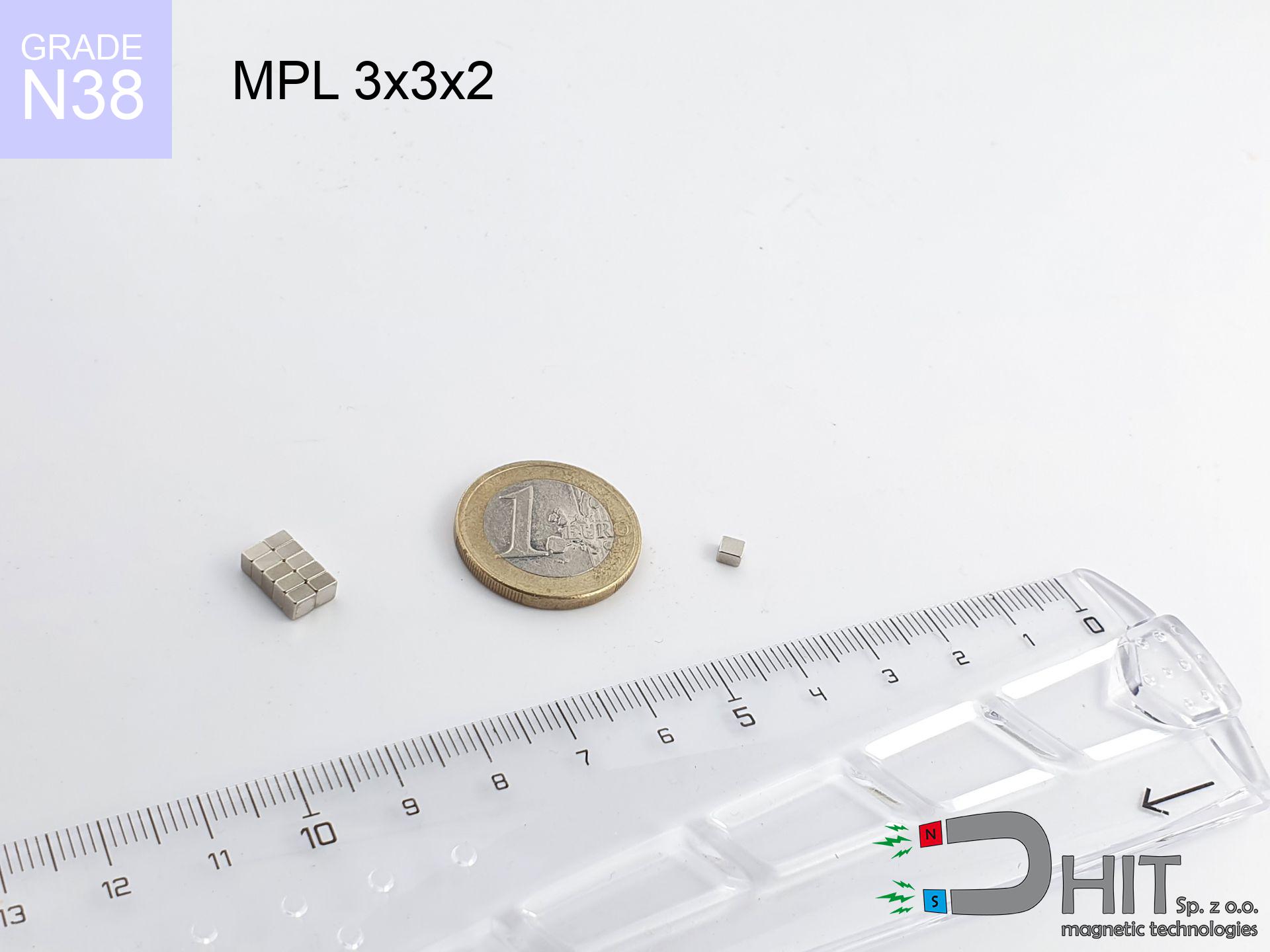

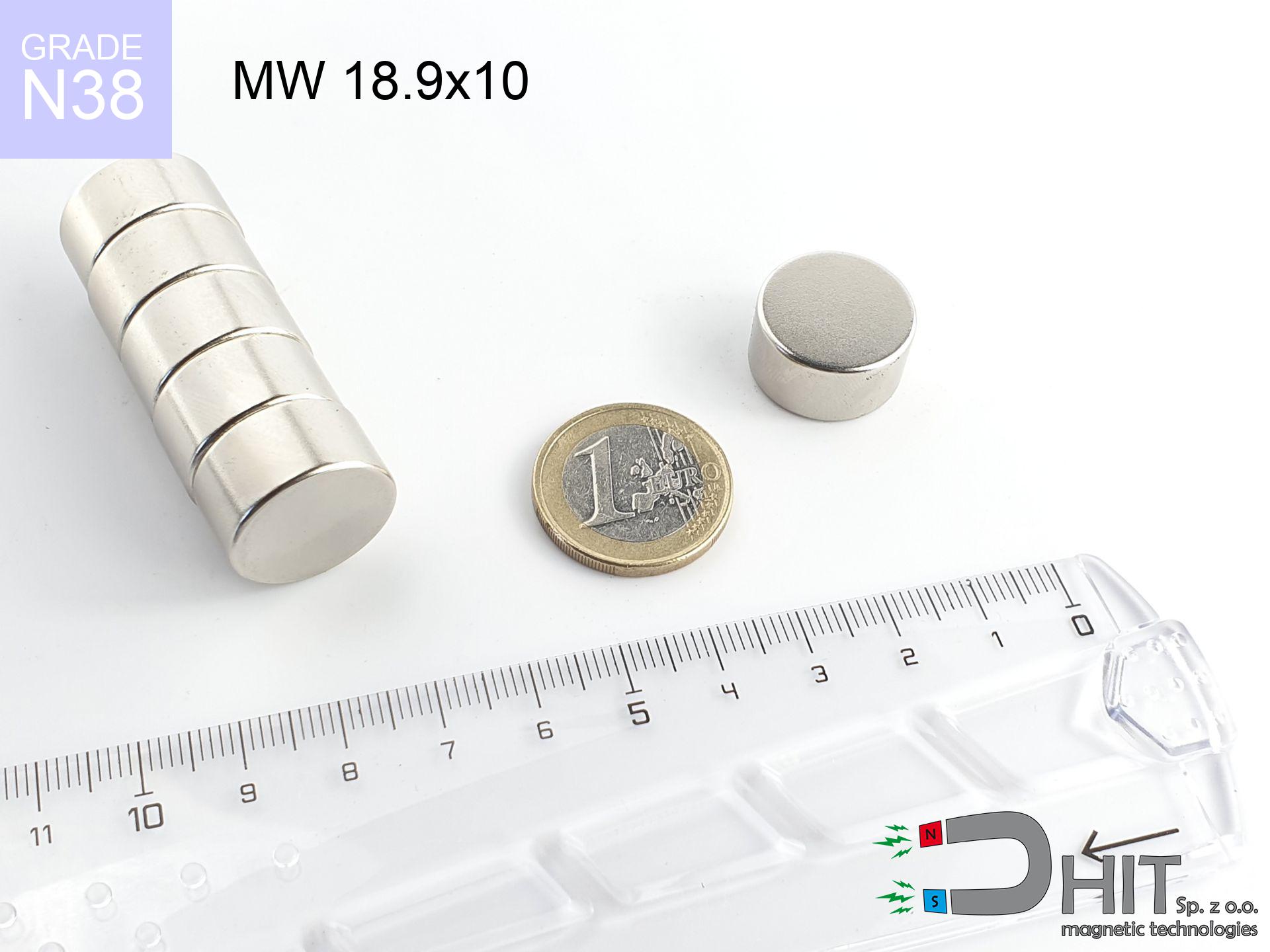
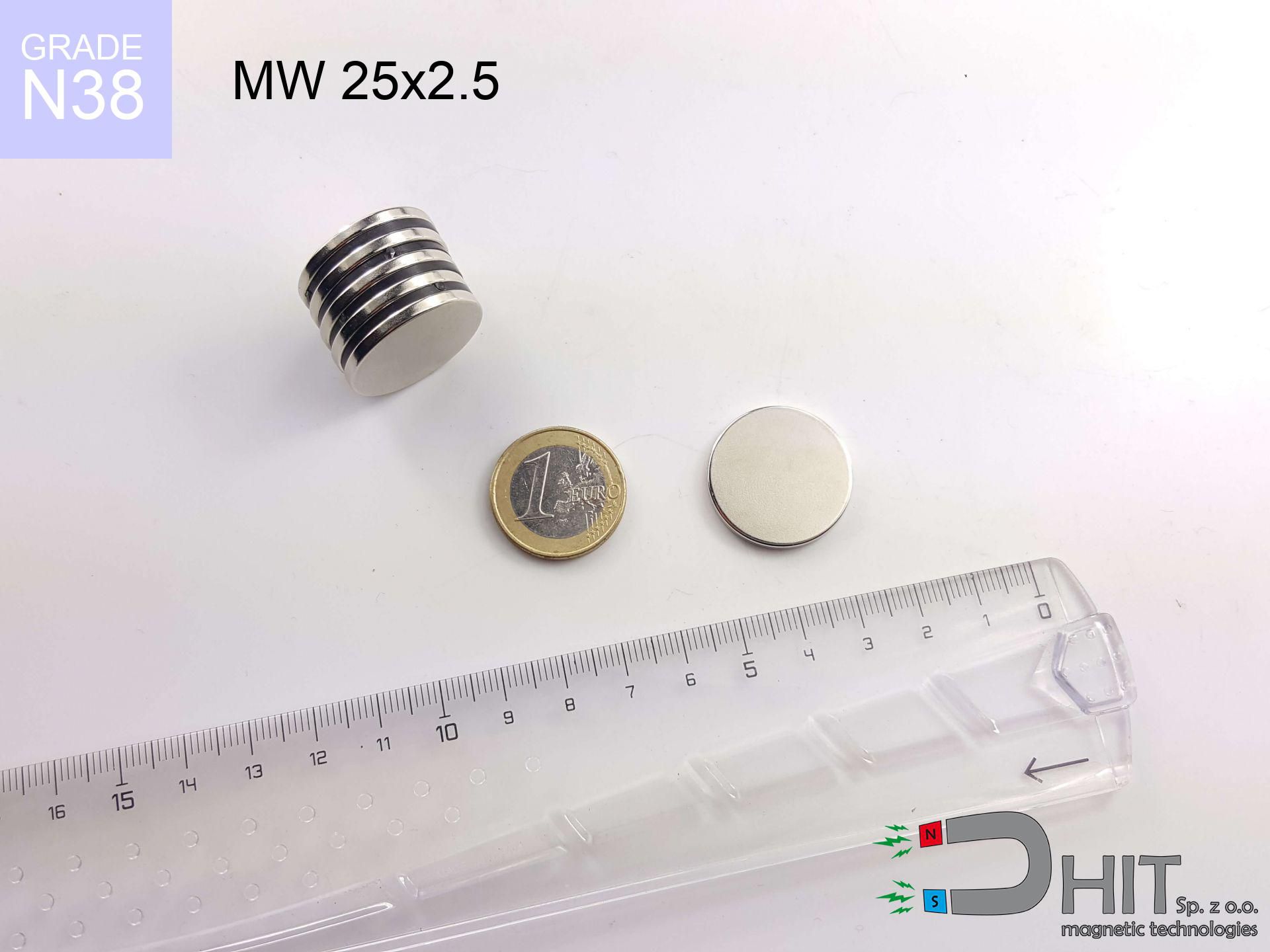
Advantages as well as disadvantages of neodymium magnets.
Strengths
- They have stable power, and over around 10 years their performance decreases symbolically – ~1% (according to theory),
- Magnets very well resist against loss of magnetization caused by external fields,
- By using a lustrous coating of gold, the element acquires an modern look,
- They show high magnetic induction at the operating surface, which improves attraction properties,
- Made from properly selected components, these magnets show impressive resistance to high heat, enabling them to function (depending on their form) at temperatures up to 230°C and above...
- Thanks to versatility in shaping and the capacity to modify to complex applications,
- Universal use in high-tech industry – they find application in magnetic memories, brushless drives, medical devices, also technologically advanced constructions.
- Compactness – despite small sizes they provide effective action, making them ideal for precision applications
Cons
- To avoid cracks upon strong impacts, we recommend using special steel housings. Such a solution secures the magnet and simultaneously improves its durability.
- Heat sensitivity: observe the temperature specified for this product. Overheating may permanently weaken the magnet.
- When exposed to humidity, magnets usually rust. To use them in conditions outside, it is recommended to use protective magnets, such as magnets in rubber or plastics, which secure oxidation as well as corrosion.
- Limited possibility of making nuts in the magnet and complex forms - recommended is a housing - magnetic holder.
- Potential hazard related to microscopic parts of magnets are risky, in case of ingestion, which becomes key in the context of child safety. It is also worth noting that tiny parts of these devices are able to complicate diagnosis medical after entering the body.
- Higher cost of purchase is one of the disadvantages compared to ceramic magnets, especially in budget applications
Lifting parameters
Best holding force of the magnet in ideal parameters – what affects it?
- using a sheet made of low-carbon steel, functioning as a circuit closing element
- possessing a massiveness of minimum 10 mm to avoid saturation
- with a surface cleaned and smooth
- with total lack of distance (without impurities)
- under vertical force vector (90-degree angle)
- at temperature room level
Lifting capacity in real conditions – factors
- Distance – the presence of foreign body (rust, tape, air) acts as an insulator, which reduces capacity steeply (even by 50% at 0.5 mm).
- Force direction – declared lifting capacity refers to detachment vertically. When applying parallel force, the magnet holds much less (often approx. 20-30% of maximum force).
- Wall thickness – thin material does not allow full use of the magnet. Part of the magnetic field passes through the material instead of converting into lifting capacity.
- Material composition – not every steel attracts identically. Alloy additives worsen the attraction effect.
- Surface structure – the smoother and more polished the plate, the better the adhesion and higher the lifting capacity. Unevenness creates an air distance.
- Thermal factor – hot environment weakens magnetic field. Exceeding the limit temperature can permanently damage the magnet.
Holding force was tested on a smooth steel plate of 20 mm thickness, when the force acted perpendicularly, in contrast under shearing force the load capacity is reduced by as much as 5 times. Moreover, even a slight gap between the magnet’s surface and the plate lowers the lifting capacity.
Safe handling of NdFeB magnets
Finger safety
Risk of injury: The attraction force is so great that it can result in blood blisters, crushing, and even bone fractures. Use thick gloves.
Avoid contact if allergic
Certain individuals experience a sensitization to Ni, which is the standard coating for neodymium magnets. Frequent touching might lead to skin redness. We strongly advise use safety gloves.
Eye protection
Neodymium magnets are ceramic materials, meaning they are very brittle. Clashing of two magnets leads to them cracking into small pieces.
Swallowing risk
Always store magnets out of reach of children. Choking hazard is significant, and the consequences of magnets clamping inside the body are very dangerous.
Magnetic media
Data protection: Strong magnets can damage payment cards and delicate electronics (pacemakers, medical aids, timepieces).
Dust is flammable
Combustion risk: Rare earth powder is highly flammable. Do not process magnets in home conditions as this risks ignition.
Threat to navigation
Be aware: rare earth magnets generate a field that disrupts precision electronics. Maintain a safe distance from your phone, tablet, and GPS.
Respect the power
Before use, read the rules. Uncontrolled attraction can destroy the magnet or hurt your hand. Be predictive.
Thermal limits
Standard neodymium magnets (grade N) lose magnetization when the temperature exceeds 80°C. The loss of strength is permanent.
Pacemakers
For implant holders: Powerful magnets disrupt electronics. Maintain minimum 30 cm distance or request help to handle the magnets.
Tabela kosztu i czasu dostawy
Płatność przed wysyłką:

GLS kurier
Przesyłka będzie u Ciebie za 2-3 dni
14.99 ZŁ

InPost Paczkomaty 24/7
Przesyłka będzie u Ciebie za 1-2 dni
12.30 ZŁ
Płatność przy odbiorze (pobranie):
GLS kurier
Przesyłka będzie u Ciebie za 1-2 dni
23.00 ZŁ