
UMGZ 20x15x7 [M4] GZ zestaw 4 szt. / N38 - magnetic holder external thread
magnetic holder external thread
Catalog no 190552
GTIN/EAN: 5906301815440
- Diameter Ø
- 20 mm [±1 mm]
- Height
- 15 mm [±1 mm]
- Height
- 7 mm [±1 mm]
- Weight
- 56 g
- Magnetization Direction
- ↑ axial
- Coating
- [NiCuNi] Nickel
How we measure these parameters — certificates and measurements
20.32 zł net / pcs
24.99 zł with VAT (23% VAT) / pcs
bulk discounts:
Need more?Frequently asked questions
Which magnetic holder is suitable for moving metal parts in a workshop?
How do I choose a holder for hanging a heavy item and check its real grip?
Which magnetic holders can be used outdoors?
How should I choose a strong threaded holder for field work?
Call us now
+48 888 99 98 98
alternatively let us know using
contact form
the contact section.
Specifications and structure of a neodymium magnet can be estimated using our
power calculator.
Order by 14:00 and we’ll ship today!
Technical specification - UMGZ 20x15x7 [M4] GZ zestaw 4 szt. / N38 - magnetic holder external thread
Specification / characteristics - UMGZ 20x15x7 [M4] GZ zestaw 4 szt. / N38 - magnetic holder external thread
| properties | values |
|---|---|
| Cat. no. | 190552 |
| GTIN/EAN | 5906301815440 |
| Distributor | Dhit sp. z o.o. |
| Country of origin | Poland / China / Germany |
| Customs code | 85059029 |
| Diameter Ø | 20 mm [±1 mm] |
| Height | 15 mm [±1 mm] |
| Height | 7 mm [±1 mm] |
| Weight | 56 g |
| Magnetization Direction | ↑ axial |
| Load capacity ~ ? | 9.00 kg / 88.26 N |
| Coating | [NiCuNi] Nickel |
| Manufacturing Tolerance | ±1 mm |
Magnetic properties of material N38
| properties | values | units |
|---|---|---|
| Remanence Br ? | 12.2-12.6 | kGs |
| Remanence Br ? | 1220-1260 | mT |
| Coercivity bHc ? | 10.8-11.5 | kOe |
| Coercivity bHc ? | 860-915 | kA/m |
| Intrinsic coercivity iHc | ≥ 12 | kOe |
| Intrinsic coercivity iHc | ≥ 955 | kA/m |
| Energy product BHmax ? | 36-38 | BH max MGOe |
| Energy product BHmax ? | 287-303 | BH max KJ/m |
| Maximum working temperature ? | ≤ 80 | °C |
Physical properties of sintered neodymium magnets Nd2Fe14B at 20°C
| properties | values | units |
|---|---|---|
| Vickers hardness | ≥550 | Hv |
| Density | ≥7.4 | g/cm3 |
| Curie Temperature TC | 310 | °C |
| Curie Temperature TF | 590 | °F |
| Specific resistance | 150 | μΩ⋅cm |
| Bending strength | 250 | MPa |
| Compressive strength | 1000~1100 | MPa |
| Thermal expansion parallel (∥) to orientation (M) | (3-4) x 10-6 | °C-1 |
| Thermal expansion perpendicular (⊥) to orientation (M) | -(1-3) x 10-6 | °C-1 |
| Young's modulus | 1.7 x 10⁴ | kg/mm² |
Chemical composition
| iron (Fe) | 64% – 68% |
| neodymium (Nd) | 29% – 32% |
| boron (B) | 1.1% – 1.2% |
| dysprosium (Dy) | 0.5% – 2.0% |
| coating (Ni-Cu-Ni) | < 0.05% |
Sustainability
| recyclability (EoL) | 100% |
| recycled raw materials | ~10% (pre-cons) |
| carbon footprint | low / zredukowany |
| waste code (EWC) | 16 02 16 |
Check out more deals
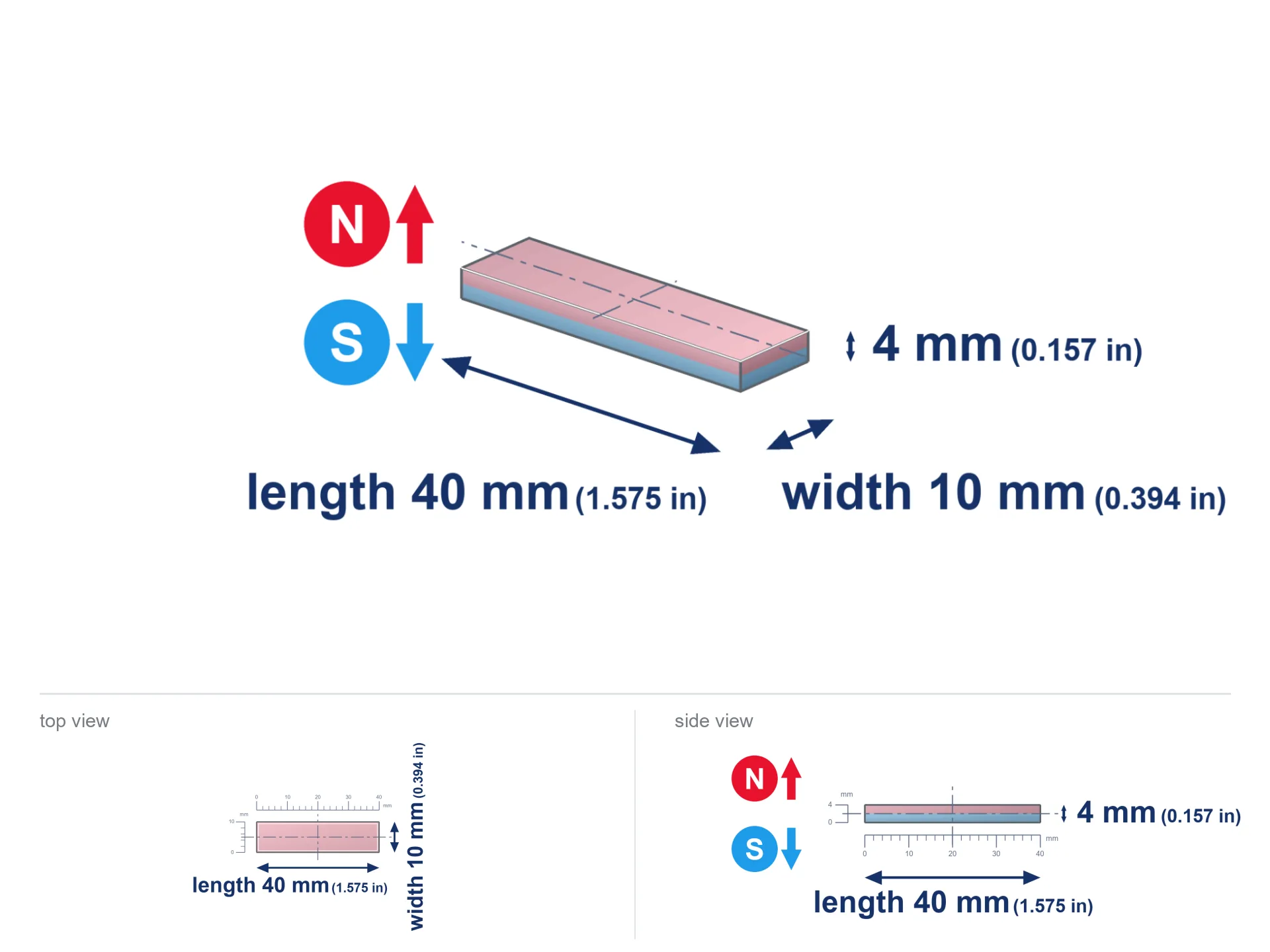
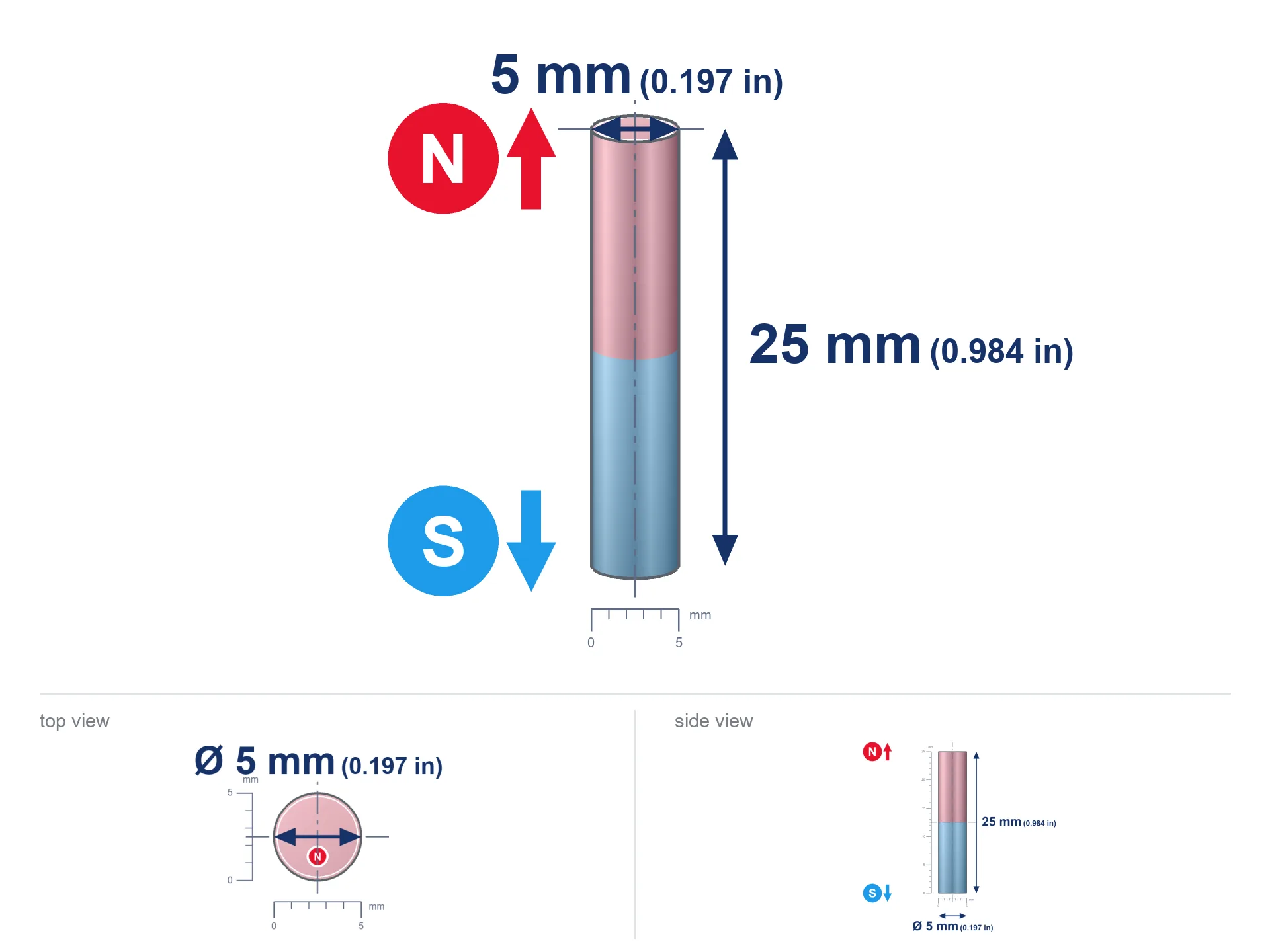

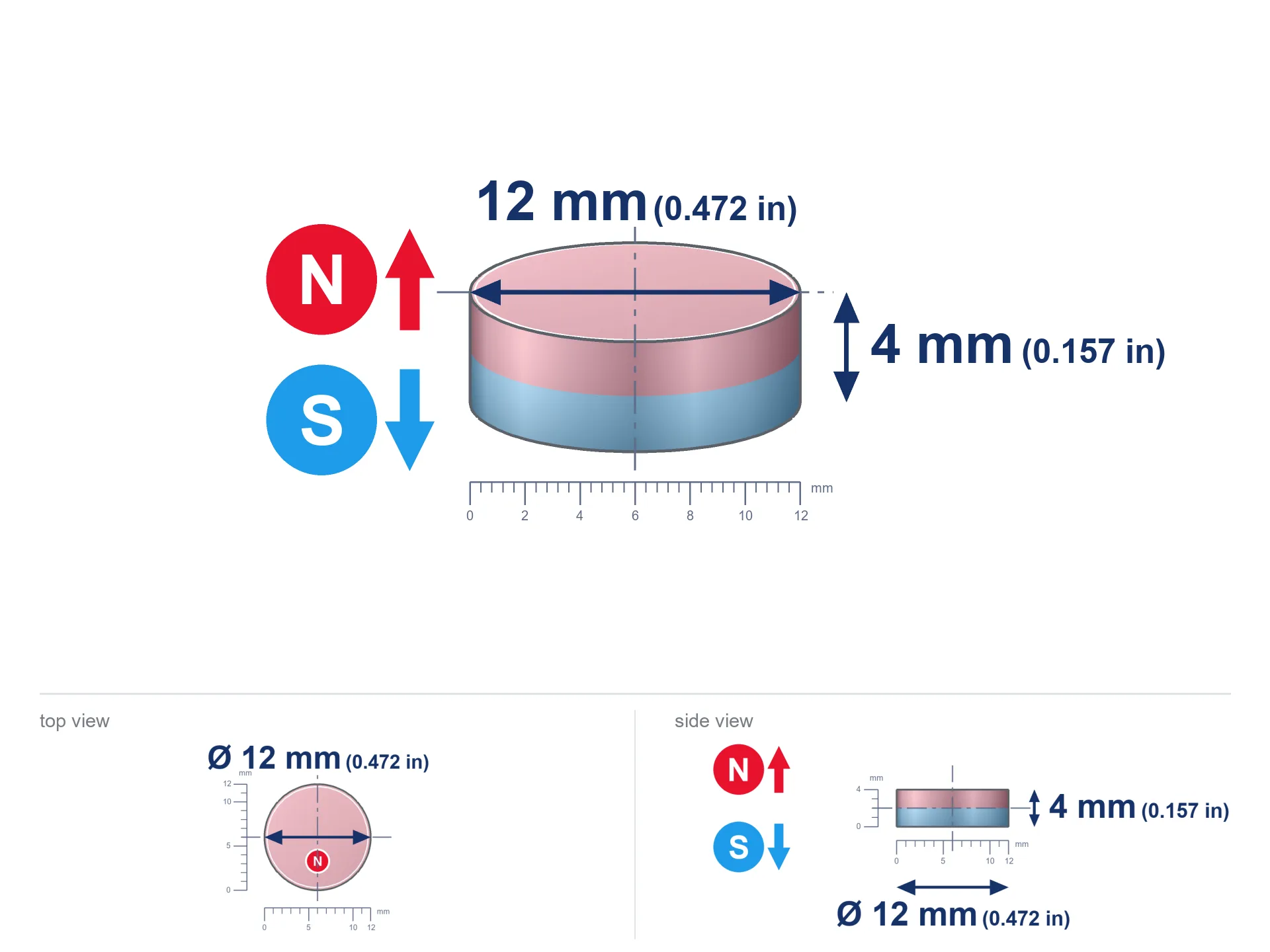
Advantages as well as disadvantages of Nd2Fe14B magnets.
Benefits
- They have unchanged lifting capacity, and over around ten years their attraction force decreases symbolically – ~1% (in testing),
- Magnets perfectly defend themselves against demagnetization caused by foreign field sources,
- Thanks to the smooth finish, the layer of nickel, gold, or silver-plated gives an aesthetic appearance,
- Magnetic induction on the working layer of the magnet remains maximum,
- Neodymium magnets are characterized by very high magnetic induction on the magnet surface and can work (depending on the form) even at a temperature of 230°C or more...
- Due to the ability of accurate shaping and adaptation to unique needs, magnetic components can be manufactured in a variety of shapes and sizes, which makes them more universal,
- Fundamental importance in electronics industry – they are used in data components, electric motors, precision medical tools, and modern systems.
- Relatively small size with high pulling force – neodymium magnets offer high power in tiny dimensions, which enables their usage in miniature devices
Limitations
- They are prone to damage upon heavy impacts. To avoid cracks, it is worth securing magnets using a steel holder. Such protection not only protects the magnet but also increases its resistance to damage
- Do not exceed this material temperature limit: 80°C. Overheating may permanently weaken the magnet.
- Due to the susceptibility of magnets to corrosion in a humid environment, we advise using waterproof magnets made of rubber, plastic or other material stable to moisture, when using outdoors
- Limited possibility of making threads in the magnet and complex shapes - recommended is a housing - mounting mechanism.
- Potential hazard to health – tiny shards of magnets can be dangerous, when accidentally swallowed, which gains importance in the context of child safety. It is also worth noting that small elements of these products are able to complicate diagnosis medical in case of swallowing.
- Higher cost of purchase is a significant factor to consider compared to ceramic magnets, especially in budget applications
Lifting parameters
Maximum magnetic pulling force – what affects it?
- with the application of a sheet made of special test steel, guaranteeing full magnetic saturation
- whose thickness is min. 10 mm
- with a surface cleaned and smooth
- without the slightest air gap between the magnet and steel
- under perpendicular force vector (90-degree angle)
- in stable room temperature
Impact of factors on magnetic holding capacity in practice
- Distance – existence of any layer (paint, tape, gap) acts as an insulator, which lowers power rapidly (even by 50% at 0.5 mm).
- Load vector – highest force is reached only during pulling at a 90° angle. The force required to slide of the magnet along the surface is usually several times lower (approx. 1/5 of the lifting capacity).
- Wall thickness – the thinner the sheet, the weaker the hold. Magnetic flux passes through the material instead of generating force.
- Plate material – low-carbon steel gives the best results. Higher carbon content decrease magnetic properties and holding force.
- Base smoothness – the more even the surface, the larger the contact zone and stronger the hold. Roughness acts like micro-gaps.
- Temperature influence – hot environment reduces pulling force. Exceeding the limit temperature can permanently damage the magnet.
Lifting capacity testing was carried out on a smooth plate of optimal thickness, under perpendicular forces, whereas under attempts to slide the magnet the holding force is lower. Additionally, even a small distance between the magnet and the plate decreases the load capacity.
Warnings
GPS and phone interference
Remember: neodymium magnets generate a field that disrupts precision electronics. Keep a safe distance from your mobile, device, and GPS.
Heat sensitivity
Do not exceed the maximum operating temperature stated in the specifications of the particular product. The limit depends on the material, geometry and operating arrangement; there is no single threshold for all neodymium magnets. Overheating can permanently weaken a magnet.
Handling guide
Before starting, read the rules. Uncontrolled attraction can break the magnet or injure your hand. Think ahead.
Fire warning
Machining of neodymium magnets poses a fire hazard. Magnetic powder reacts violently with oxygen and is hard to extinguish.
Safe distance
Avoid bringing magnets near a wallet, computer, or screen. The magnetic field can irreversibly ruin these devices and erase data from cards.
Skin irritation risks
Nickel alert: The nickel-copper-nickel coating contains nickel. If an allergic reaction happens, immediately stop handling magnets and wear gloves.
Serious injuries
Watch your fingers. Two large magnets will join instantly with a force of several hundred kilograms, crushing anything in their path. Be careful!
Danger to the youngest
Always keep magnets out of reach of children. Ingestion danger is high, and the effects of magnets clamping inside the body are life-threatening.
Medical implants
Warning for patients: Powerful magnets disrupt medical devices. Keep at least 30 cm distance or ask another person to work with the magnets.
Risk of cracking
NdFeB magnets are sintered ceramics, meaning they are fragile like glass. Impact of two magnets leads to them shattering into small pieces.
Tabela kosztu i czasu dostawy
Płatność przed wysyłką:

GLS kurier
Przesyłka będzie u Ciebie za 2-3 dni
14.99 ZŁ

InPost Paczkomaty 24/7
Przesyłka będzie u Ciebie za 1-2 dni
12.30 ZŁ
Płatność przy odbiorze (pobranie):
GLS kurier
Przesyłka będzie u Ciebie za 1-2 dni
23.00 ZŁ