

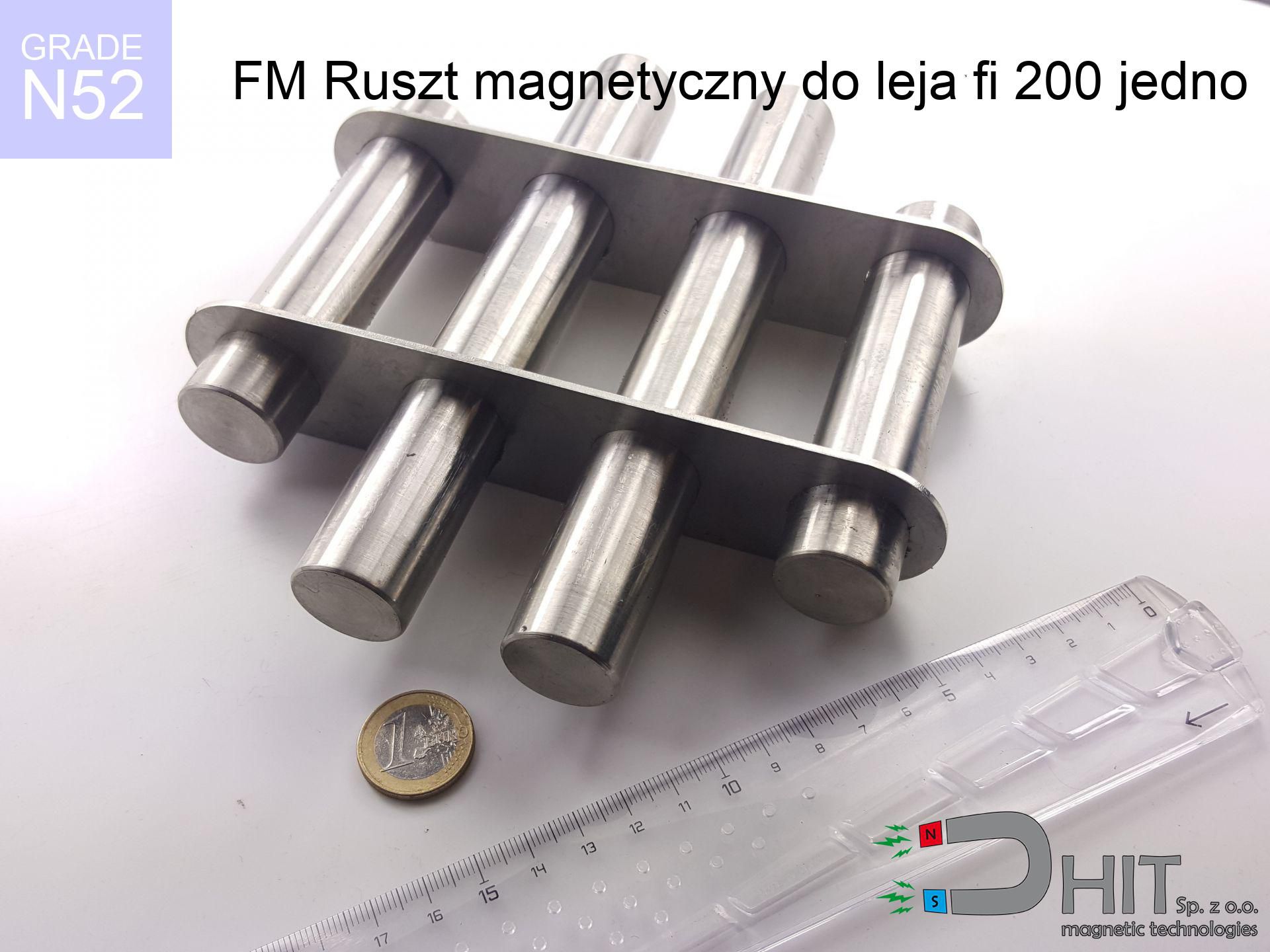
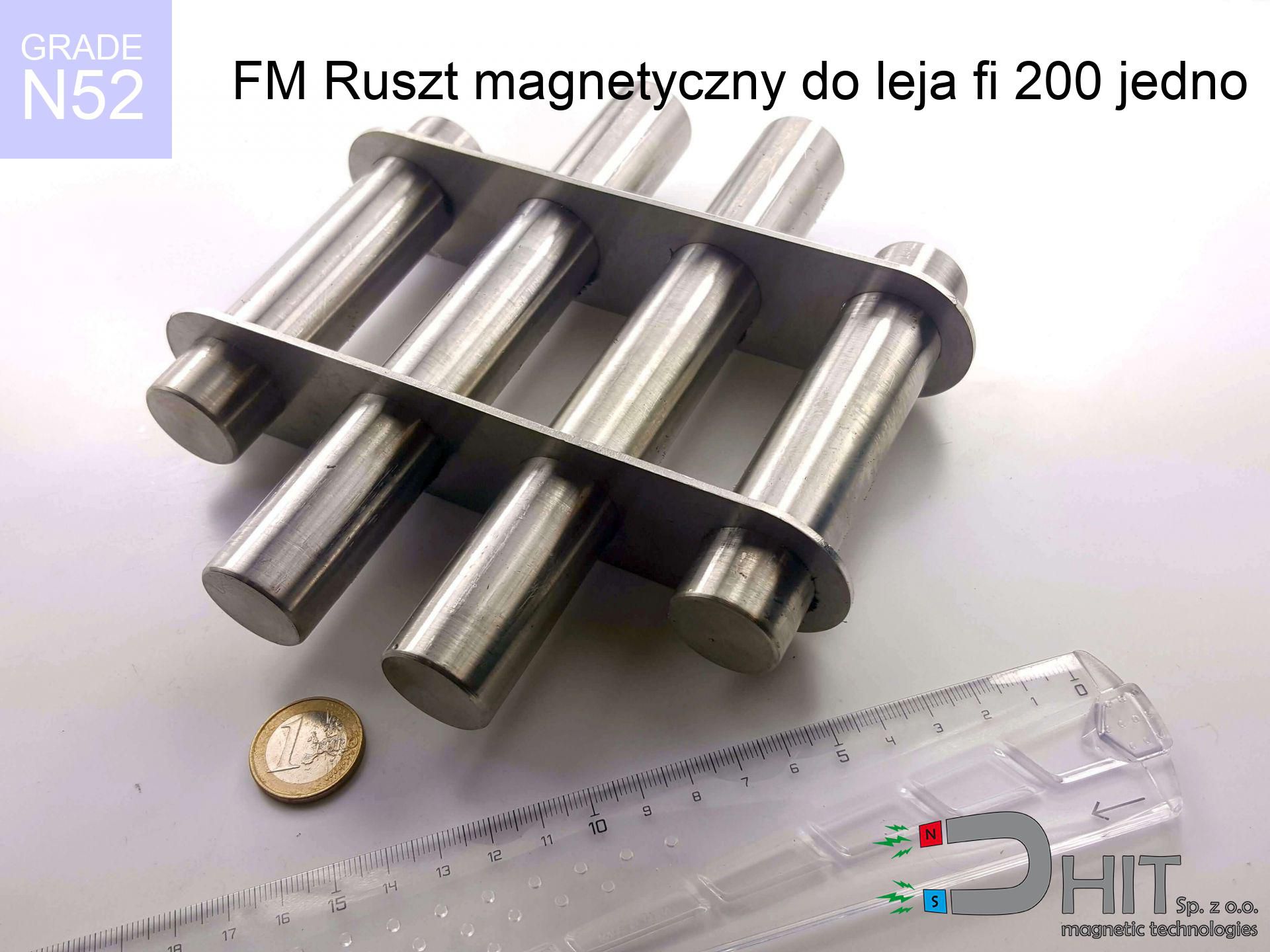
FM Ruszt magnetyczny do leja fi 200 jednopoziomowy / N52 - magnetic filter
magnetic filter
Catalog no 110457
GTIN/EAN: 5906301812654
- Weight
- 2250 g
- Coating
- [NiCuNi] Nickel
How we measure these parameters — certificates and measurements
1600.00 zł net / pcs
1968.00 zł with VAT (23% VAT) / pcs
bulk discounts:
Need more?Frequently asked questions
How do I choose a separator for fine contamination and check availability?
Where can I order a separator for a production line, and what should I check?
How can I verify a separator's declared magnetic parameters before purchase?
Can a magnetic beam withstand continuous work on a production line?
What roller design is suitable for a dusty environment?
How do I choose the size of a hand-held separator?
What is a hand-held separator for, and how is it different from a built-in rod?
Which separator type suits a small production plant?
Call us now
+48 888 99 98 98
alternatively let us know using
contact form
the contact section.
Specifications and structure of a neodymium magnet can be estimated using our
power calculator.
Order by 14:00 and we’ll ship today!
Product card - FM Ruszt magnetyczny do leja fi 200 jednopoziomowy / N52 - magnetic filter
Specification / characteristics - FM Ruszt magnetyczny do leja fi 200 jednopoziomowy / N52 - magnetic filter
| properties | values |
|---|---|
| Cat. no. | 110457 |
| GTIN/EAN | 5906301812654 |
| Production/Distribution | Dhit sp. z o.o. |
| Country of origin | Poland / China / Germany |
| Customs code | 85059029 |
| Weight | 2250 g |
| Coating | [NiCuNi] Nickel |
| Manufacturing Tolerance | ±1 mm |
Magnetic properties of material N52
| properties | values | units |
|---|---|---|
| Remanence Br ? | 14.2-14.7 | kGs |
| Remanence Br ? | 1420-1470 | mT |
| Coercivity bHc ? | 10.8-12.5 | kOe |
| Coercivity bHc ? | 860-995 | kA/m |
| Intrinsic coercivity iHc | ≥ 12 | kOe |
| Intrinsic coercivity iHc | ≥ 955 | kA/m |
| Energy product BHmax ? | 48-53 | BH max MGOe |
| Energy product BHmax ? | 380-422 | BH max KJ/m |
| Maximum working temperature ? | ≤ 60 | °C |
Physical properties of sintered neodymium magnets Nd2Fe14B at 20°C
| properties | values | units |
|---|---|---|
| Vickers hardness | ≥550 | Hv |
| Density | ≥7.4 | g/cm3 |
| Curie Temperature TC | 310 | °C |
| Curie Temperature TF | 590 | °F |
| Specific resistance | 150 | μΩ⋅cm |
| Bending strength | 250 | MPa |
| Compressive strength | 1000~1100 | MPa |
| Thermal expansion parallel (∥) to orientation (M) | (3-4) x 10-6 | °C-1 |
| Thermal expansion perpendicular (⊥) to orientation (M) | -(1-3) x 10-6 | °C-1 |
| Young's modulus | 1.7 x 10⁴ | kg/mm² |
Elemental analysis
| iron (Fe) | 64% – 68% |
| neodymium (Nd) | 29% – 32% |
| boron (B) | 1.1% – 1.2% |
| dysprosium (Dy) | 0.5% – 2.0% |
| coating (Ni-Cu-Ni) | < 0.05% |
Ecology and recycling (GPSR)
| recyclability (EoL) | 100% |
| recycled raw materials | ~10% (pre-cons) |
| carbon footprint | low / zredukowany |
| waste code (EWC) | 16 02 16 |
Other offers
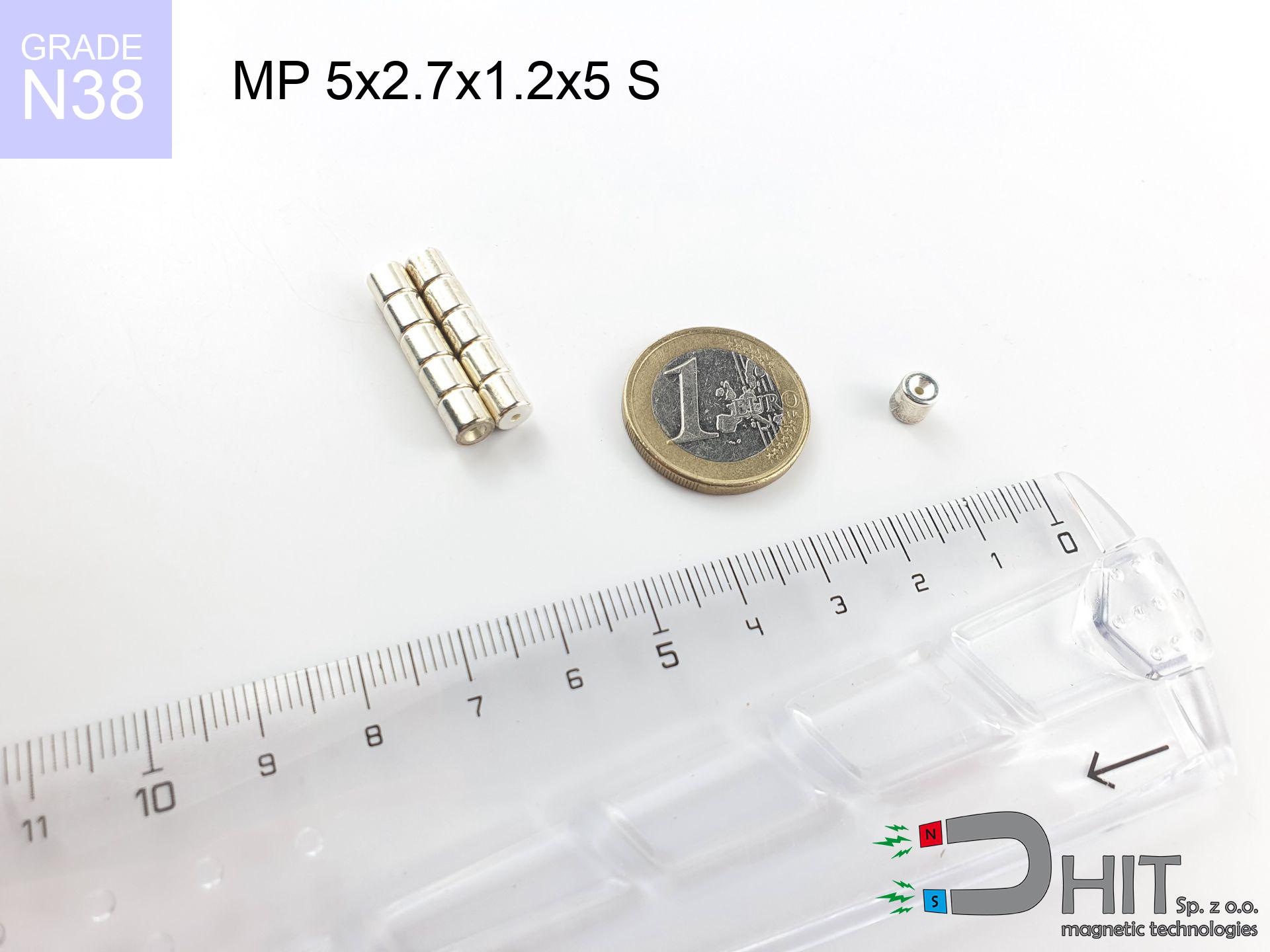
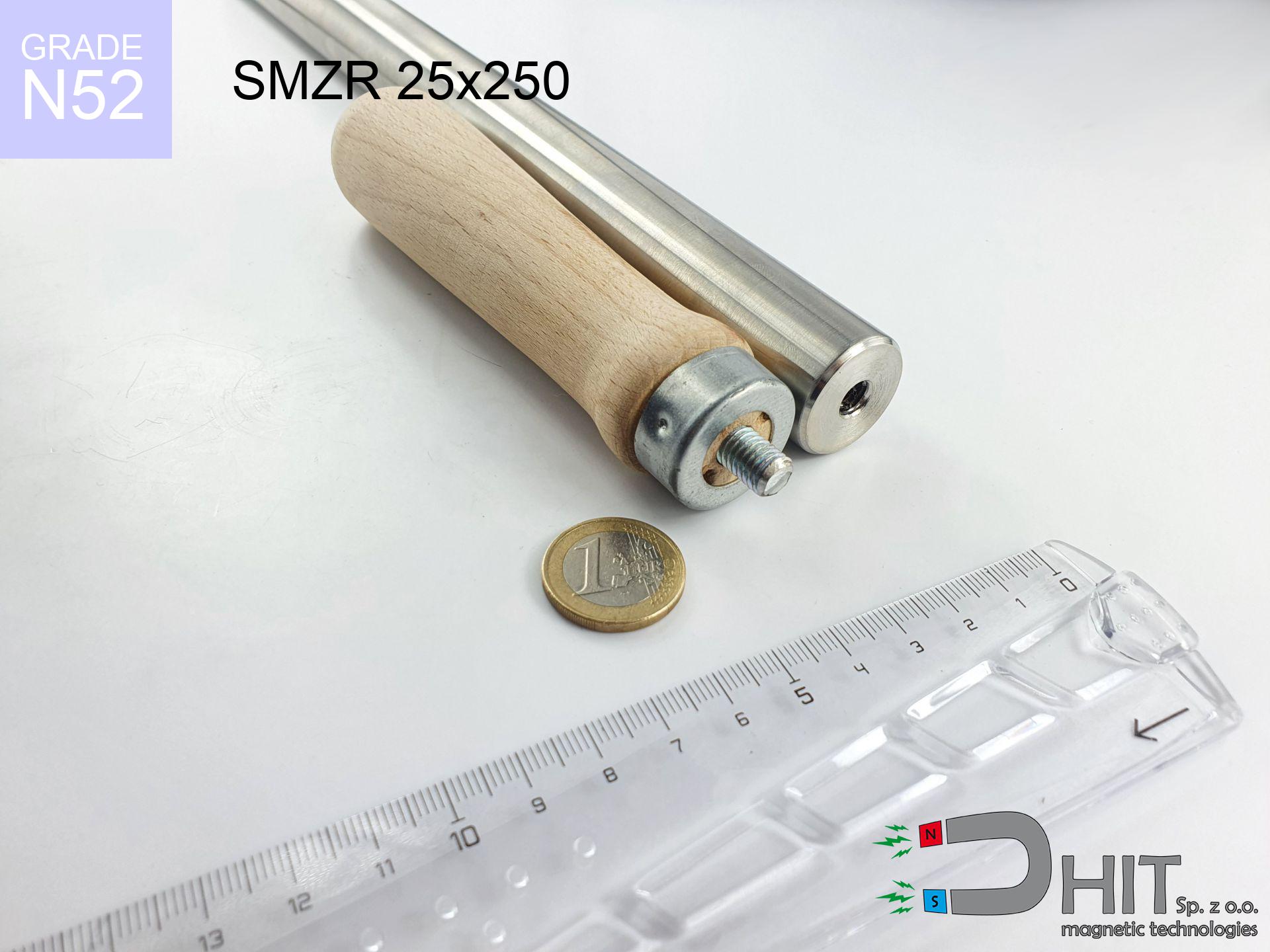
Strengths as well as weaknesses of neodymium magnets.
Pros
- They have constant strength, and over more than ten years their attraction force decreases symbolically – ~1% (in testing),
- They maintain their magnetic properties even under close interference source,
- Thanks to the smooth finish, the layer of nickel, gold, or silver gives an clean appearance,
- They show high magnetic induction at the operating surface, which improves attraction properties,
- Made from properly selected components, these magnets show impressive resistance to high heat, enabling them to function (depending on their shape) at temperatures up to 230°C and above...
- Possibility of custom forming and modifying to complex applications,
- Significant place in modern technologies – they are utilized in computer drives, drive modules, advanced medical instruments, also industrial machines.
- Thanks to their power density, small magnets offer high operating force, occupying minimum space,
Cons
- Susceptibility to cracking is one of their disadvantages. Upon intense impact they can break. We advise keeping them in a strong case, which not only protects them against impacts but also increases their durability
- Do not exceed this material temperature limit: 60°C. Overheating may permanently weaken the magnet.
- They rust in a humid environment - during use outdoors we advise using waterproof magnets e.g. in rubber, plastic
- We recommend cover - magnetic holder, due to difficulties in realizing threads inside the magnet and complex shapes.
- Potential hazard resulting from small fragments of magnets are risky, in case of ingestion, which is particularly important in the context of child safety. It is also worth noting that small elements of these devices can complicate diagnosis medical after entering the body.
- Due to expensive raw materials, their price is higher than average,
Holding force characteristics
Maximum holding power of the magnet – what affects it?
- on a plate made of mild steel, perfectly concentrating the magnetic flux
- with a cross-section no less than 10 mm
- with an ideally smooth contact surface
- under conditions of no distance (surface-to-surface)
- during pulling in a direction perpendicular to the mounting surface
- at ambient temperature approx. 20 degrees Celsius
Key elements affecting lifting force
- Space between surfaces – every millimeter of distance (caused e.g. by veneer or dirt) drastically reduces the pulling force, often by half at just 0.5 mm.
- Angle of force application – maximum parameter is reached only during perpendicular pulling. The force required to slide of the magnet along the plate is standardly several times smaller (approx. 1/5 of the lifting capacity).
- Substrate thickness – to utilize 100% power, the steel must be sufficiently thick. Paper-thin metal limits the lifting capacity (the magnet "punches through" it).
- Material composition – different alloys reacts the same. High carbon content worsen the attraction effect.
- Base smoothness – the smoother and more polished the plate, the larger the contact zone and higher the lifting capacity. Unevenness creates an air distance.
- Thermal environment – temperature increase results in weakening of induction. It is worth remembering the thermal limit for a given model.
Lifting capacity testing was conducted on a smooth plate of suitable thickness, under perpendicular forces, however under parallel forces the holding force is lower. In addition, even a minimal clearance between the magnet’s surface and the plate decreases the holding force.
Precautions when working with NdFeB magnets
Danger to the youngest
Product intended for adults. Tiny parts pose a choking risk, leading to serious injuries. Keep away from children and animals.
Skin irritation risks
Allergy Notice: The nickel-copper-nickel coating consists of nickel. If an allergic reaction happens, cease working with magnets and wear gloves.
ICD Warning
Patients with a heart stimulator should maintain an absolute distance from magnets. The magnetism can interfere with the functioning of the implant.
Machining danger
Mechanical processing of neodymium magnets carries a risk of fire risk. Neodymium dust reacts violently with oxygen and is hard to extinguish.
Material brittleness
Protect your eyes. Magnets can explode upon uncontrolled impact, ejecting sharp fragments into the air. We recommend safety glasses.
Crushing risk
Watch your fingers. Two large magnets will join immediately with a force of massive weight, crushing anything in their path. Be careful!
Electronic hazard
Data protection: Neodymium magnets can damage payment cards and delicate electronics (pacemakers, medical aids, timepieces).
GPS Danger
Navigation devices and mobile phones are highly susceptible to magnetic fields. Close proximity with a strong magnet can permanently damage the internal compass in your phone.
Maximum temperature
Standard neodymium magnets (grade N) lose power when the temperature goes above 80°C. This process is irreversible.
Caution required
Use magnets consciously. Their powerful strength can surprise even experienced users. Plan your moves and respect their power.
Tabela kosztu i czasu dostawy
Płatność przed wysyłką:

GLS kurier
Przesyłka będzie u Ciebie za 2-3 dni
14.99 ZŁ

InPost Paczkomaty 24/7
Przesyłka będzie u Ciebie za 1-2 dni
12.30 ZŁ
Płatność przy odbiorze (pobranie):
GLS kurier
Przesyłka będzie u Ciebie za 1-2 dni
23.00 ZŁ