

MW 15x3 zestaw 10 szt. / N38 - cylindrical magnet
cylindrical magnet
Catalog no 010544
GTIN/EAN: 5906301815358
- Diameter Ø
- 15 mm [±0,1 mm]
- Height
- 3 mm [±0,1 mm]
- Weight
- 39.8 g
- Magnetization Direction
- ↑ axial
- Coating
- [NiCuNi] Nickel
How we measure these parameters — certificates and measurements
18.69 zł net / pcs
22.99 zł with VAT (23% VAT) / pcs
bulk discounts:
Need more?Frequently asked questions
Where can I buy strong cylindrical neodymium magnets?
Can a small cylindrical magnet provide a strong grip for precise workshop work?
Which cylindrical magnet can work at a higher temperature?
Engineering report for this magnet
Full PDF analysis: pull and shear force, effect of distance, temperature and plate thickness, safety distances and the demagnetization curve.
Call us now
+48 888 99 98 98
alternatively let us know using
contact form
the contact section.
Specifications and structure of a neodymium magnet can be estimated using our
power calculator.
Order by 14:00 and we’ll ship today!
Technical details - MW 15x3 zestaw 10 szt. / N38 - cylindrical magnet
Specification / characteristics - MW 15x3 zestaw 10 szt. / N38 - cylindrical magnet
| properties | values |
|---|---|
| Cat. no. | 010544 |
| GTIN/EAN | 5906301815358 |
| Distributor | Dhit sp. z o.o. |
| Country of origin | Poland / China / Germany |
| Customs code | 85059029 |
| Diameter Ø | 15 mm [±0,1 mm] |
| Height | 3 mm [±0,1 mm] |
| Weight | 39.8 g |
| Magnetization Direction | ↑ axial |
| Load capacity ~ ? | 2.87 kg / 28.14 N |
| Magnetic Induction ~ ? | 230.16 mT / 2302 Gs |
| Coating | [NiCuNi] Nickel |
| Manufacturing Tolerance | ±0.1 mm |
Magnetic properties of material N38
| properties | values | units |
|---|---|---|
| Remanence Br ? | 12.2-12.6 | kGs |
| Remanence Br ? | 1220-1260 | mT |
| Coercivity bHc ? | 10.8-11.5 | kOe |
| Coercivity bHc ? | 860-915 | kA/m |
| Intrinsic coercivity iHc | ≥ 12 | kOe |
| Intrinsic coercivity iHc | ≥ 955 | kA/m |
| Energy product BHmax ? | 36-38 | BH max MGOe |
| Energy product BHmax ? | 287-303 | BH max KJ/m |
| Maximum working temperature ? | ≤ 80 | °C |
Physical properties of sintered neodymium magnets Nd2Fe14B at 20°C
| properties | values | units |
|---|---|---|
| Vickers hardness | ≥550 | Hv |
| Density | ≥7.4 | g/cm3 |
| Curie Temperature TC | 310 | °C |
| Curie Temperature TF | 590 | °F |
| Specific resistance | 150 | μΩ⋅cm |
| Bending strength | 250 | MPa |
| Compressive strength | 1000~1100 | MPa |
| Thermal expansion parallel (∥) to orientation (M) | (3-4) x 10-6 | °C-1 |
| Thermal expansion perpendicular (⊥) to orientation (M) | -(1-3) x 10-6 | °C-1 |
| Young's modulus | 1.7 x 10⁴ | kg/mm² |
Technical analysis of the assembly - technical parameters
The following data constitute the result of a mathematical analysis. Values rely on algorithms for the class Nd2Fe14B. Operational parameters might slightly differ. Treat these calculations as a supplementary guide for designers.
Table 1: Static force (force vs gap) - characteristics
MW 15x3 zestaw 10 szt. / N38
| Distance (mm) | Induction (Gauss) / mT | Pull Force (kg/lbs/g/N) | Risk Status |
|---|---|---|---|
| 0 mm |
2301 Gs
230.1 mT
|
2.87 kg / 6.33 pounds
2870.0 g / 28.2 N
|
medium risk |
| 1 mm |
2098 Gs
209.8 mT
|
2.39 kg / 5.26 pounds
2386.5 g / 23.4 N
|
medium risk |
| 2 mm |
1842 Gs
184.2 mT
|
1.84 kg / 4.05 pounds
1838.5 g / 18.0 N
|
weak grip |
| 3 mm |
1570 Gs
157.0 mT
|
1.34 kg / 2.95 pounds
1337.0 g / 13.1 N
|
weak grip |
| 5 mm |
1084 Gs
108.4 mT
|
0.64 kg / 1.40 pounds
637.0 g / 6.2 N
|
weak grip |
| 10 mm |
410 Gs
41.0 mT
|
0.09 kg / 0.20 pounds
91.3 g / 0.9 N
|
weak grip |
| 15 mm |
178 Gs
17.8 mT
|
0.02 kg / 0.04 pounds
17.1 g / 0.2 N
|
weak grip |
| 20 mm |
89 Gs
8.9 mT
|
0.00 kg / 0.01 pounds
4.3 g / 0.0 N
|
weak grip |
| 30 mm |
31 Gs
3.1 mT
|
0.00 kg / 0.00 pounds
0.5 g / 0.0 N
|
weak grip |
| 50 mm |
7 Gs
0.7 mT
|
0.00 kg / 0.00 pounds
0.0 g / 0.0 N
|
weak grip |
Table 2: Vertical hold (vertical surface)
MW 15x3 zestaw 10 szt. / N38
| Distance (mm) | Friction coefficient | Pull Force (kg/lbs/g/N) |
|---|---|---|
| 0 mm | Raw steel (µ ≈ 0.2) |
0.57 kg / 1.27 pounds
574.0 g / 5.6 N
|
| 1 mm | Raw steel (µ ≈ 0.2) |
0.48 kg / 1.05 pounds
478.0 g / 4.7 N
|
| 2 mm | Raw steel (µ ≈ 0.2) |
0.37 kg / 0.81 pounds
368.0 g / 3.6 N
|
| 3 mm | Raw steel (µ ≈ 0.2) |
0.27 kg / 0.59 pounds
268.0 g / 2.6 N
|
| 5 mm | Raw steel (µ ≈ 0.2) |
0.13 kg / 0.28 pounds
128.0 g / 1.3 N
|
| 10 mm | Raw steel (µ ≈ 0.2) |
0.02 kg / 0.04 pounds
18.0 g / 0.2 N
|
| 15 mm | Raw steel (µ ≈ 0.2) |
0.00 kg / 0.01 pounds
4.0 g / 0.0 N
|
| 20 mm | Raw steel (µ ≈ 0.2) |
0.00 kg / 0.00 pounds
0.0 g / 0.0 N
|
| 30 mm | Raw steel (µ ≈ 0.2) |
0.00 kg / 0.00 pounds
0.0 g / 0.0 N
|
| 50 mm | Raw steel (µ ≈ 0.2) |
0.00 kg / 0.00 pounds
0.0 g / 0.0 N
|
Table 3: Vertical assembly (sliding) - behavior on slippery surfaces
MW 15x3 zestaw 10 szt. / N38
| Surface type | Friction coefficient / % | Max load (kg/lbs/g/N) |
|---|---|---|
| Raw steel |
µ = 0.3
30% of nominal force
|
0.86 kg / 1.90 pounds
861.0 g / 8.4 N
|
| Painted steel (standard) |
µ = 0.2
20% of nominal force
|
0.57 kg / 1.27 pounds
574.0 g / 5.6 N
|
| Oily/slippery steel |
µ = 0.1
10% of nominal force
|
0.29 kg / 0.63 pounds
287.0 g / 2.8 N
|
| Magnet with anti-slip rubber |
µ = 0.5
50% of nominal force
|
1.44 kg / 3.16 pounds
1435.0 g / 14.1 N
|
Table 4: Material efficiency (saturation) - power losses
MW 15x3 zestaw 10 szt. / N38
| Steel thickness (mm) | % power | Real pull force (kg/lbs/g/N) |
|---|---|---|
| 0.5 mm |
|
0.29 kg / 0.63 pounds
287.0 g / 2.8 N
|
| 1 mm |
|
0.72 kg / 1.58 pounds
717.5 g / 7.0 N
|
| 2 mm |
|
1.44 kg / 3.16 pounds
1435.0 g / 14.1 N
|
| 3 mm |
|
2.15 kg / 4.75 pounds
2152.5 g / 21.1 N
|
| 5 mm |
|
2.87 kg / 6.33 pounds
2870.0 g / 28.2 N
|
| 10 mm |
|
2.87 kg / 6.33 pounds
2870.0 g / 28.2 N
|
| 11 mm |
|
2.87 kg / 6.33 pounds
2870.0 g / 28.2 N
|
| 12 mm |
|
2.87 kg / 6.33 pounds
2870.0 g / 28.2 N
|
Table 5: Working in heat (material behavior) - power drop
MW 15x3 zestaw 10 szt. / N38
| Magnet temperature (°C) | Force change relative to 20°C | Remaining pull (kg/lbs/g/N) | Status |
|---|---|---|---|
| 20 °C | 0.0% |
2.87 kg / 6.33 pounds
2870.0 g / 28.2 N
|
Estimate |
| 40 °C | -4.4% |
2.75 kg / 6.05 pounds
2745.1 g / 26.9 N
|
Estimate |
| 60 °C | -8.6% |
2.62 kg / 5.78 pounds
2623.0 g / 25.7 N
|
Estimate |
| 80 °C | -12.8% |
2.50 kg / 5.52 pounds
2503.7 g / 24.6 N
|
Material limit |
| 100 °C | — | — | Out of range — no model |
Table 6: Magnet-Magnet interaction (repulsion) - field collision
MW 15x3 zestaw 10 szt. / N38
| Gap (mm) | Attraction (kg/lbs) (N-S) | Shear Strength (kg/lbs/g/N) | Repulsion (kg/lbs) (N-N) |
|---|---|---|---|
| 0 mm |
5.77 kg / 12.72 pounds
3 869 Gs
|
0.87 kg / 1.91 pounds
865 g / 8.5 N
|
N/A |
| 1 mm |
5.32 kg / 11.73 pounds
4 419 Gs
|
0.80 kg / 1.76 pounds
798 g / 7.8 N
|
4.79 kg / 10.55 pounds
~0 Gs
|
| 2 mm |
4.80 kg / 10.57 pounds
4 196 Gs
|
0.72 kg / 1.59 pounds
719 g / 7.1 N
|
4.32 kg / 9.52 pounds
~0 Gs
|
| 3 mm |
4.25 kg / 9.36 pounds
3 948 Gs
|
0.64 kg / 1.40 pounds
637 g / 6.2 N
|
3.82 kg / 8.42 pounds
~0 Gs
|
| 5 mm |
3.17 kg / 6.99 pounds
3 412 Gs
|
0.48 kg / 1.05 pounds
476 g / 4.7 N
|
2.85 kg / 6.29 pounds
~0 Gs
|
| 10 mm |
1.28 kg / 2.82 pounds
2 168 Gs
|
0.19 kg / 0.42 pounds
192 g / 1.9 N
|
1.15 kg / 2.54 pounds
~0 Gs
|
| 20 mm |
0.18 kg / 0.40 pounds
821 Gs
|
0.03 kg / 0.06 pounds
28 g / 0.3 N
|
0.17 kg / 0.36 pounds
~0 Gs
|
| 50 mm |
0.00 kg / 0.01 pounds
101 Gs
|
0.00 kg / 0.00 pounds
0 g / 0.0 N
|
0.00 kg / 0.00 pounds
~0 Gs
|
| 60 mm |
0.00 kg / 0.00 pounds
62 Gs
|
0.00 kg / 0.00 pounds
0 g / 0.0 N
|
0.00 kg / 0.00 pounds
~0 Gs
|
| 70 mm |
0.00 kg / 0.00 pounds
41 Gs
|
0.00 kg / 0.00 pounds
0 g / 0.0 N
|
0.00 kg / 0.00 pounds
~0 Gs
|
| 80 mm |
0.00 kg / 0.00 pounds
28 Gs
|
0.00 kg / 0.00 pounds
0 g / 0.0 N
|
0.00 kg / 0.00 pounds
~0 Gs
|
| 90 mm |
0.00 kg / 0.00 pounds
20 Gs
|
0.00 kg / 0.00 pounds
0 g / 0.0 N
|
0.00 kg / 0.00 pounds
~0 Gs
|
| 100 mm |
0.00 kg / 0.00 pounds
15 Gs
|
0.00 kg / 0.00 pounds
0 g / 0.0 N
|
0.00 kg / 0.00 pounds
~0 Gs
|
Table 7: Axial field levels — not safety zones
MW 15x3 zestaw 10 szt. / N38
| Field level (Gs) | mT | Model distance (cm) |
|---|---|---|
| < 5 Gs | < 0.5 mT | 6.0 cm |
| < 10 Gs | < 1.0 mT | 5.0 cm |
| < 20 Gs | < 2.0 mT | 4.0 cm |
| < 40 Gs | < 4.0 mT | 3.0 cm |
| < 50 Gs | < 5.0 mT | 3.0 cm |
| < 400 Gs | < 40.0 mT | 1.5 cm |
| < 600 Gs | < 60.0 mT | 1.0 cm |
Table 8: Impact energy (kinetic energy) - warning
MW 15x3 zestaw 10 szt. / N38
| Start from (mm) | Speed (km/h) | Energy (J) | Predicted outcome |
|---|---|---|---|
| 10 mm |
7.84 km/h
(2.18 m/s)
|
0.09 J | |
| 30 mm |
7.96 km/h
(2.21 m/s)
|
0.10 J | |
| 50 mm |
7.96 km/h
(2.21 m/s)
|
0.10 J | |
| 100 mm |
7.96 km/h
(2.21 m/s)
|
0.10 J |
Table 9: Anti-corrosion coating durability
MW 15x3 zestaw 10 szt. / N38
| Technical parameter | Value / Description |
|---|---|
| Coating type | [NiCuNi] Nickel |
| Layer structure | Nickel - Copper - Nickel |
| Layer thickness | 10-20 µm |
| Salt spray test (SST) ? | 24 h |
| Recommended environment | Indoors only (dry) |
Table 10: Construction data (Pc)
MW 15x3 zestaw 10 szt. / N38
| Parameter | Value | SI Unit / Description |
|---|---|---|
| Magnetic Flux | 4 718 Mx | 47.2 µWb |
| Pc Coefficient | 0.29 | Low (Flat) |
Table 11: Physics of underwater searching
MW 15x3 zestaw 10 szt. / N38
| Environment | Effective steel pull | Effect |
|---|---|---|
| Air (land) | 2.87 kg | Standard |
| Water (riverbed) |
3.29 kg
(+0.42 kg buoyancy gain)
|
+14.5% |
1. Shear force
*Caution: On a vertical surface, the magnet holds merely approx. 20-30% of its max power.
2. Plate thickness effect
*Thin steel (e.g. 0.5mm PC case) significantly weakens the holding force.
3. Heat tolerance
N38: the maximum material working temperature is 80°C. Permitted conditions also depend on the shape and magnetic circuit.
4. Demagnetization curve and operating point (B-H)
chart generated for the permeance coefficient Pc (Permeance Coefficient) = 0.29
This simulation demonstrates the magnetic stability of the selected magnet under specific geometric conditions. The solid red line represents the demagnetization curve (material potential), while the dashed blue line is the load line based on the magnet's geometry. The Pc (Permeance Coefficient), also known as the load line slope, is a dimensionless value that describes the relationship between the magnet's shape and its magnetic stability. The intersection of these two lines (the black dot) is the operating point — it determines the actual magnetic flux density generated by the magnet in this specific configuration. A higher Pc value means the magnet is more 'slender' (tall relative to its area), resulting in a higher operating point and better resistance to irreversible demagnetization caused by external fields or temperature. A value of 0.42 is relatively low (typical for flat magnets), meaning the operating point is closer to the 'knee' of the curve — caution is advised when operating at temperatures near the maximum limit to avoid strength loss.
Chemical composition
| iron (Fe) | 64% – 68% |
| neodymium (Nd) | 29% – 32% |
| boron (B) | 1.1% – 1.2% |
| dysprosium (Dy) | 0.5% – 2.0% |
| coating (Ni-Cu-Ni) | < 0.05% |
Environmental data
| recyclability (EoL) | 100% |
| recycled raw materials | ~10% (pre-cons) |
| carbon footprint | low / zredukowany |
| waste code (EWC) | 16 02 16 |
Other deals
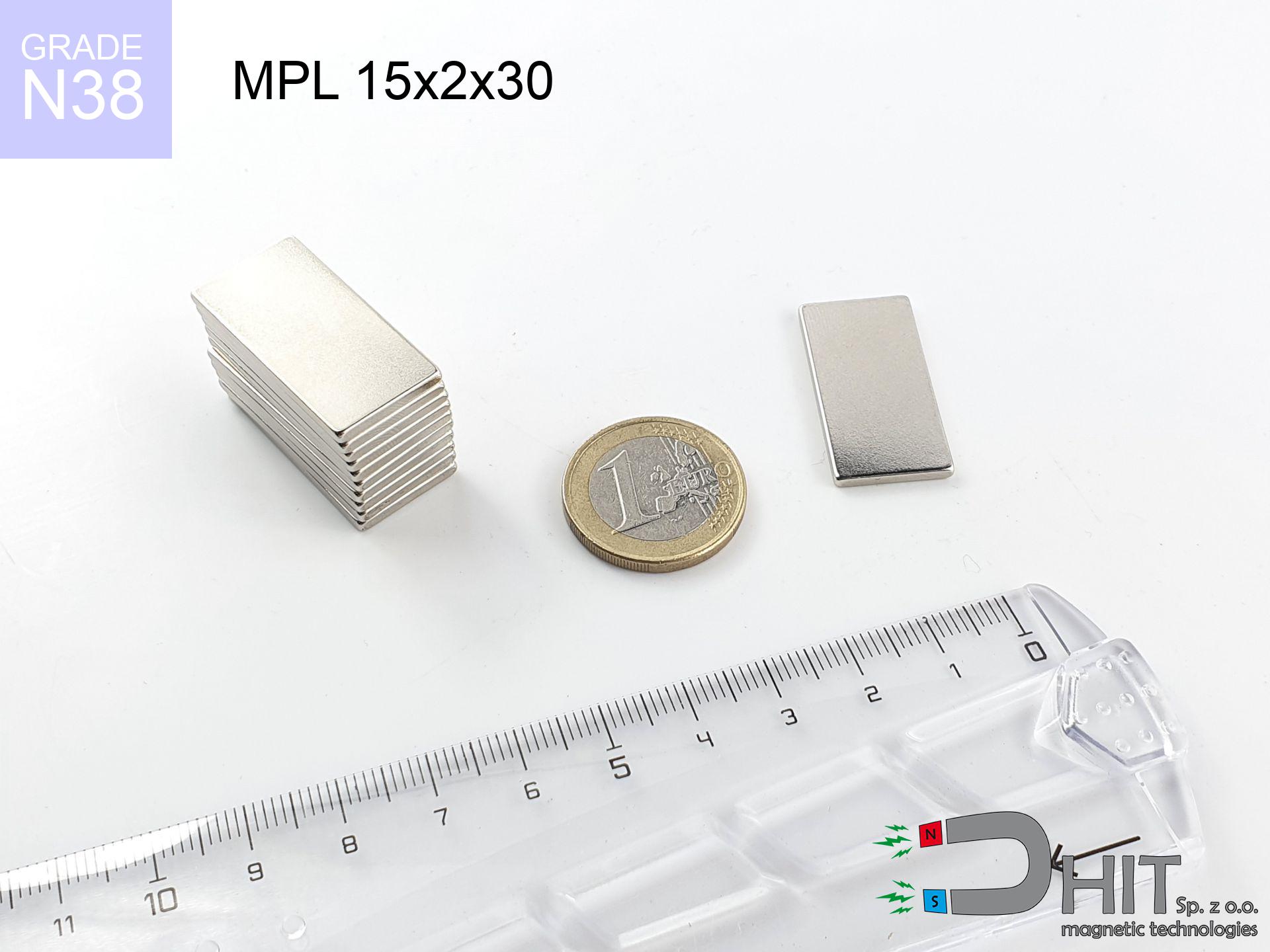
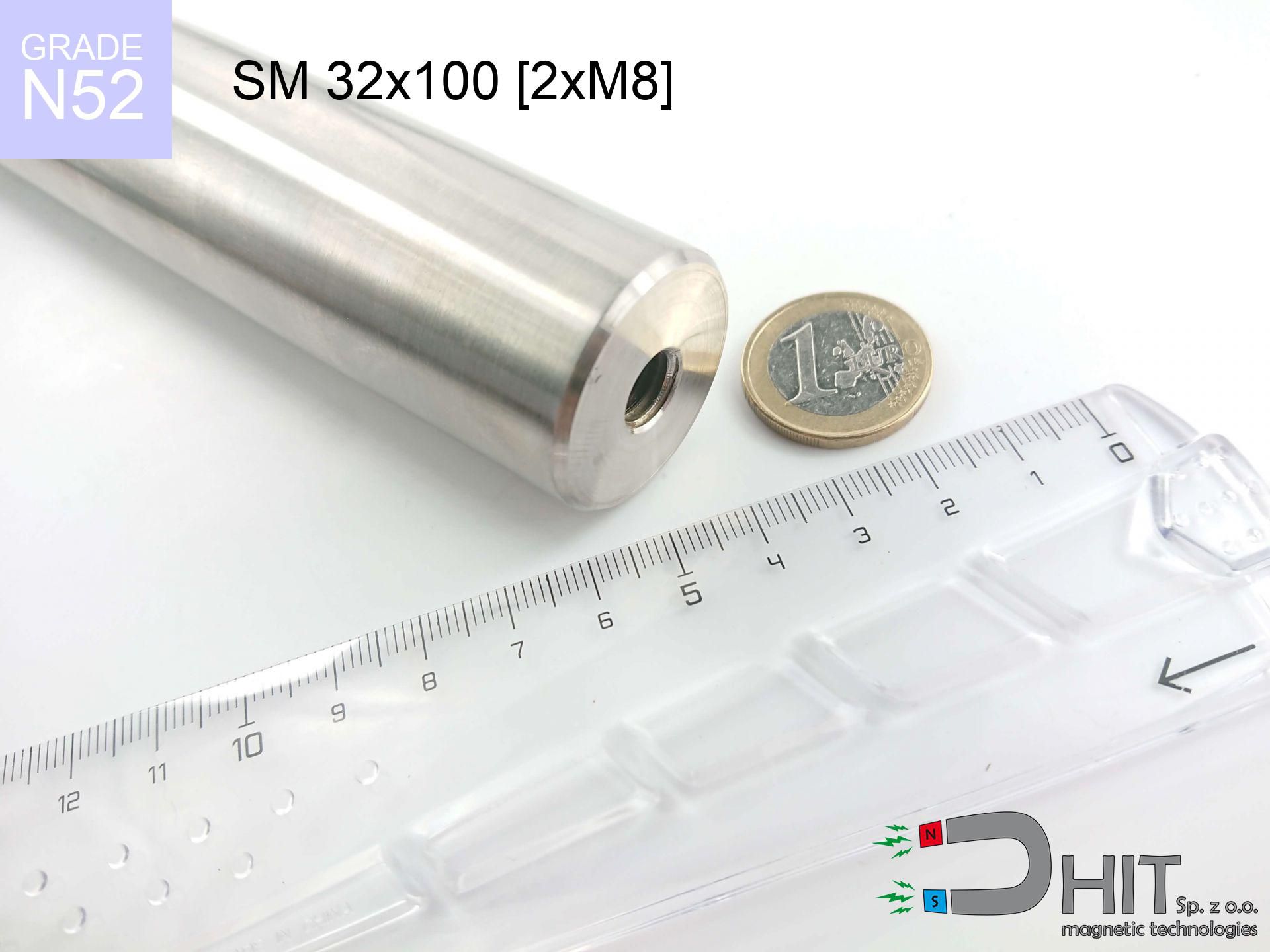

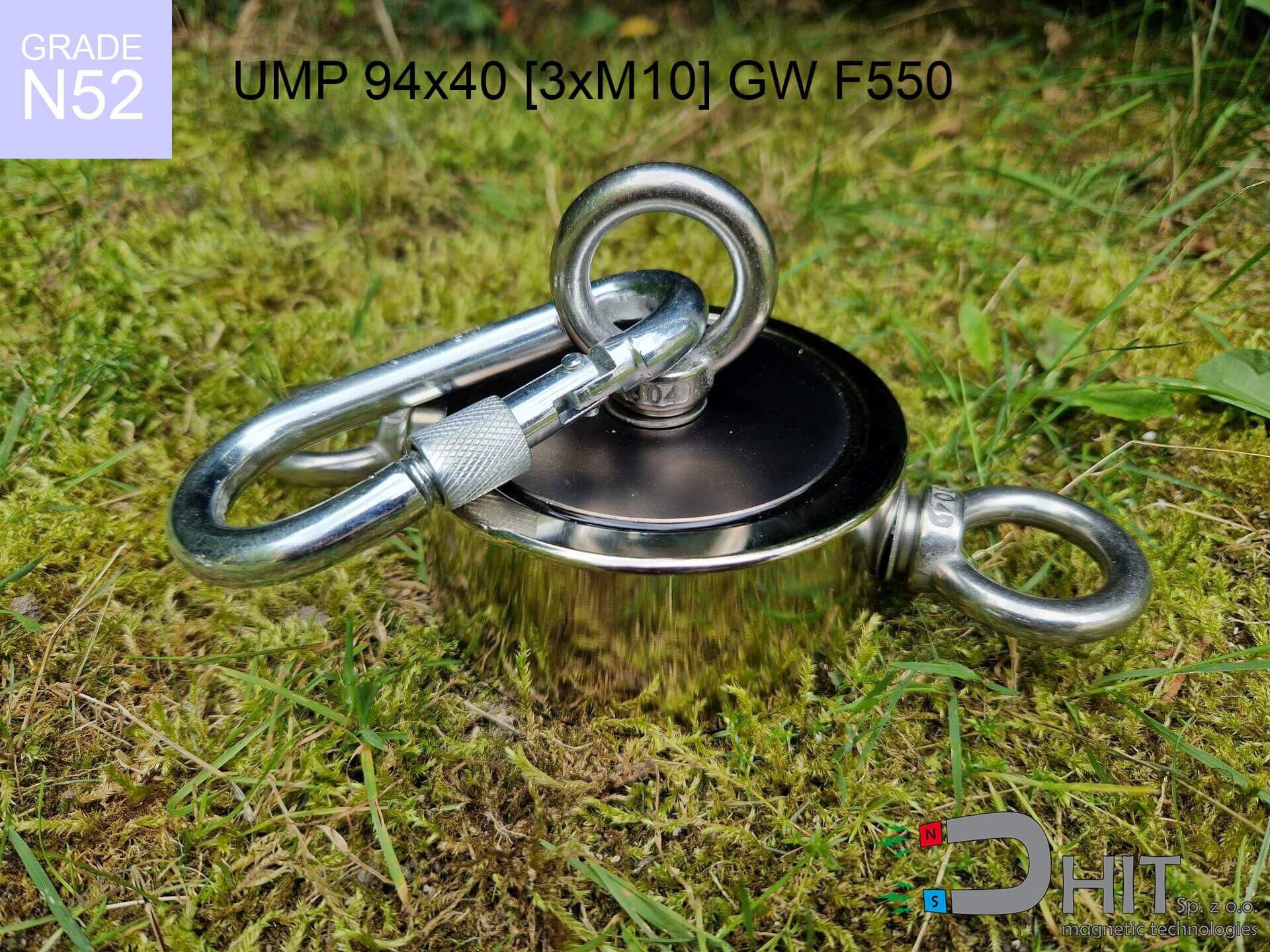
Advantages as well as disadvantages of neodymium magnets.
Pros
- They virtually do not lose power, because even after 10 years the decline in efficiency is only ~1% (according to literature),
- They feature excellent resistance to weakening of magnetic properties as a result of external fields,
- Thanks to the reflective finish, the surface of nickel, gold-plated, or silver-plated gives an elegant appearance,
- Magnets possess extremely high magnetic induction on the outer layer,
- Due to their durability and thermal resistance, neodymium magnets are capable of operate (depending on the shape) even at high temperatures reaching 230°C or more...
- Thanks to versatility in shaping and the ability to adapt to complex applications,
- Wide application in innovative solutions – they find application in magnetic memories, drive modules, medical equipment, also complex engineering applications.
- Compactness – despite small sizes they generate large force, making them ideal for precision applications
Limitations
- At strong impacts they can crack, therefore we recommend placing them in strong housings. A metal housing provides additional protection against damage, as well as increases the magnet's durability.
- Do not exceed this material temperature limit: 80°C. Overheating may permanently weaken the magnet.
- Magnets exposed to a humid environment can corrode. Therefore during using outdoors, we recommend using waterproof magnets made of rubber, plastic or other material resistant to moisture
- Limited ability of making threads in the magnet and complicated shapes - preferred is casing - magnetic holder.
- Possible danger to health – tiny shards of magnets pose a threat, in case of ingestion, which becomes key in the context of child health protection. Furthermore, small components of these magnets are able to disrupt the diagnostic process medical when they are in the body.
- Due to neodymium price, their price is relatively high,
Holding force characteristics
Maximum holding power of the magnet – what affects it?
- using a sheet made of low-carbon steel, acting as a ideal flux conductor
- with a thickness of at least 10 mm
- characterized by smoothness
- under conditions of no distance (surface-to-surface)
- under axial application of breakaway force (90-degree angle)
- at temperature room level
Determinants of lifting force in real conditions
- Gap between surfaces – even a fraction of a millimeter of separation (caused e.g. by varnish or dirt) significantly weakens the magnet efficiency, often by half at just 0.5 mm.
- Angle of force application – highest force is obtained only during pulling at a 90° angle. The resistance to sliding of the magnet along the plate is typically many times smaller (approx. 1/5 of the lifting capacity).
- Base massiveness – insufficiently thick plate does not accept the full field, causing part of the power to be lost into the air.
- Material type – the best choice is pure iron steel. Hardened steels may have worse magnetic properties.
- Surface structure – the more even the plate, the larger the contact zone and stronger the hold. Unevenness acts like micro-gaps.
- Temperature – heating the magnet causes a temporary drop of induction. Check the thermal limit for a given model.
Holding force was tested on a smooth steel plate of 20 mm thickness, when the force acted perpendicularly, however under shearing force the load capacity is reduced by as much as 75%. In addition, even a slight gap between the magnet and the plate decreases the holding force.
Warnings
Threat to navigation
GPS units and smartphones are highly susceptible to magnetism. Close proximity with a powerful NdFeB magnet can permanently damage the sensors in your phone.
Health Danger
For implant holders: Powerful magnets affect electronics. Maintain at least 30 cm distance or request help to work with the magnets.
Respect the power
Before starting, read the rules. Sudden snapping can destroy the magnet or hurt your hand. Think ahead.
Swallowing risk
Absolutely keep magnets away from children. Risk of swallowing is high, and the effects of magnets clamping inside the body are tragic.
Operating temperature
Do not exceed the maximum operating temperature stated in the specifications of the particular product. The limit depends on the material, geometry and operating arrangement; there is no single threshold for all neodymium magnets. Overheating can permanently weaken a magnet.
Dust explosion hazard
Powder produced during machining of magnets is combustible. Do not drill into magnets unless you are an expert.
Material brittleness
Despite metallic appearance, the material is delicate and cannot withstand shocks. Avoid impacts, as the magnet may crumble into hazardous fragments.
Electronic hazard
Data protection: Neodymium magnets can damage data carriers and delicate electronics (heart implants, hearing aids, mechanical watches).
Skin irritation risks
Studies show that nickel (standard magnet coating) is a strong allergen. For allergy sufferers, avoid touching magnets with bare hands and opt for encased magnets.
Bone fractures
Protect your hands. Two powerful magnets will join instantly with a force of several hundred kilograms, destroying everything in their path. Exercise extreme caution!
Tabela kosztu i czasu dostawy
Płatność przed wysyłką:

GLS kurier
Przesyłka będzie u Ciebie za 2-3 dni
14.99 ZŁ

InPost Paczkomaty 24/7
Przesyłka będzie u Ciebie za 1-2 dni
12.30 ZŁ
Płatność przy odbiorze (pobranie):
GLS kurier
Przesyłka będzie u Ciebie za 1-2 dni
23.00 ZŁ