
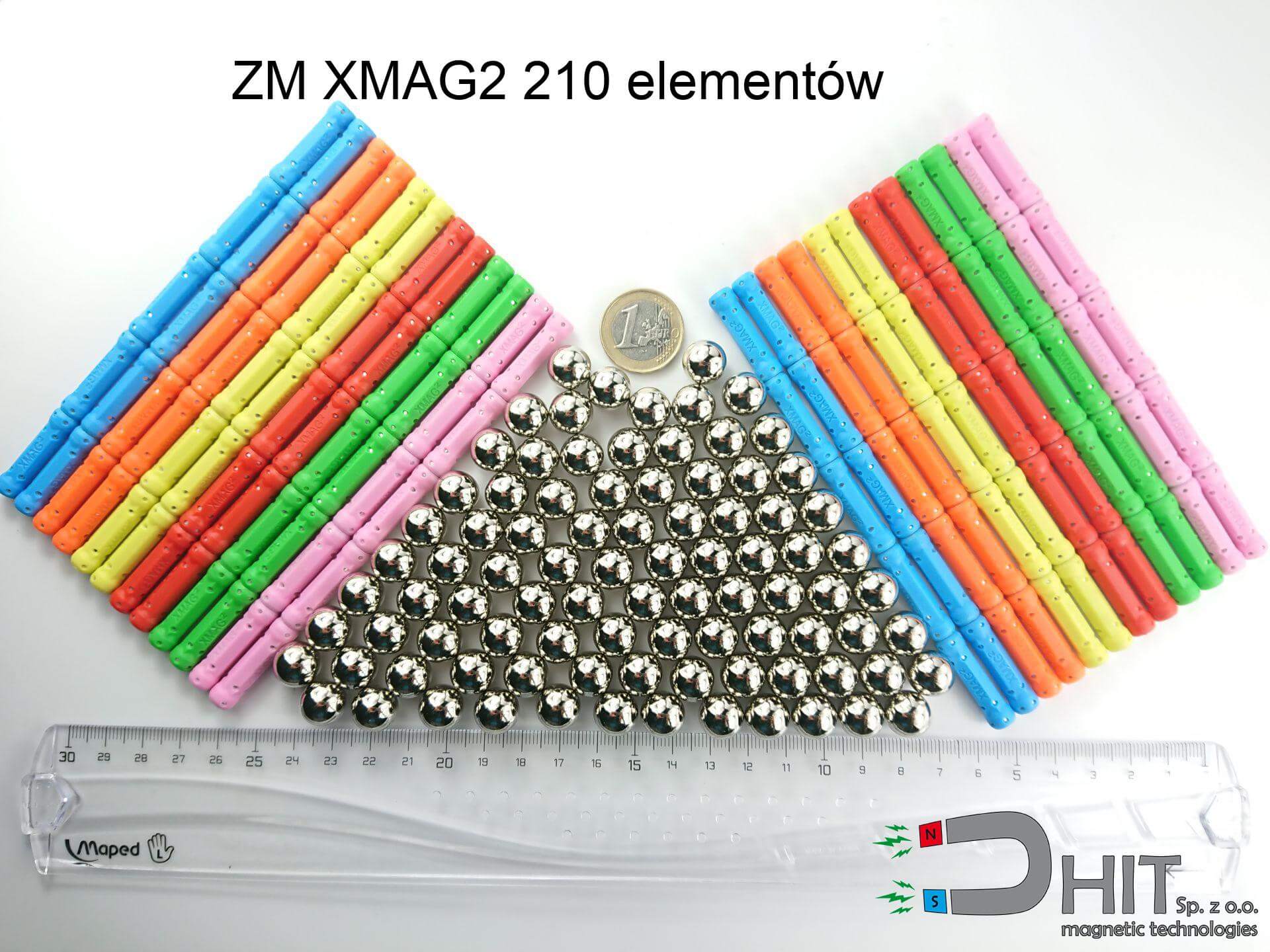
ZM XMAG2 210 elementów - magnetic toy
magnetic toy
Catalog no 040314
GTIN/EAN: 5906301812388
Weight
0.03 g
Load capacity
0.03 kg / 0.26 N
86.10 ZŁ with VAT / pcs + price for transport
70.00 ZŁ net + 23% VAT / pcs
bulk discounts:
Need more?
Pick up the phone and ask
+48 22 499 98 98
alternatively send us a note via
request form
the contact form page.
Lifting power along with appearance of a magnet can be analyzed with our
modular calculator.
Same-day shipping for orders placed before 14:00.
Technical - ZM XMAG2 210 elementów - magnetic toy
Specification / characteristics - ZM XMAG2 210 elementów - magnetic toy
| properties | values |
|---|---|
| Cat. no. | 040314 |
| GTIN/EAN | 5906301812388 |
| Production/Distribution | Dhit sp. z o.o. |
| Country of origin | Poland / China / Germany |
| Customs code | 85059029 |
| Weight | 0.03 g |
| Load capacity ~ ? | 0.03 kg / 0.26 N |
| Manufacturing Tolerance | ±1 mm |
Physical properties of sintered neodymium magnets Nd2Fe14B at 20°C
| properties | values | units |
|---|---|---|
| Vickers hardness | ≥550 | Hv |
| Density | ≥7.4 | g/cm3 |
| Curie Temperature TC | 312 - 380 | °C |
| Curie Temperature TF | 593 - 716 | °F |
| Specific resistance | 150 | μΩ⋅cm |
| Bending strength | 250 | MPa |
| Compressive strength | 1000~1100 | MPa |
| Thermal expansion parallel (∥) to orientation (M) | (3-4) x 10-6 | °C-1 |
| Thermal expansion perpendicular (⊥) to orientation (M) | -(1-3) x 10-6 | °C-1 |
| Young's modulus | 1.7 x 10⁴ | kg/mm² |
Elemental analysis
| iron (Fe) | 64% – 68% |
| neodymium (Nd) | 29% – 32% |
| boron (B) | 1.1% – 1.2% |
| dysprosium (Dy) | 0.5% – 2.0% |
| coating (Ni-Cu-Ni) | < 0.05% |
Environmental data
| recyclability (EoL) | 100% |
| recycled raw materials | ~10% (pre-cons) |
| carbon footprint | low / zredukowany |
| waste code (EWC) | 16 02 16 |
Other deals
![SM 25x225 [2xM8] / N42 - magnetic separator](https://cdn3.dhit.pl/graphics/products/sm-25x225-2xm8-tix.jpg "SM 25x225 [2xM8] / N42 - magnetic separator")
![UI 39x9x7 [BA] - badge holder](https://cdn3.dhit.pl/graphics/products/ui39x9x7-dav.jpg "UI 39x9x7 [BA] - badge holder")
![SM 25x175 [2xM8] / N42 - magnetic separator](https://cdn3.dhit.pl/graphics/products/sm-25x175-2xm8-fux.jpg "SM 25x175 [2xM8] / N42 - magnetic separator")
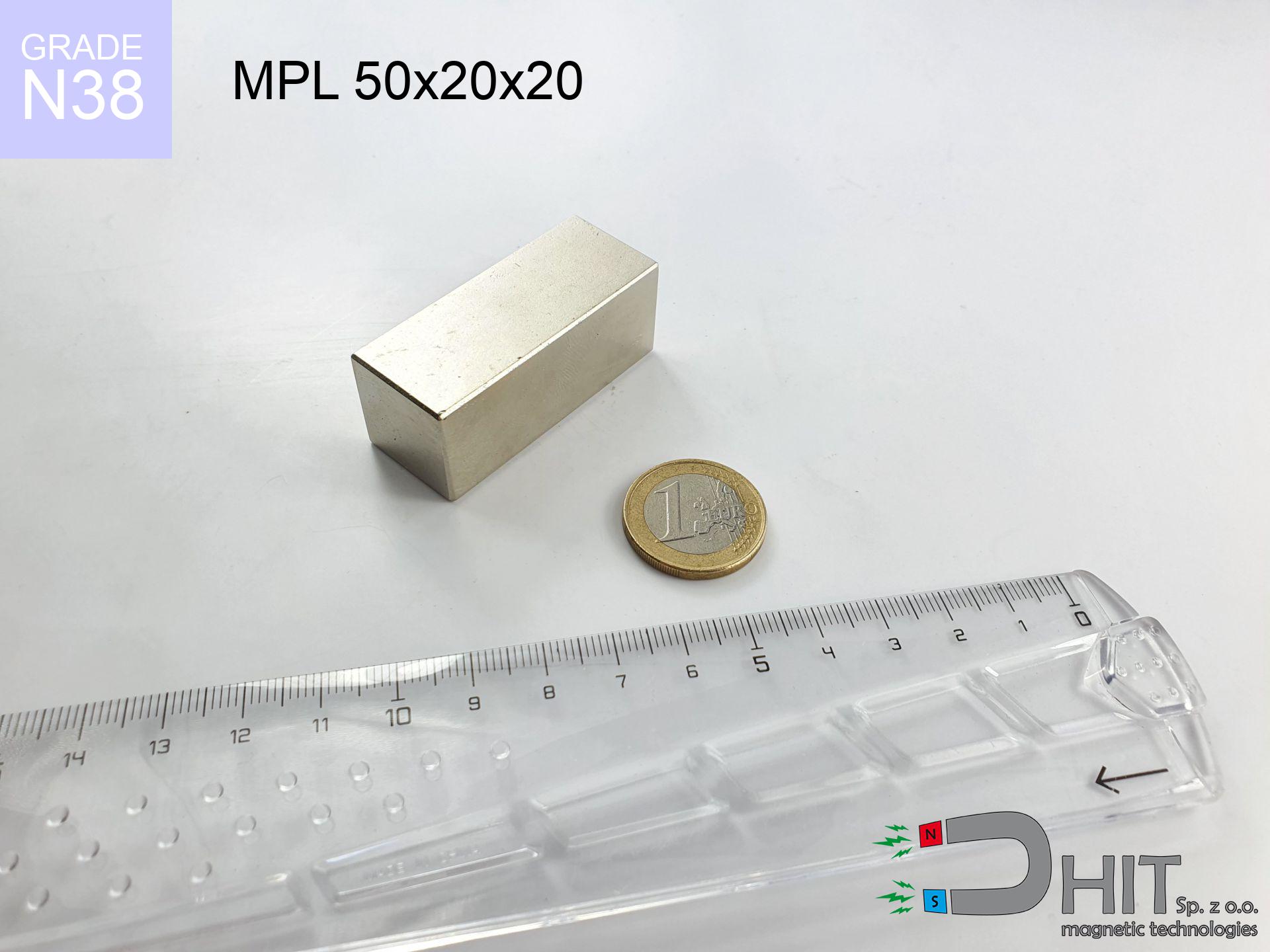
Pros and cons of Nd2Fe14B magnets.
Advantages
- They have constant strength, and over nearly ten years their attraction force decreases symbolically – ~1% (in testing),
- Magnets perfectly defend themselves against demagnetization caused by foreign field sources,
- A magnet with a metallic gold surface is more attractive,
- Magnetic induction on the working part of the magnet is maximum,
- Through (appropriate) combination of ingredients, they can achieve high thermal strength, allowing for functioning at temperatures approaching 230°C and above...
- Possibility of accurate machining and adjusting to complex applications,
- Versatile presence in modern industrial fields – they are used in hard drives, brushless drives, medical devices, as well as complex engineering applications.
- Compactness – despite small sizes they provide effective action, making them ideal for precision applications
Cons
- Susceptibility to cracking is one of their disadvantages. Upon intense impact they can fracture. We advise keeping them in a strong case, which not only secures them against impacts but also raises their durability
- When exposed to high temperature, neodymium magnets suffer a drop in force. Often, when the temperature exceeds 80°C, their strength decreases (depending on the size, as well as shape of the magnet). For those who need magnets for extreme conditions, we offer [AH] versions withstanding up to 230°C
- Magnets exposed to a humid environment can rust. Therefore when using outdoors, we advise using water-impermeable magnets made of rubber, plastic or other material protecting against moisture
- We suggest a housing - magnetic mount, due to difficulties in realizing threads inside the magnet and complex forms.
- Possible danger resulting from small fragments of magnets can be dangerous, when accidentally swallowed, which gains importance in the context of child safety. Furthermore, small components of these products are able to disrupt the diagnostic process medical after entering the body.
- Higher cost of purchase is one of the disadvantages compared to ceramic magnets, especially in budget applications
Lifting parameters
Maximum holding power of the magnet – what it depends on?
- using a plate made of mild steel, acting as a magnetic yoke
- possessing a thickness of minimum 10 mm to avoid saturation
- characterized by even structure
- without any insulating layer between the magnet and steel
- for force acting at a right angle (pull-off, not shear)
- at temperature approx. 20 degrees Celsius
Practical aspects of lifting capacity – factors
- Air gap (between the magnet and the metal), as even a microscopic distance (e.g. 0.5 mm) results in a decrease in lifting capacity by up to 50% (this also applies to varnish, rust or debris).
- Direction of force – highest force is reached only during pulling at a 90° angle. The resistance to sliding of the magnet along the plate is usually several times lower (approx. 1/5 of the lifting capacity).
- Plate thickness – insufficiently thick plate does not close the flux, causing part of the flux to be wasted into the air.
- Material type – ideal substrate is high-permeability steel. Hardened steels may generate lower lifting capacity.
- Smoothness – full contact is obtained only on smooth steel. Any scratches and bumps reduce the real contact area, weakening the magnet.
- Temperature – temperature increase results in weakening of force. It is worth remembering the thermal limit for a given model.
Holding force was tested on the plate surface of 20 mm thickness, when a perpendicular force was applied, in contrast under shearing force the holding force is lower. Moreover, even a small distance between the magnet and the plate decreases the holding force.
Warnings
Heat sensitivity
Monitor thermal conditions. Exposing the magnet to high heat will ruin its magnetic structure and strength.
Product not for children
NdFeB magnets are not suitable for play. Accidental ingestion of several magnets may result in them attracting across intestines, which poses a direct threat to life and necessitates immediate surgery.
Powerful field
Before starting, check safety instructions. Sudden snapping can break the magnet or hurt your hand. Think ahead.
Electronic devices
Data protection: Neodymium magnets can damage payment cards and delicate electronics (pacemakers, hearing aids, mechanical watches).
Fire risk
Drilling and cutting of neodymium magnets poses a fire risk. Neodymium dust reacts violently with oxygen and is hard to extinguish.
GPS and phone interference
An intense magnetic field negatively affects the operation of compasses in smartphones and navigation systems. Maintain magnets near a device to avoid breaking the sensors.
Magnet fragility
Watch out for shards. Magnets can explode upon uncontrolled impact, launching shards into the air. Wear goggles.
Serious injuries
Big blocks can smash fingers in a fraction of a second. Under no circumstances place your hand betwixt two strong magnets.
Pacemakers
For implant holders: Strong magnetic fields disrupt electronics. Keep at least 30 cm distance or request help to work with the magnets.
Avoid contact if allergic
Studies show that nickel (the usual finish) is a common allergen. If your skin reacts to metals, avoid direct skin contact or choose coated magnets.
Tabela kosztu i czasu dostawy
Płatność przed wysyłką:

GLS kurier
Przesyłka będzie u Ciebie za 2-3 dni
14.99 ZŁ

InPost Paczkomaty 24/7
Przesyłka będzie u Ciebie za 1-2 dni
12.30 ZŁ
Płatność przy odbiorze (pobranie):
GLS kurier
Przesyłka będzie u Ciebie za 1-2 dni
23.00 ZŁ
Rate the product

Your rating