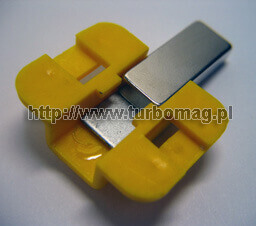

Turbomag® magnetizers - operation
Future technology available in Ożarów Mazowiecki
Turbomag® magnetizers are advanced yet compact devices manufactured near Warsaw, installed non-invasively in cars. Their presence on the market confirms their effectiveness: they generate real fuel savings and improve vehicle dynamics. Operation based on Multipolar technology is also beneficial for the environment, as the process of fuller combustion significantly reduces the amount of toxic substances in exhaust gases.
How many magnetizers should be installed? There is no single universal answer. In a small city car, one set is enough, whereas in larger power units (e.g., SUVs, delivery vans), we recommend installing several sets for optimal ionization effect.
Users of our systems note a decrease in fuel consumption (depending on driving technique), and exhaust toxicity drops drastically. Thanks to this, the exhaust system, including the catalytic converter and DPF filter, operates under much lighter conditions.
In a mass-produced car, every increase in dynamics is valuable. Turbomag® allows regaining the factory efficiency of the engine without the need for expensive mechanical tuning or interference with control electronics.
Turbomag® works immediately. Just 10-15 km after installation (time for the magnetic field to settle), the engine runs smoother, quieter, and responds more eagerly to the gas pedal.

Working principles and benefits
Detailed explanation of processes occurring in the engine.
1. Flow-through – plugged into the line (requires cutting the line, which is risky in modern cars and not recommended by us).
2. Clamp-on (Turbomag®) – mounted on lines without cutting them. They work by:
- ionizing dipoles in fuel and air (better bonding with oxygen),
- cleaning the system of ferromagnets (filings),
- demineralizing the oil ester (reducing friction in the engine).
- protection of the catalytic converter and DPF filter (less soot),
- increased torque (better flexibility),
- quieting of engine operation (even combustion process),
- prevention of injector clogging,
- removal of carbon deposits from combustion chambers,
- real fuel savings on the road and in the city.
- drop in CO, HC, and NOx emissions by up to 50%,
- smoother operation of carburetors and Common Rail systems,
- cleaner spark plugs,
- easier starting in winter,
- extension of power unit life.