

Ukraine and China’s dominance in battery and magnet supplies – a strategic dependency for NATO
In 2025, Ukraine continues its rapid rise in lithium-ion battery and drone component imports, driven by military demand amid ongoing conflict. In 2024, the country imported nearly 56 million lithium batteries - a ninefold increase compared to 2021. Ukrainian defense companies are stockpiling in anticipation of further Chinese export restrictions, which Beijing continues to tighten. China controls 70% of global rare earth mining and 90% of refining, while dominating lithium battery and neodymium magnet production - critical to electronics, electric motors, and defense systems.
Need advice?
China’s control over the heart of modern technology
Rare earth elements such as lithium, neodymium, dysprosium, and praseodymium have become strategic resources comparable to oil. They are essential for wind turbines, electric motors, drones, and missile systems. Beijing has built a global monopoly controlling both extraction and refining, allowing it to dictate prices and availability. For Ukraine, whose defense relies heavily on drone and magnetic technologies, this dependency is a serious vulnerability that cannot be eliminated quickly.
Since April 2025, China has imposed export restrictions on seven REEs (samarium, gadolinium, terbium, dysprosium) and permanent magnets, requiring export licenses and detailed end-user information. In October, the list was expanded to include holmium and erbium, and starting December 2025, even products containing trace amounts of Chinese REEs will require licenses. Officially justified as national security measures, these policies effectively serve as leverage against NATO and indirect support for Russia.
Neodymium magnets – the invisible core of modern weaponry
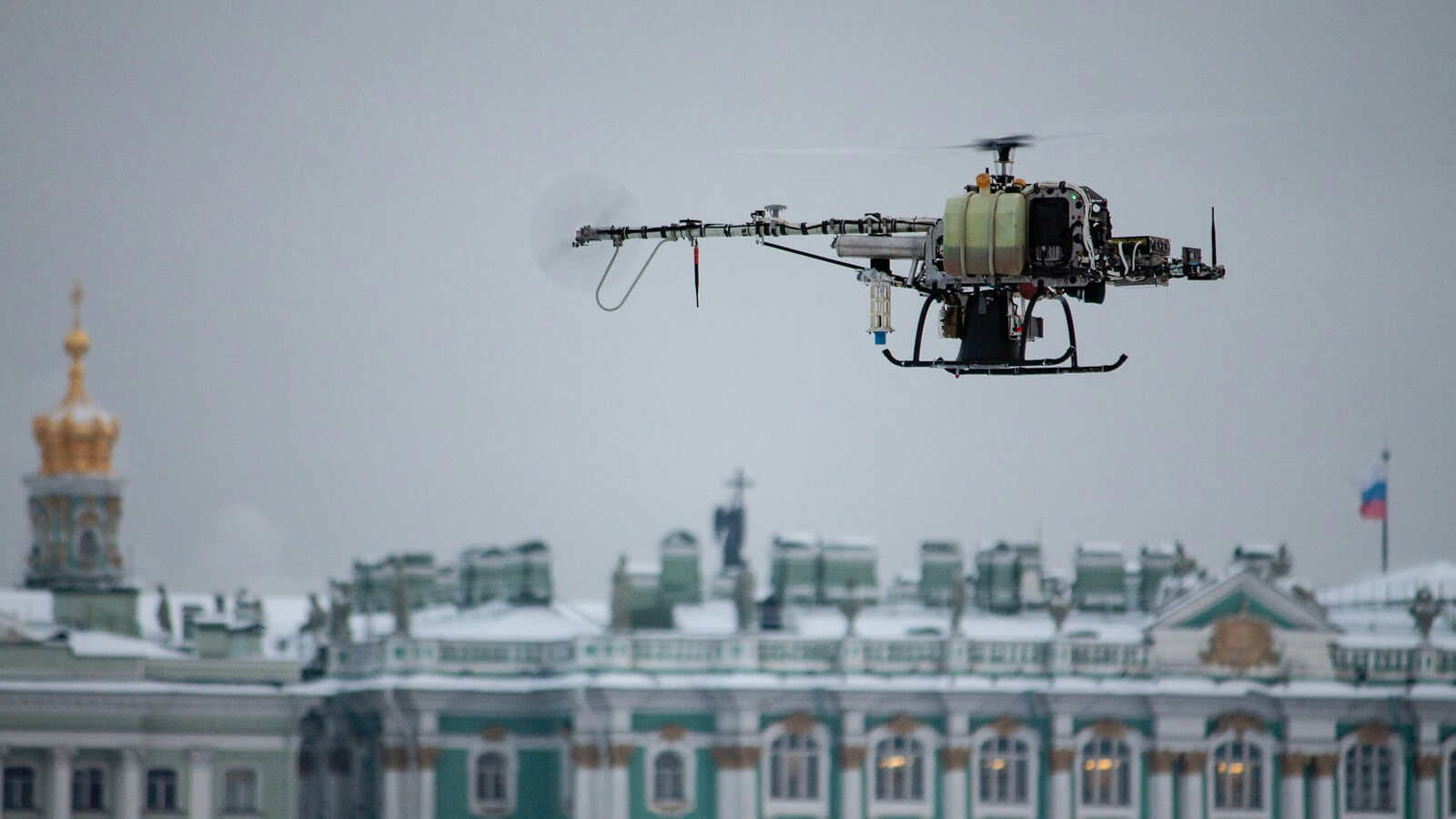
Neodymium magnets (NdFeB) are key components in drone motors, missile guidance systems, radar sensors, and camera stabilizers. A single combat drone contains several to dozens of these magnets, delivering high power at low weight. Even domestically produced Ukrainian drones rely heavily on Chinese magnets, as China dominates high-temperature magnet technology through its access to dysprosium and terbium.
Following the new restrictions, China’s magnet exports to the EU dropped by 44% in April 2025 and 62% in May, with partial recovery later. The licensing process remains opaque, with only about 25% of applications approved.
Ukraine’s defense industry under the shadow of Chinese components
Motor-G, the largest drone engine producer in Europe, manufactures nearly 100,000 units per month. However, key components - neodymium magnets, copper wire, and sensors - still come from China. Local production faces both technological and financial barriers due to the complexity of REE processing and environmental standards.
In the optoelectronic sector, companies such as Odd Systems, SeekUAV, Oko Camera, and Ochi Nochi are developing thermal imaging devices (e.g., Kurba-256), yet as much as 90% of these products still originate from China. An estimated 97% of Ukrainian drone manufacturers depend on Chinese components.
Alternatives exist, but they are extremely costly
Japan, South Korea, and Germany are expanding domestic magnet production, but costs remain up to twice as high due to limited access to cheap raw materials and strict environmental regulations. Many Western firms disguise Chinese semi-finished products as “assembled in the EU.” According to the Snake Island Institute, nearly all Ukrainian drone producers import at least some components from China, and 37% of tech companies would have to halt operations without them.
The long and costly road to independence
The European Union, through the Critical Raw Materials Act (CRMA), supports REE recycling and mining projects in Scandinavia, including a discovery of 8.8 million tons in Norway. By 2030, the EU aims to reach 10% mining, 40% processing, and 15% recycling of critical raw materials domestically. Currently, REE recycling in the EU accounts for less than 1%, and tangible results are expected only after 2030.
Recycling still relies on chemical separation technologies licensed by Chinese corporations, which makes technological independence from Beijing difficult to achieve.
Strategic implications for NATO and Europe
Dependence on Chinese raw materials is not just an economic issue - it is a strategic threat. Beijing’s restrictions are slowing NATO’s modernization and affecting drone and precision weapon production, particularly as China continues to support Russia in its war against Ukraine.
NATO must treat REEs, batteries, and magnets as strategic resources, investing in diversification and independent supply chains to maintain technological superiority in future conflicts.
Q&A - Questions and Answers
Source:
- Reuters – How China's new rare earth export controls work (October 2025). A detailed description of China's new export restrictions on REEs introduced in October 2025, including the addition of five new elements.
- Bloomberg – The World’s Chip Supply Chain Is Bracing for Fallout From China’s Rare-Earth Curbs (October 2025). An analysis of how China’s export restrictions impact the global semiconductor supply chain.
- Bloomberg – China Widens Rare Earth Curbs Ahead of Key Xi-Trump Meeting (October 2025). Expansion of China’s export restrictions and their political context.
- South China Morning Post – In the global race for critical minerals, China identifies dozens of new reserves (2025). Information about newly discovered mineral resource locations in China.
Tags:
niedziela 2025-10-12T10:00:00